
How to Use a Gourmet Liquid Culture Syringe
Living Cultures, Ready to Grow
Store it, prep it, and inoculate grain or agar with sterile technique — then jump straight to your species' full grow guide.
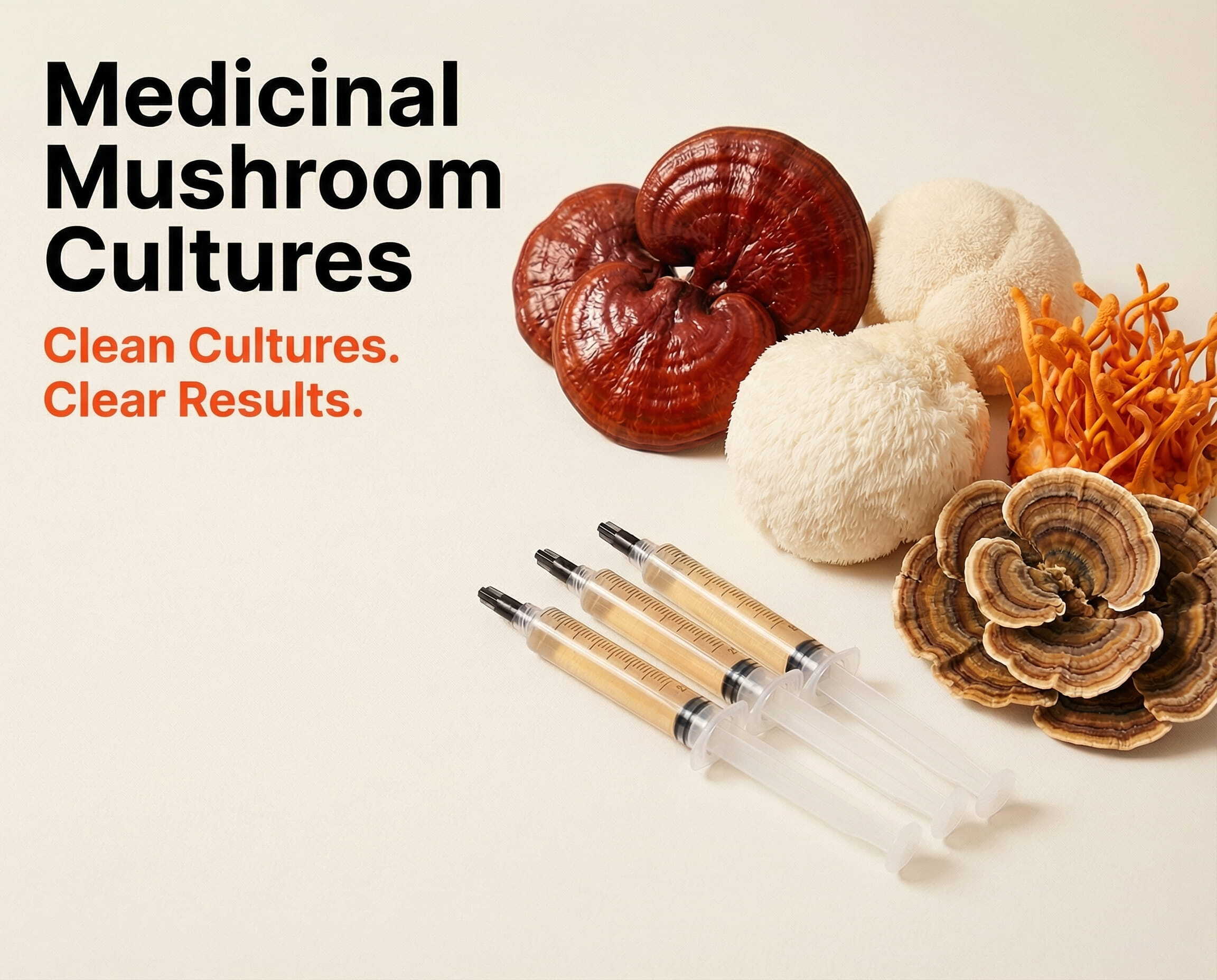
At Spore Genetics, our gourmet liquid culture syringes contain actively growing mycelium suspended in a nutrient-rich, sterile solution. Prepared in our ISO-7 certified cleanroom, each syringe delivers fast colonization, reliable expansion, and a hands-on learning experience in home or lab environments.
Unlike spore syringes — designed for microscopy and taxonomy — liquid culture (LC) syringes contain living fungal cells and are ready to inoculate sterile grains, grow kits, agar plates, or LC expansion jars.
Tap your species to open its full grow guide
Shop Cultures & Supplies
Drag or scroll to explore →





What Is a Liquid Culture Syringe?
A liquid culture syringe contains live mycelium growing in a sterilized nutrient broth. Think of it as a spore syringe — but further along the mushroom life cycle. Instead of spores, you're working with actively growing, colonization-ready mycelium.
Benefits vs. Spore Syringes
Spore syringe or liquid culture?
Many customers use spore syringes for microscopy research and gourmet liquid cultures to explore legal cultivation with Lion's Mane, Oysters, Shiitake, and more.
How to Use a Spore Syringe →How to Store Your Liquid Culture
Refrigerate on arrival — 35°F–46°F (2°C–8°C)
Do not freeze — ice crystals damage mycelium and compromise sterility
Shake before each use to re-suspend settled mycelium
Shelf life — 3–6 months refrigerated (species-dependent)
Inoculating Sterile Grains
Work in the cleanest environment possible — ideally a still-air box (SAB) or laminar flow hood. In a pinch, the oven-door method can work surprisingly well too.
Suitable Grain & Expansion Mediums
Optimal Colonization by Species
Tap a linked species to open its full grow guide.
On mobile, swipe the table sideways to see every column →
| Species | Colonization Temp | Notes |
|---|---|---|
| Albino Cordyceps Militaris » | 68–75°F | Cool-growing culture; develops fine, steady mycelium and should be protected from prolonged heat. |
| Amanita Muscaria » | 64–72°F | Very slow-growing mycelium; prefers cool, stable conditions and forms associations with living tree roots. |
| Antler Reishi » | 72–80°F | CO₂-tolerant; forms antlers readily during colonization. |
| Black Fungus » | 72–77°F | Fast woody-substrate colonizer; commonly used as the companion culture for Snow Fungus. |
| Black Pearl Oyster » | 65–75°F | Fast, vigorous colonizer; performs especially well on supplemented hardwood substrates. |
| Black Truffle » | 68–75°F | Slow ectomycorrhizal growth; naturally colonizes the roots of compatible host trees. |
| Blue Oyster » | 68–76°F | Aggressive growth; adapts well to many substrates. |
| Brown Beech » | 68–77°F | Slow, dense colonization; benefits from an extended maturation period after the substrate turns white. |
| Chestnut » | 72–77°F | Steady, dense growth; slower than oysters and benefits from additional block maturation. |
| Chicken of the Woods » | 75–82°F | Warm-growing hardwood species; colonization can be slow and may vary significantly between isolates. |
| Cordyceps Militaris » | 68–75°F | Steady growth at moderate temperatures; prolonged excessive heat can weaken culture performance. |
| Cordyceps (Ophiocordyceps sinensis) » | 59–68°F | Extremely slow, cold-adapted mycelium; growth declines noticeably at warmer temperatures. |
| Elm Oyster » | 72–77°F | Fast, vigorous colonizer; grows well on hardwood sawdust, straw and similar plant-based substrates. |
| Enoki » | 68–77°F | Dense, cold-tolerant mycelium; colonizes warm but requires much cooler conditions for fruiting. |
| Giant Puffball » | 65–75°F | Slow, wispy mycelium; best suited to experimental outdoor or soil-based cultivation. |
| Golden Morel » | 59–68°F | Cool-growing Wisconsin isolate; develops fine mycelium and may form dense sclerotia as it matures. |
| Golden Oyster » | 70–80°F | Fast, aggressive colonizer; fruits quickly once established. |
| King Blue Oyster » | 68–75°F | Thick mycelium; more temperature-stable than standard blues. |
| King Trumpet Oyster » | 65–72°F | Slower colonizer; prefers cooler temps and extended incubation. |
| Lion's Mane » | 65–72°F | Steady, ropey growth; prefers high humidity and fresh air later. |
| Maitake » | 70–75°F | Slow, dense colonization; requires a substantial maturation period before fruiting conditions are introduced. |
| Pearl Oyster » | 68–76°F | Highly adaptable; strong colonizer across many substrates. |
| Pink Oyster » | 70–78°F | Extremely fast colonizer; very forgiving and beginner-friendly. |
| Pioppino (Black Poplar) » | 68–75°F | Steady hardwood colonizer; produces dense white mycelium and benefits from full block maturation. |
| Portobello » | 73–77°F | Colonizes prepared compost rather than hardwood; casing is applied after the compost is fully colonized. |
| Red Reishi » | 72–78°F | Slower colonization; long runtime but very resilient. |
| Shiitake 3782 » | 70–75°F | Dense colonization; often benefits from a cold shock to trigger fruiting. |
| Snow Fungus » | 72–77°F | Slow alone; vigorous development occurs when grown with a compatible Annulohypoxylon companion culture (its host, Black Fungus). |
| Turkey Tail » | 70–80°F | Aggressive colonizer; longer runtime. |
✅ Keep jars/bags in a dark, undisturbed space · ❌ Avoid opening containers until fully colonized
Healthy vs. Contaminated Growth
✔ Healthy Mycelium
Bright white color
Rhizomorphic (stringy / rope-like)
Tomentose (fluffy, snow-like)
Even spread from the injection point
❌ Signs of Contamination
Green (Trichoderma)
Black (Aspergillus or mold)
Pink / orange / slimy textures
Sour or foul odors
Suspect contamination? Take a clear photo and email support@sporegenetics.com for help. Always discard contaminated materials and disinfect your work area.
Expanding Your Liquid Culture
Why test on agar? Contamination isn't always visible in liquid — agar lets you confirm your culture is clean before scaling up.
Questions or need support? Email support@sporegenetics.com — we're always here to help you grow smarter.