
Mushroom Spores Formats, Legality & How to Buy
The Microscopic Starting Point of Every Mushroom
How spores are sold, which format fits your work, how to store them, and where they're legal — a plain-English primer from the Spore Genetics lab.
Mushroom spores — the single microscopic cells fungi reproduce from — are sold as microscopy specimens in a few standard formats, and choosing well comes down to format, genetics, and the laws where you live. This guide covers that practical side: how spores are sold, which format fits your work, what's legal where, and how to keep them viable.
Want the science instead — spore types, how mushrooms reproduce, the full life cycle? That's our deep dive on what mushroom spores are. Below is everything you need to choose, buy, and store spores as a collector.
What Exactly Is a Mushroom Spore?
Where a plant makes seeds, a mushroom makes spores. They form by the millions on the fertile surface of a mature mushroom — on the gills of an oyster or cubensis, the pores of a bolete, the teeth of Lion's Mane, or inside a puffball — and drift away on the air to start the next generation. A single mushroom can release billions of spores over its lifetime.
The spores produced by most gilled and pored mushrooms are called basidiospores, because they form on a club-shaped cell called a basidium. Each one is essentially a sealed packet of genetic information — but unlike a seed, a spore contains no embryo and no stored food supply. It's a much simpler, more primitive unit of reproduction. For a deeper look at the different spore types and how mushrooms reproduce, see our guide to fungal spores and the mushroom life cycle.
Because spores are microscopic — typically just a few thousandths of a millimeter — you can't meaningfully examine them with the naked eye. Studying their size, shape, color, and ornamentation under magnification is the heart of mycology and mushroom taxonomy, and it's the primary, legal use of the spores we sell.
Where Spores Fit in the Mushroom Life Cycle
A spore is step one of a loop. Understanding the cycle explains why a spore isn't a mushroom — it's the very beginning of one.
This is why the mushroom you see is really just the fruit — the mycelium is the organism, and the spore is its seed-like beginning.
How Are Mushroom Spores Sold?
Spores are supplied in a few standard formats. Which one you want depends on how you plan to study them.
Spore Syringe
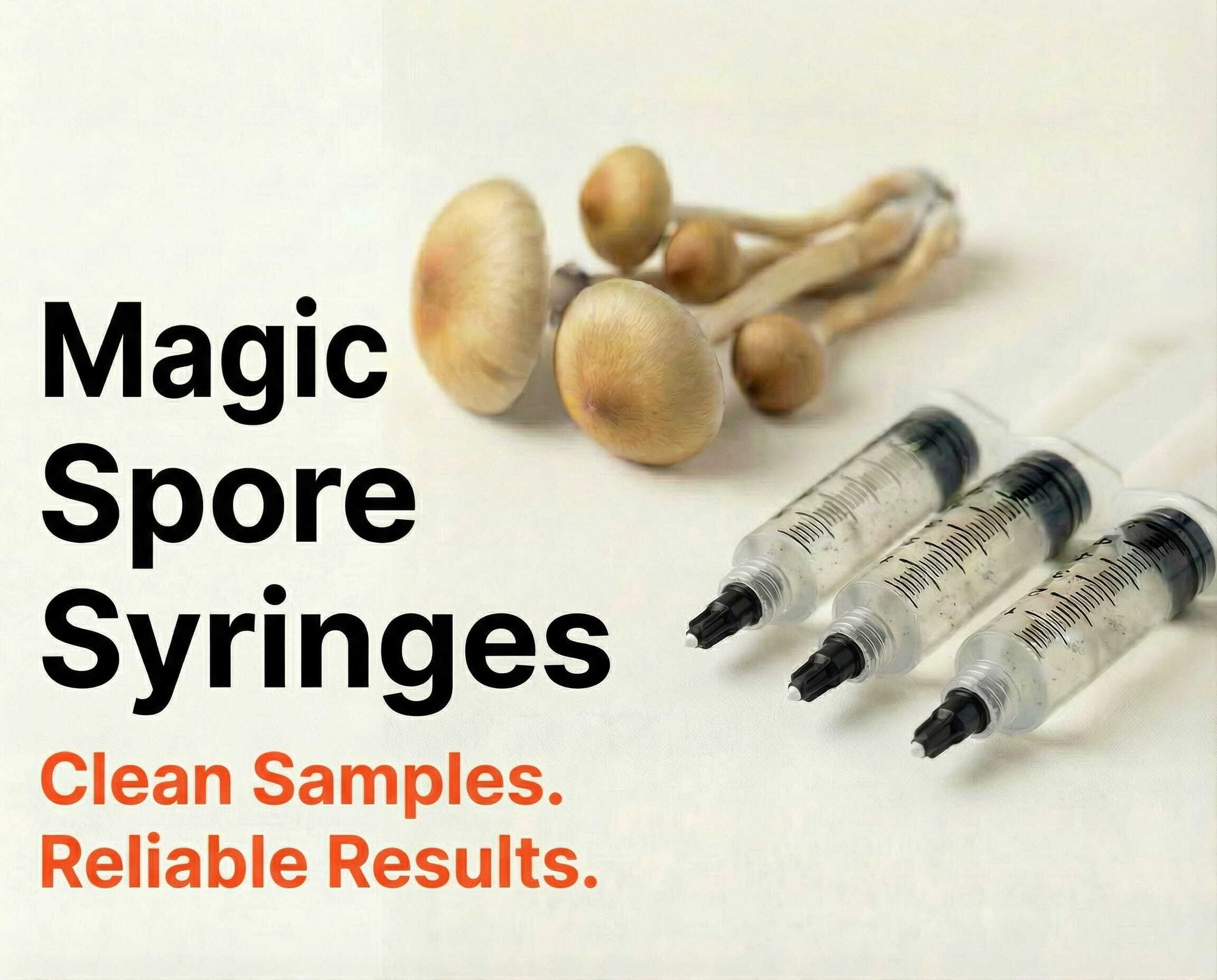
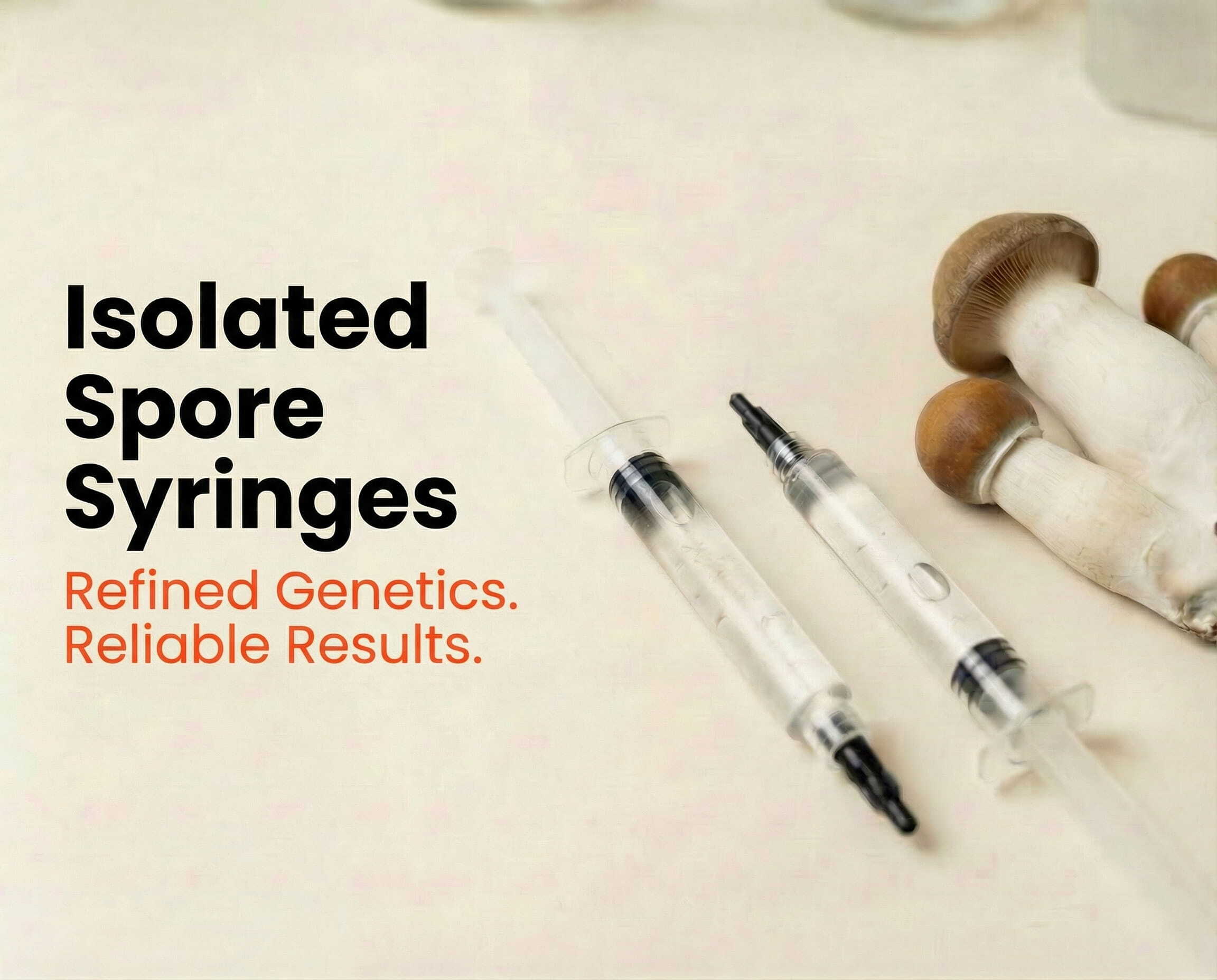
The most popular format — spores suspended in sterile water inside a labeled syringe, ready to deposit onto a slide for viewing. See how to use a spore syringe, or browse all spore syringes or our isolated spore syringes.
Spore Print
A pattern of spores deposited onto foil or paper — the classic long-term storage format collectors use to preserve and share genetics. Browse our mushroom spore prints.
Spore Swab
A sterile swab loaded with spores — a compact, travel-friendly way to capture a sample for the microscope.
Liquid Culture (not a spore)
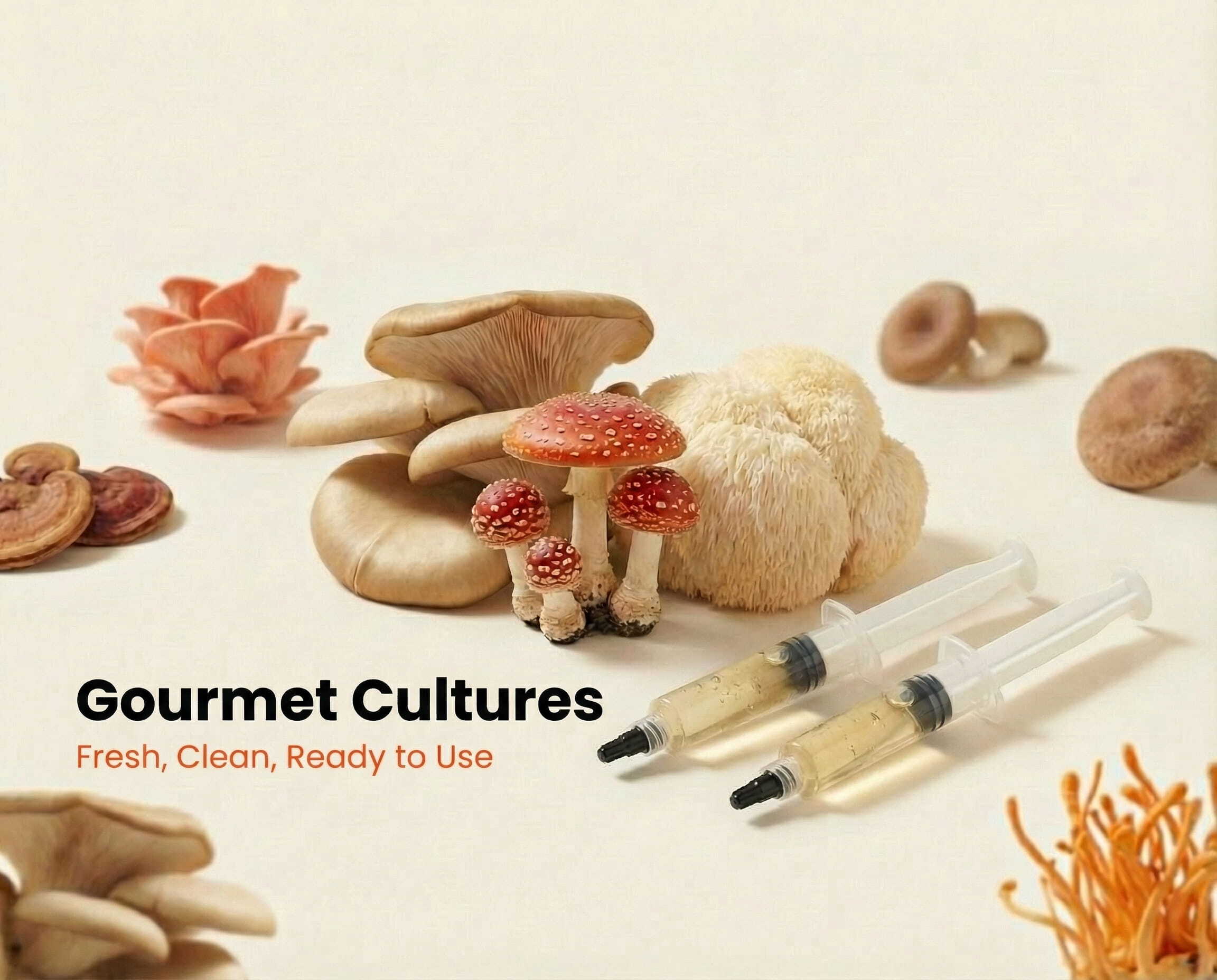
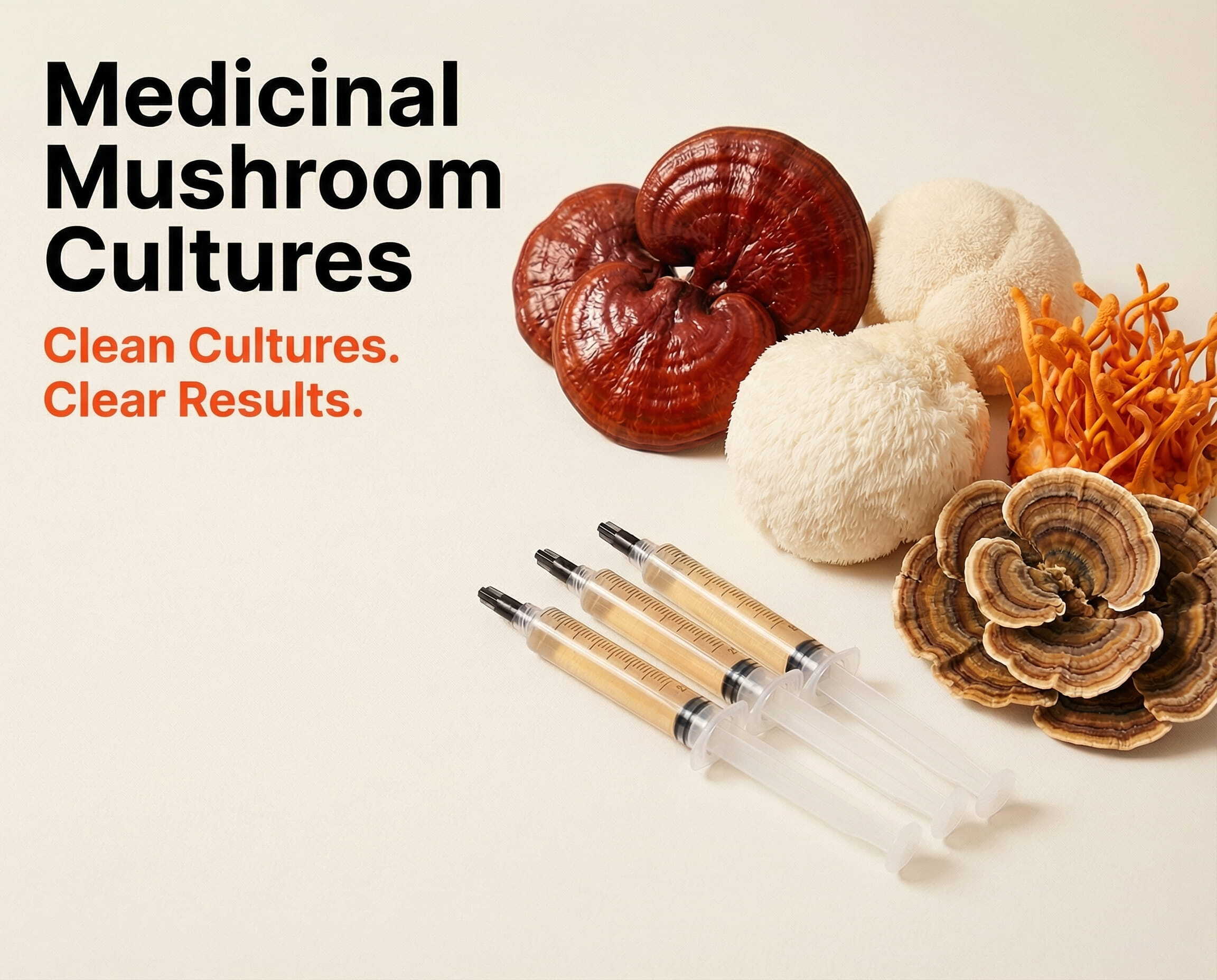
Worth knowing the difference: a liquid culture contains living mycelium already grown from a spore, not the spores themselves. It's a different tool for a different job — used with our gourmet and medicinal cultures.
Types of Mushroom Spores
“Mushroom spores” is a broad umbrella. In practice, collectors sort them into a few families:
Gourmet & edible spores. Culinary species like oyster, Lion's Mane, shiitake, and king trumpet. In cultivation these are usually worked as liquid cultures rather than spores, but the underlying genetics start the same way. Browse edible cultures.
Medicinal spores. Functional species such as reishi, turkey tail, and cordyceps, studied for their compounds. See our medicinal cultures.
Exotic & wood-lover spores. Less-common Psilocybe and Panaeolus species prized by taxonomy hobbyists for their distinctive microscopy. Browse exotic mushroom spores and panaeolus spores.
“Magic” / psilocybin mushroom spores. The Psilocybe cubensis strains and related species — searched as magic mushroom spores, psilocybin spores, or cubensis spores. We supply these strictly as microscopy and taxonomy specimens. Explore magic spore syringes.
Are Mushroom Spores Legal?
For gourmet, edible, and medicinal species, spores and cultures are legal to buy, own, and grow across the U.S. and most of the world.
For Psilocybe (“magic”) species, the key fact is this: dormant spores contain no psilocybin. The controlled compound only forms later, in the growing mushroom — so the spores themselves are legal to sell and possess as microscopy specimens almost everywhere. What's restricted in some places is cultivation, and that is the customer's responsibility to understand. For the full picture, see our state-by-state legality guide.
We ship psilocybe spores worldwide and to every U.S. state except Georgia and Idaho, which restrict the spores themselves. Gourmet cultures ship everywhere, including Georgia and Idaho. This page is for informational purposes only — laws vary by location and change over time, so please confirm the rules where you live before purchasing or germinating any spores.
How Long Do Spores Last & How to Store Them
Kept cool, dark, and dry — ideally in a refrigerator, sealed against moisture — a spore syringe generally stays viable for several months to a year or more, and a well-made spore print can last considerably longer. Viability slowly declines with age, heat, and light exposure, so fresher is always better and storage matters.
A few rules of thumb: don't freeze a water-based spore syringe (ice crystals damage the cells), let a refrigerated syringe return to room temperature before handling, and keep prints in a sealed, labeled envelope away from humidity. For the complete method, see how to store mushroom spores.
Shop Spores & Cultures
Drag or scroll to explore →


Mushroom Spores FAQ
Do mushroom spores contain psilocybin?
No. Psilocybin only forms in the growing mushroom — dormant spores contain none of the controlled compound, which is why psilocybe spores are sold legally as microscopy specimens in most places.
Are mushroom spores the same as seeds?
No. A seed is a multicellular package with an embryo and stored food. A spore is a single cell with neither — a much simpler unit that germinates into fungal threads rather than sprouting like a plant.
How long do mushroom spores last?
Stored cool, dark, and dry, a spore syringe typically stays viable for several months to a year or more, and a spore print can last longer still. Viability declines gradually with age, heat, and light.
What can I legally do with mushroom spores?
Study them — examining spore size, shape, and color under a microscope for taxonomy and identification is the primary legal use. Cultivating gourmet, edible, and medicinal species is legal in most areas; cultivating psilocybin species is restricted in many places and is the buyer's responsibility to check.
Are magic mushroom spores legal to buy?
In most U.S. states, yes — as microscopy specimens, because dormant spores contain no psilocybin. They can't be shipped to Georgia or Idaho, which restrict the spores themselves. Always confirm your own local laws before buying.
Still Have Questions?
Now you know the essentials — how spores are sold, which format fits your work, how to store them, and where they're legal. If you're deciding which format or species is right for your microscopy work, reach out any time via email and we'll point you in the right direction.
Spore Genetics — Exceptional Mushroom Spores & Cultures