
What Is Mycelium?
The Living Network Beneath Every Mushroom
The mushroom is just the fruit — the real organism is the mycelium. Here's what it is, how the mycelial network works, and why it matters when you grow.
Mycelium is the living, thread-like body of a fungus — a branching network of fine white filaments called hyphae that grows through soil, wood, or grain. If a mushroom is the fruit, the mycelium is the plant: the actual organism, most of which lives out of sight.
New to the basics? Start with what are mushroom spores. Below: what mycelium is, how the network works, and its role in cultivation.
What Is Mycelium?
Mycelium is made of hyphae — microscopic tubular threads that grow at their tips and branch as they spread. Thousands upon thousands of hyphae together form the soft, cobweb-like mat you'll recognize as mycelium: white, fuzzy, and steadily expanding outward in search of food.
Unlike a plant, a fungus doesn't photosynthesize. Instead, its mycelium digests nutrients externally, releasing enzymes into whatever it grows on and absorbing what breaks down. That's why mycelium is nature's great recycler — it turns fallen logs and leaf litter back into soil.
Mycelium vs the Mushroom
Here's the key idea: the mushroom is not the organism — it's the fruit of the organism. The mycelium lives and grows continuously, often for months or years. When conditions are right — the right moisture, temperature, and fresh air — it channels its energy into producing mushrooms, whose job is simply to release spores and start the next generation.
So a patch of mushrooms popping up overnight isn't a group of separate individuals — it's one hidden mycelial network sending up fruit, the same way an apple tree sends up apples.
How the Mycelial Network Works
As hyphae branch and fuse, they weave into a vast, interconnected web — the mycelial network. In the wild, a single network can spread through acres of forest floor, threading between plant roots and knitting an entire ecosystem together.
These networks do more than feed the fungus. They shuttle water and nutrients between plants and can even carry chemical signals from one point to another — the reason scientists nicknamed them the “wood wide web.” It's also why some fungi rank among the largest living organisms on Earth: a single mycelial network in Oregon covers several square miles.
Mycelium in Growing Mushrooms
Cultivation is really just guiding this natural process. A spore germinates into hyphae, the hyphae spread into mycelium, the mycelium colonizes its substrate, and once fully colonized it fruits into mushrooms. When you hear a grow described as “colonizing,” that's the mycelium claiming new territory.
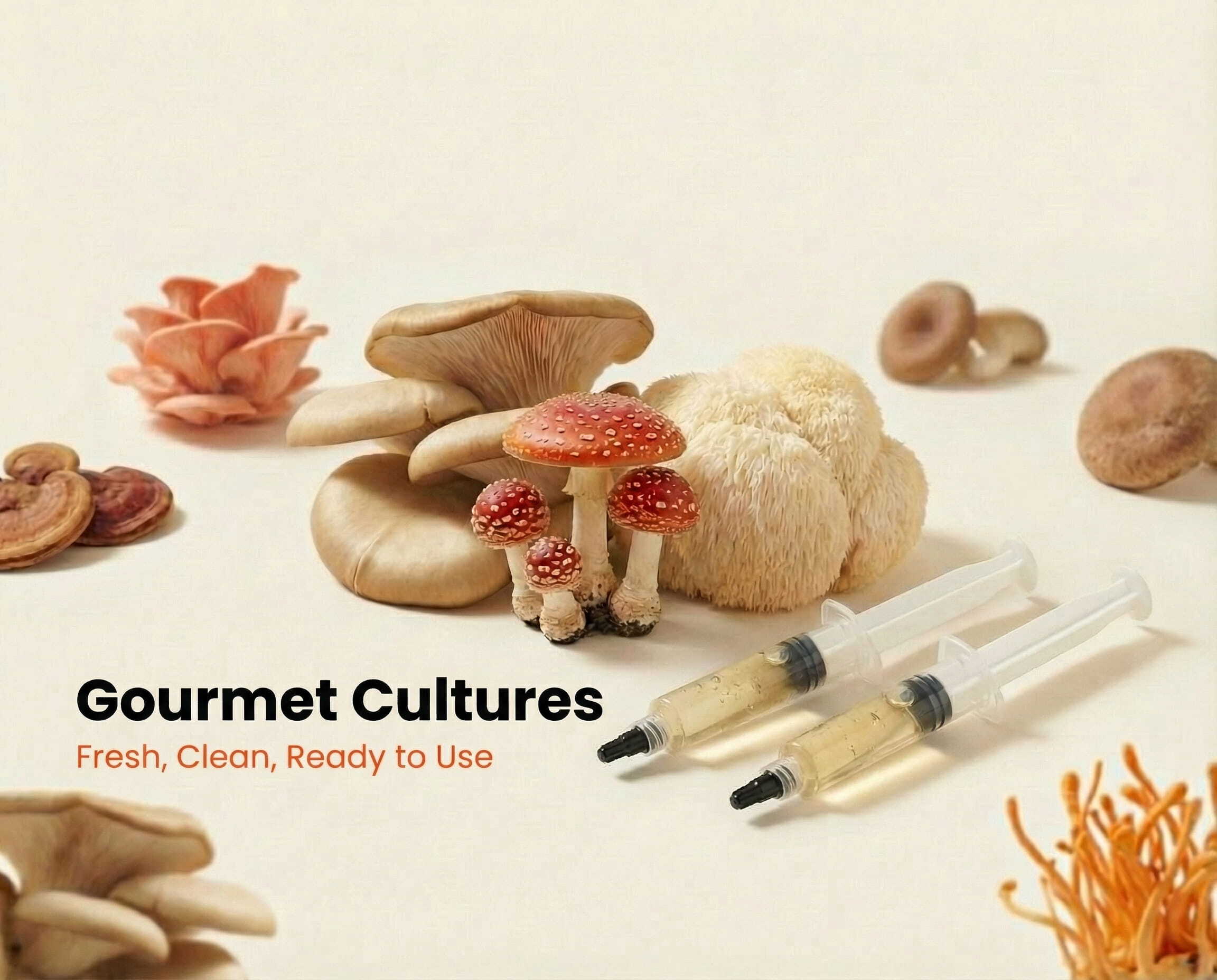
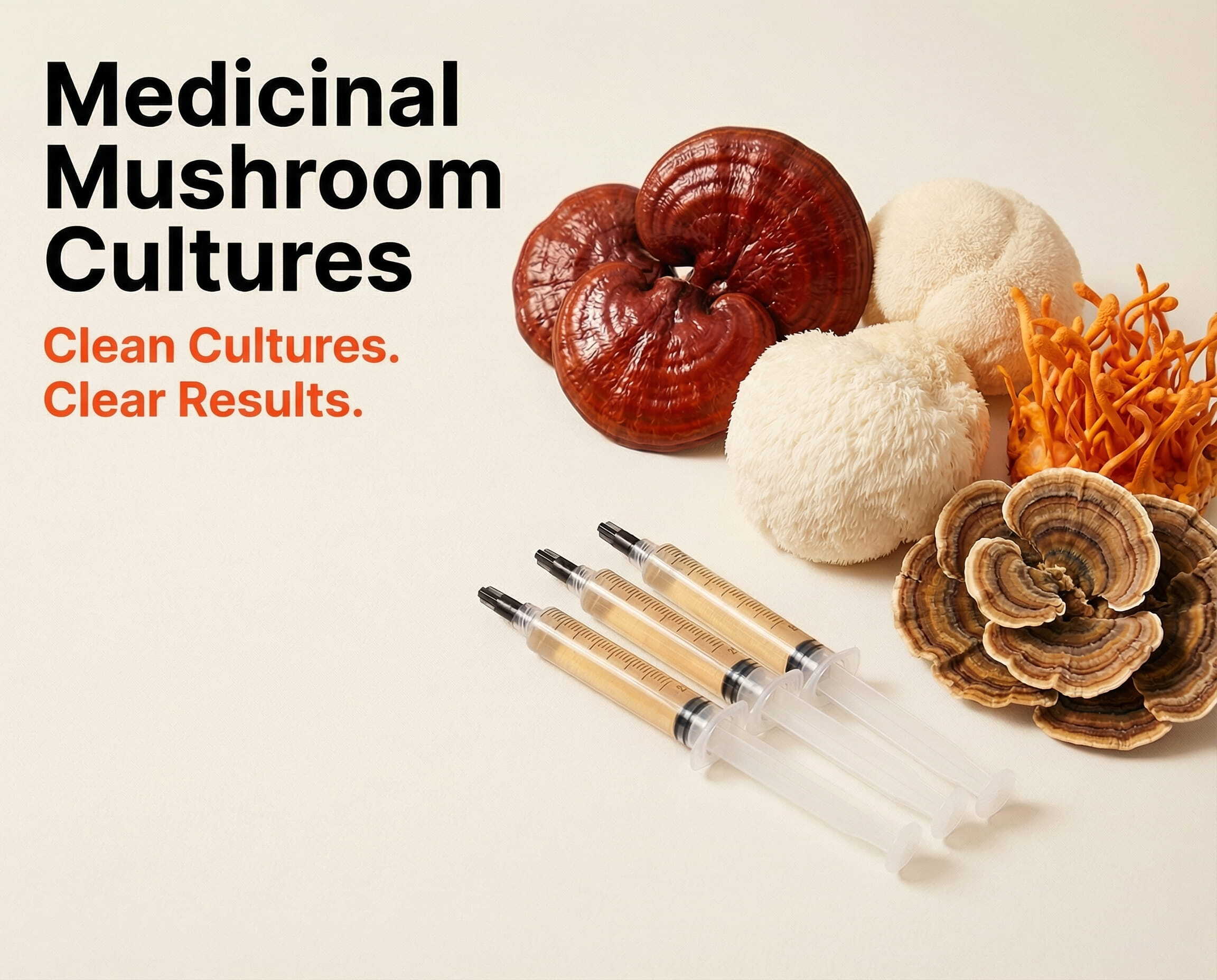
It's also why a liquid culture — living mycelium already suspended in nutrient broth — gets a head start over spores: it skips germination and begins colonizing right away.
Shop Spores & Cultures
Drag or scroll to explore →




Mycelium FAQ
Is mycelium the same as a mushroom?
No. Mycelium is the living body of the fungus; the mushroom is the temporary fruit it produces to release spores. The mycelium is the organism, the mushroom is just one stage of it.
What are hyphae?
Hyphae are the individual microscopic threads that make up mycelium. Each one grows at its tip and branches outward; together, they form the mycelial network.
What is the mycelial network?
It's the vast, interconnected web formed as hyphae branch and fuse. In nature it can span acres, linking plant roots and moving water, nutrients, and even signals — often called the “wood wide web.”
What does “colonizing” mean?
In cultivation, colonizing is the mycelium spreading through and taking over its substrate. Once it's fully colonized, the culture is ready to be triggered into fruiting.
Is mycelium alive in a liquid culture?
Yes — a liquid culture is living mycelium suspended in nutrient broth, which is why it colonizes faster than spores that still have to germinate.
Go Deeper
Now that mycelium makes sense, the rest of the picture clicks into place — see how it all begins in what are mushroom spores, or how growers put living mycelium to work with a liquid culture. Questions? Reach us any time via email.
Spore Genetics — Exceptional Mushroom Spores & Cultures