
Spore Syringe vs Liquid Culture
Two Tools, Two Different Jobs
Spores or living mycelium? Here's exactly how a spore syringe and a liquid culture differ — what's inside each, what they're for, and which one fits your work.
A spore syringe holds mushroom spores suspended in sterile water. A liquid culture holds living mycelium already grown from a spore, suspended in a nutrient broth. In short: a spore syringe is a starting point — ideal for microscopy and exploring genetics — while a liquid culture is live, ready-to-grow mycelium that colonizes faster and more predictably.
New to the basics? Start with what are mushroom spores. Below, we break down each one, put them side by side, and help you choose.
What Is a Spore Syringe?
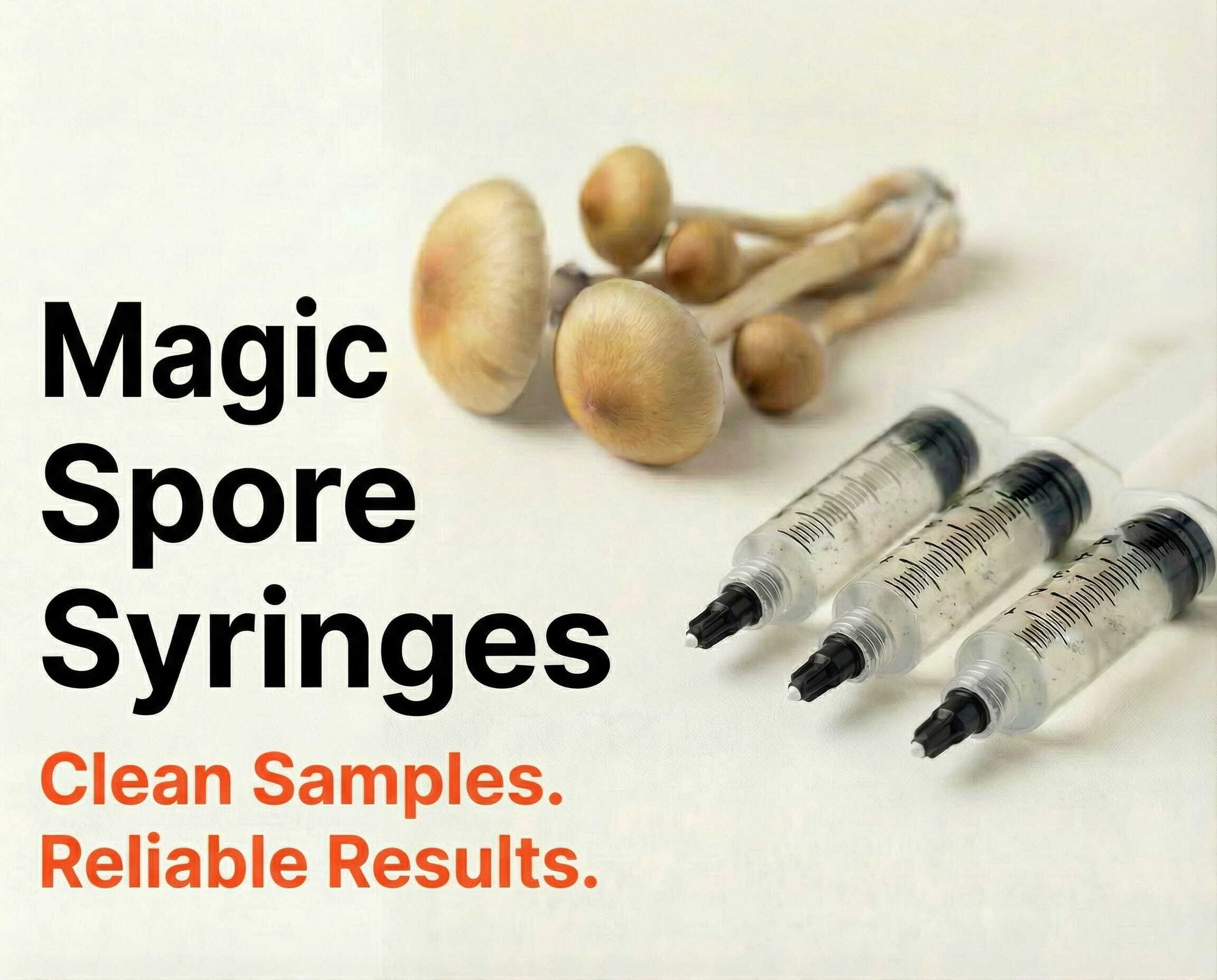
A spore syringe is a sterile syringe filled with a suspension of mushroom spores in water. Spores are the fungal equivalent of seeds — single reproductive cells that haven't germinated yet. Because nothing is alive and growing in the syringe, the spores stay dormant and stable until you're ready to work with them.
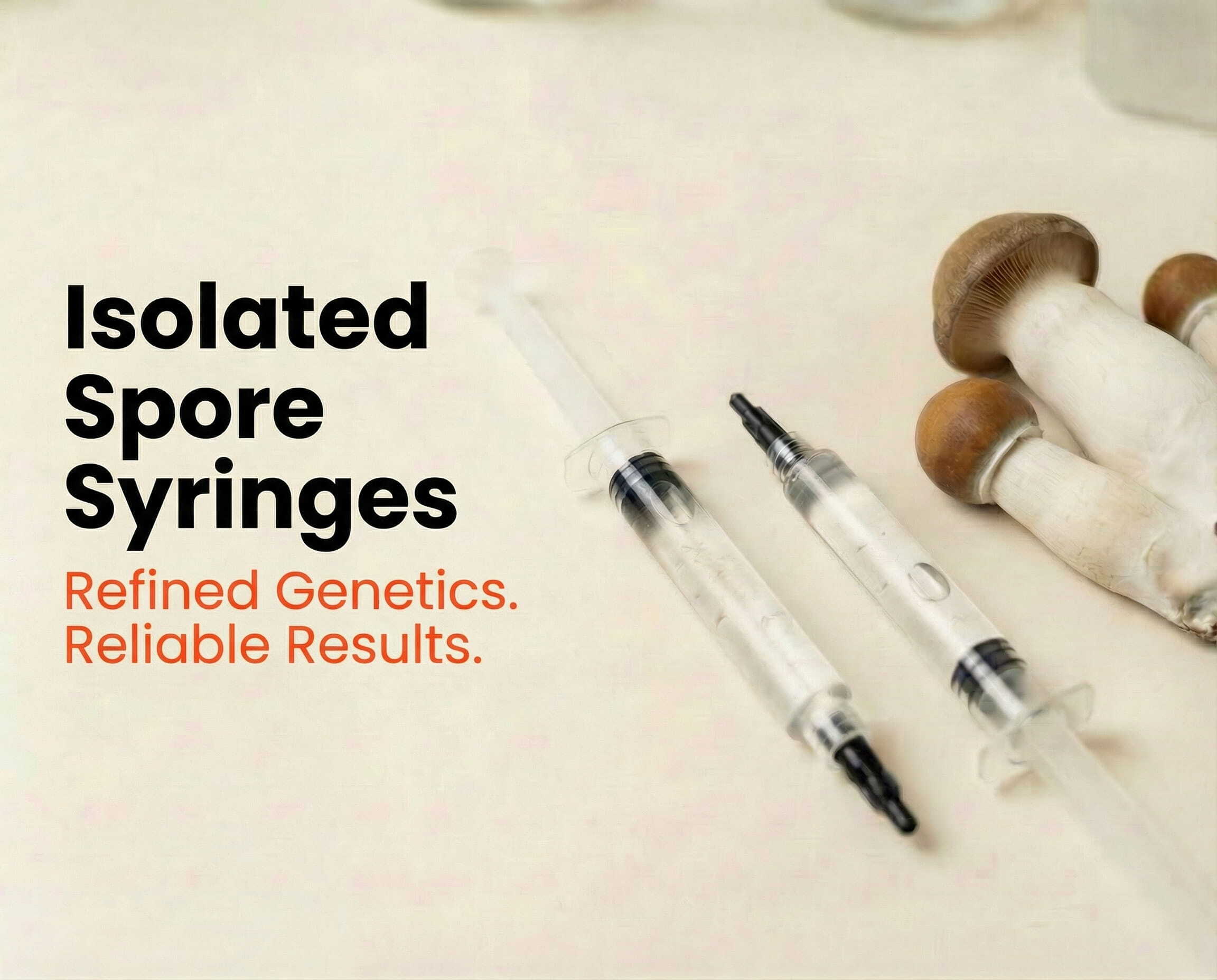
Spore syringes come in two flavors. A multi-spore syringe contains dozens of genetically distinct spores, giving you natural variation to observe and compare. An isolated spore syringe is the single-genetic option — and at Spore Genetics it is actually a liquid culture, not dormant spores (more on that below).
Their primary, legal use is microscopy and taxonomy — studying spore size, shape, and color under magnification. New to them? See how to use a spore syringe, or browse all spore syringes.
What Is a Liquid Culture?
A liquid culture (LC) is living mycelium suspended in a sterile, lightly sweetened nutrient broth. The spore has already germinated and grown into a mesh of fine white threads — the actual body of the fungus — so an LC is a step further along the life cycle than a spore syringe.
Because it skips the germination stage, a liquid culture colonizes substrate faster and more predictably. And since it's grown from a single selected culture, every syringe is a genetically uniform clone — you know exactly what you're getting each time.
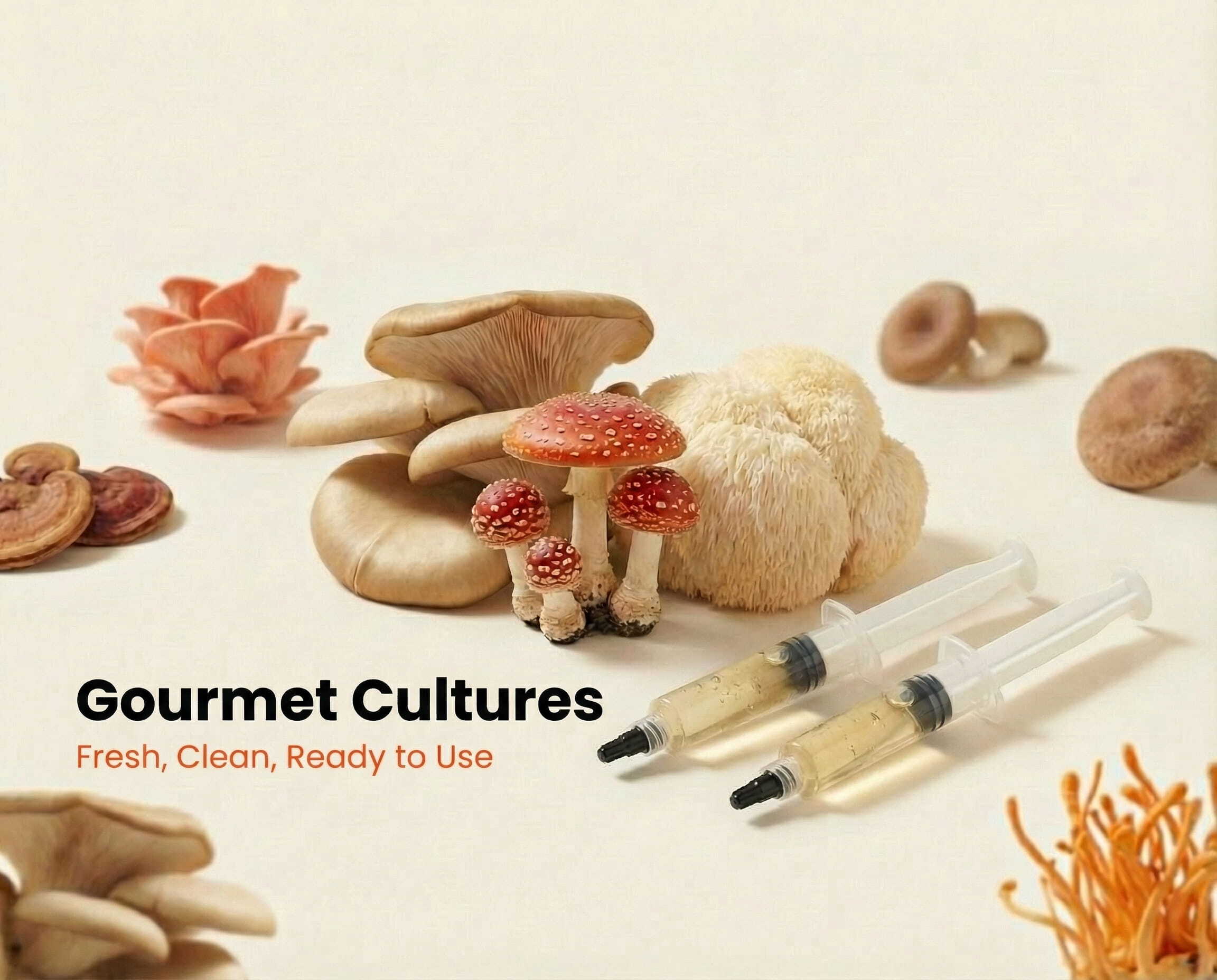
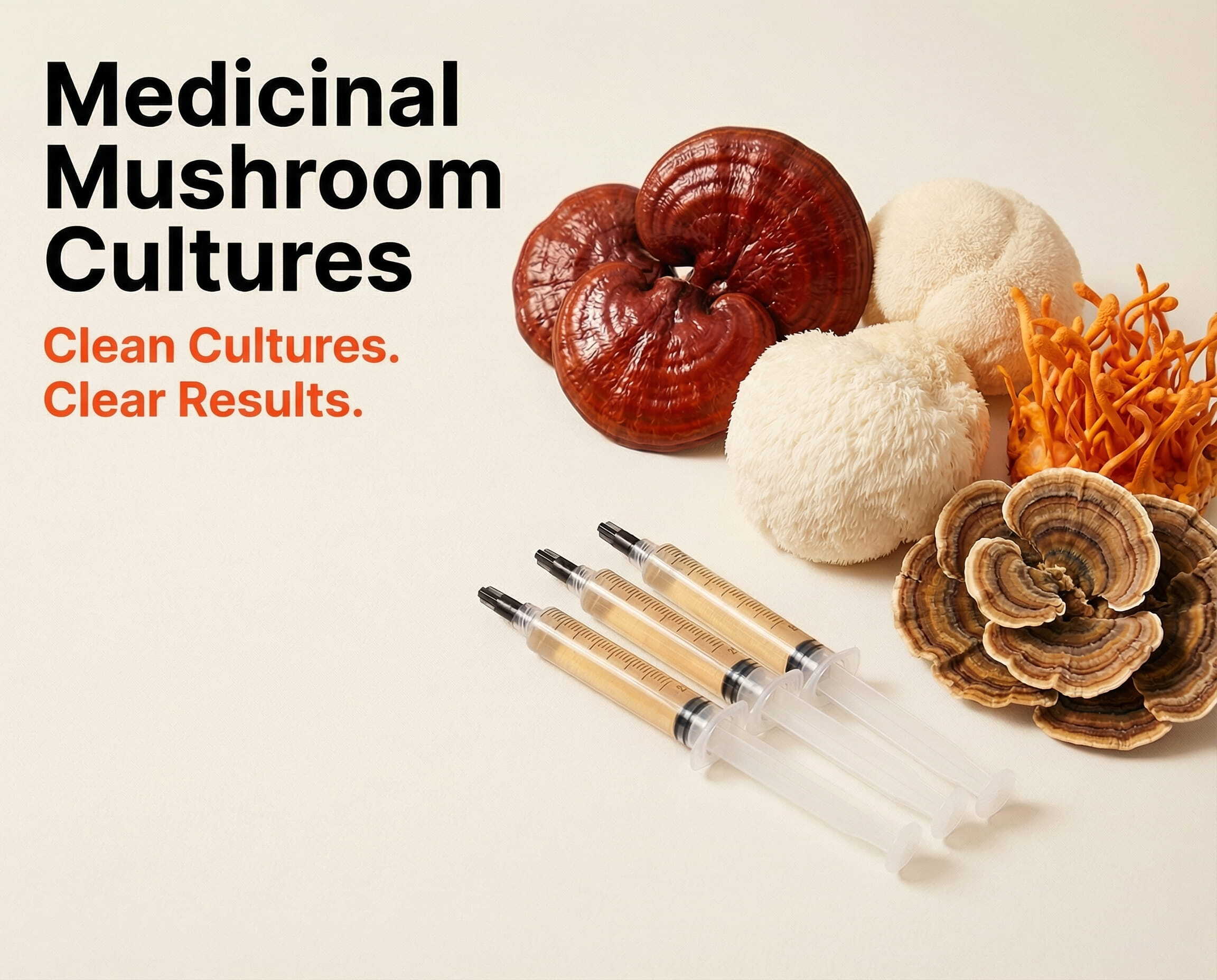
Liquid cultures are the go-to for cultivating gourmet and medicinal species like oyster, Lion's Mane, and reishi. Learn how to use a liquid culture, or browse our gourmet cultures.
Our Psilocybe isolates are liquid cultures too. Every isolated spore syringe and 30mL master isolate vial holds one stabilized genetic line in sterile solution rather than a mixed spore population. We sell them under our isolate label, they are formulated and tested to contain zero psilocybin and psilocin, and they are for microscopy and taxonomy research only.
Spore Syringe vs Liquid Culture, Side by Side
| Spore Syringe | Liquid Culture | |
|---|---|---|
| What's inside | Spores in sterile water | Living mycelium in nutrient broth |
| Life stage | Dormant, pre-germination | Already germinated & growing |
| Genetics | Multi-spore = a diverse population | A single uniform clone (our isolates included) |
| Primary use | Microscopy, taxonomy, exploring genetics | Fast, reliable cultivation of a known strain |
| Colonization speed | Slower — must germinate first | Faster — skips germination |
| Contamination | Can hide until growth begins | Visible sooner — you can inspect the growth |
| Shelf life | Long — months or more, refrigerated | Shorter — it's alive, so use it sooner |
| Best for | Studying spores & genetic diversity | Growers wanting speed & consistency |
Which Should You Choose?
Choose a spore syringe if…
You want to study spores under a microscope, compare genetics across a diverse population, build a taxonomy reference library, or preserve strains long-term. Spores are also where every new culture ultimately begins.
Choose a liquid culture if…
You're cultivating a known gourmet or medicinal species and want the fastest, most consistent colonization. An LC skips germination, clones a single reliable genetic, and gets you to a colonized substrate sooner.
Many researchers keep both on hand: spore syringes for exploration and study, liquid cultures for dependable grows. Wondering where our isolated syringes fit? They are liquid cultures — see isolated spore syringe vs liquid culture for the full explanation.
A quick note on use: Psilocybe spore syringes and isolates are sold strictly as microscopy and taxonomy specimens — dormant spores contain no controlled compound, and our isolates are formulated and tested to contain zero psilocybin and psilocin. Gourmet, edible, and medicinal liquid cultures are offered for species that are legal to cultivate. As always, growing any species is the customer's responsibility to keep within the laws where they live.
Shop Spores & Cultures
Drag or scroll to explore →


Spore Syringe vs Liquid Culture FAQ
What's the difference between a liquid culture and a spore syringe?
The difference between a spore syringe and a liquid culture comes down to life stage. A spore syringe holds dormant, ungerminated spores — best for microscopy and long-term storage. A liquid culture holds living mycelium already grown from a spore — a single-genetic clone that colonizes a substrate faster because it skips germination. Spores come first in the life cycle; the liquid culture is the next step.
Is a liquid culture better than a spore syringe?
Neither is “better” — they do different jobs. A liquid culture is faster and more consistent for cultivating a known strain; a spore syringe is the right tool for microscopy, taxonomy, and exploring genetic diversity.
Can you make a liquid culture from a spore syringe?
In gourmet and medicinal cultivation, yes — germinating spores in a sterile nutrient broth produces a liquid culture. That's the general relationship between the two: spores come first, living mycelium follows.
Which is better for beginners?
For learning microscopy, a spore syringe is the natural starting point. For a first gourmet grow, a liquid culture is more forgiving because it colonizes quickly and you can watch the growth develop.
Which lasts longer in storage?
A spore syringe. Because the spores are dormant, a refrigerated syringe stays viable for months or more, while a living liquid culture is best used within a shorter window.
What's an isolated spore syringe, then?
It's our Psilocybe liquid culture: a single stabilized genetic line in sterile solution rather than a mixed spore population, sold under the isolate label and formulated and tested to contain zero psilocybin and psilocin. For the full explanation, see isolated spore syringe vs liquid culture.
Still Deciding?
If you're not sure whether a spore syringe or a liquid culture fits your project, tell us what you're working on and we'll point you the right way — just reach out via email. And if you're still getting your bearings, our mushroom spore basics guide covers the fundamentals.
Spore Genetics — Exceptional Mushroom Spores & Cultures