Are Mushroom Spores Legal? State-by-State
Are Mushroom Spores Legal?
In most of the U.S., yes — because dormant spores contain no controlled compound. Here's the state-by-state picture, and where the lines are drawn.
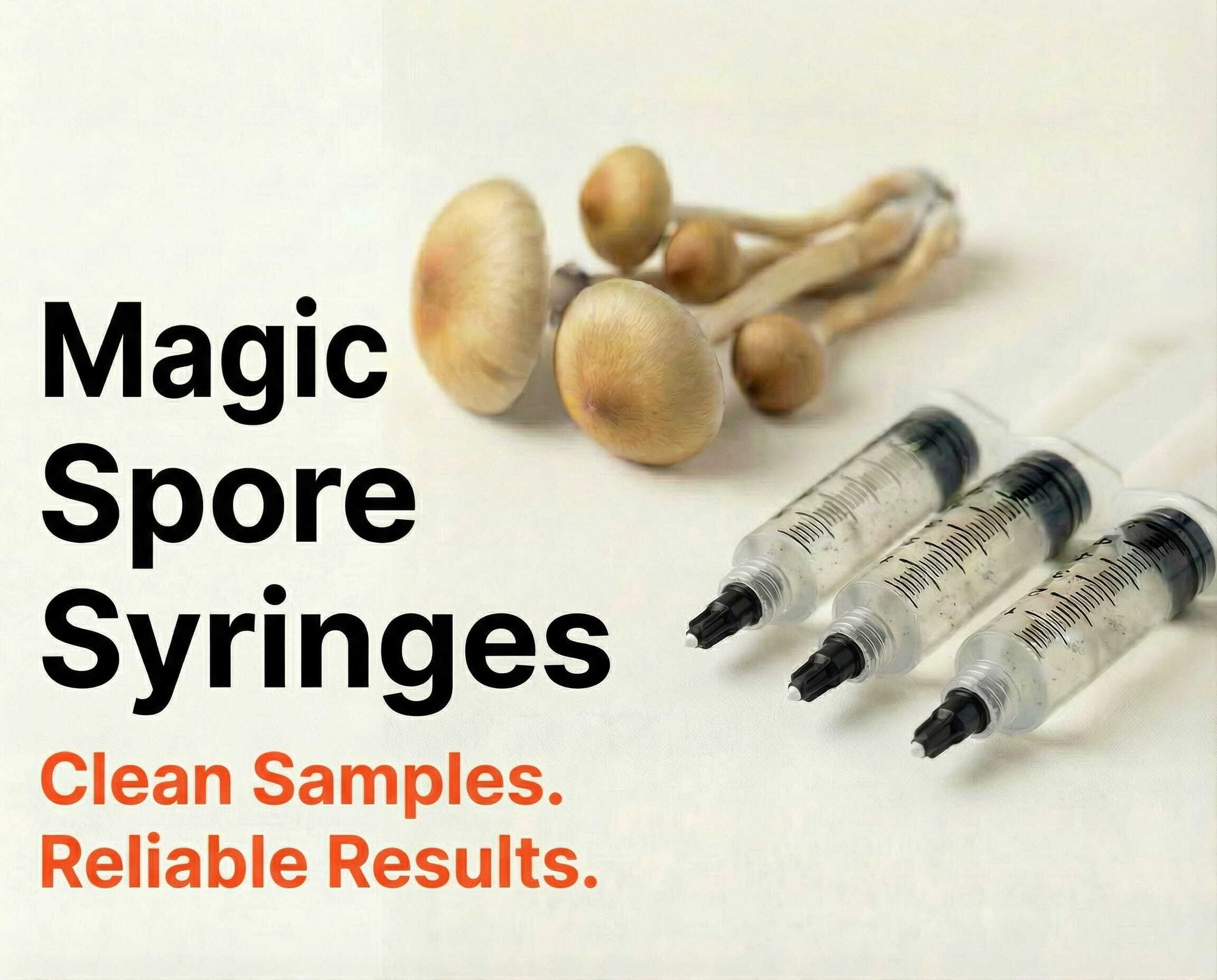
Psilocybin mushroom spores are legal to buy and possess in most U.S. states, because the spores themselves contain no psilocybin. The controlled compound only forms after the spores germinate and grow into mushrooms — so as microscopy and taxonomy specimens, dormant spores fall outside federal drug scheduling.
A handful of states are exceptions, and cultivation is a separate matter entirely. Here's how it breaks down — and if you're new to the topic, start with what are mushroom spores. Ready to order? Browse spore syringes for sale — we ship to every state except Georgia and Idaho.
The Federal Picture
Under federal law, psilocybin and psilocin are Schedule I controlled substances — but spores contain neither compound. Because federal scheduling targets the active substances, not the dormant reproductive cells, spores aren't federally controlled. That's why they can be sold and possessed for microscopy, taxonomy, and research across most of the country.
The line is the compound, not the container. Material that contains psilocybin or psilocin is a Schedule I substance — and cultivating psilocybin mushrooms is illegal under federal law regardless of the state you're in. This is the distinction behind the “for microscopy use only” framing you'll see across the hobby.
It's worth understanding why the compound isn't present in the spore. Psilocybin is a metabolite — the fungus produces it as it grows, not before. A dormant spore is a single reproductive cell, closer to a seed than to a plant: it carries the genetic blueprint but none of the chemistry. Psilocybin is produced later, as the fungus grows and fruits — it is not present in the spore. That biological fact is the entire basis for the legal distinction, and it's why the spores themselves can be studied under a microscope legally in most of the country.
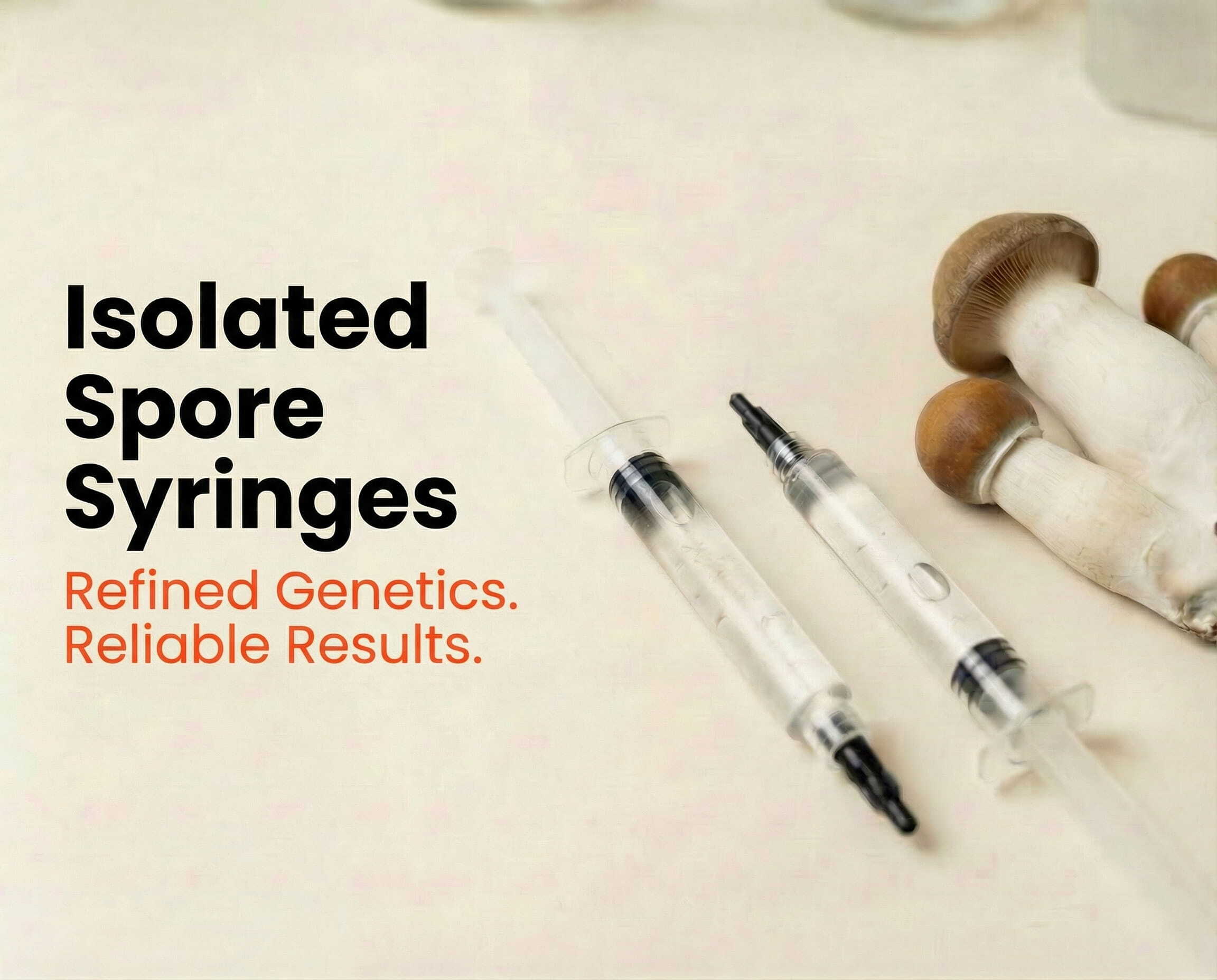
What about our isolates? Our isolated spore syringes and 30mL master isolate vials are liquid cultures — one stabilized genetic line in sterile solution rather than dormant spores. They are formulated and tested to contain zero psilocybin and psilocin, and we sell them on the same terms as our spores: for microscopy and taxonomy research only, shipped to every state except Georgia and Idaho.
State Restrictions & Where We Ship
Most states allow the purchase and possession of psilocybin spores for microscopy and taxonomy. A few states have passed their own laws addressing psilocybin spores specifically — and because those rules vary and can change, it's always worth confirming the current laws where you live before you order.
As a matter of our shipping policy, we do not ship psilocybe spores or isolates to Georgia or Idaho.
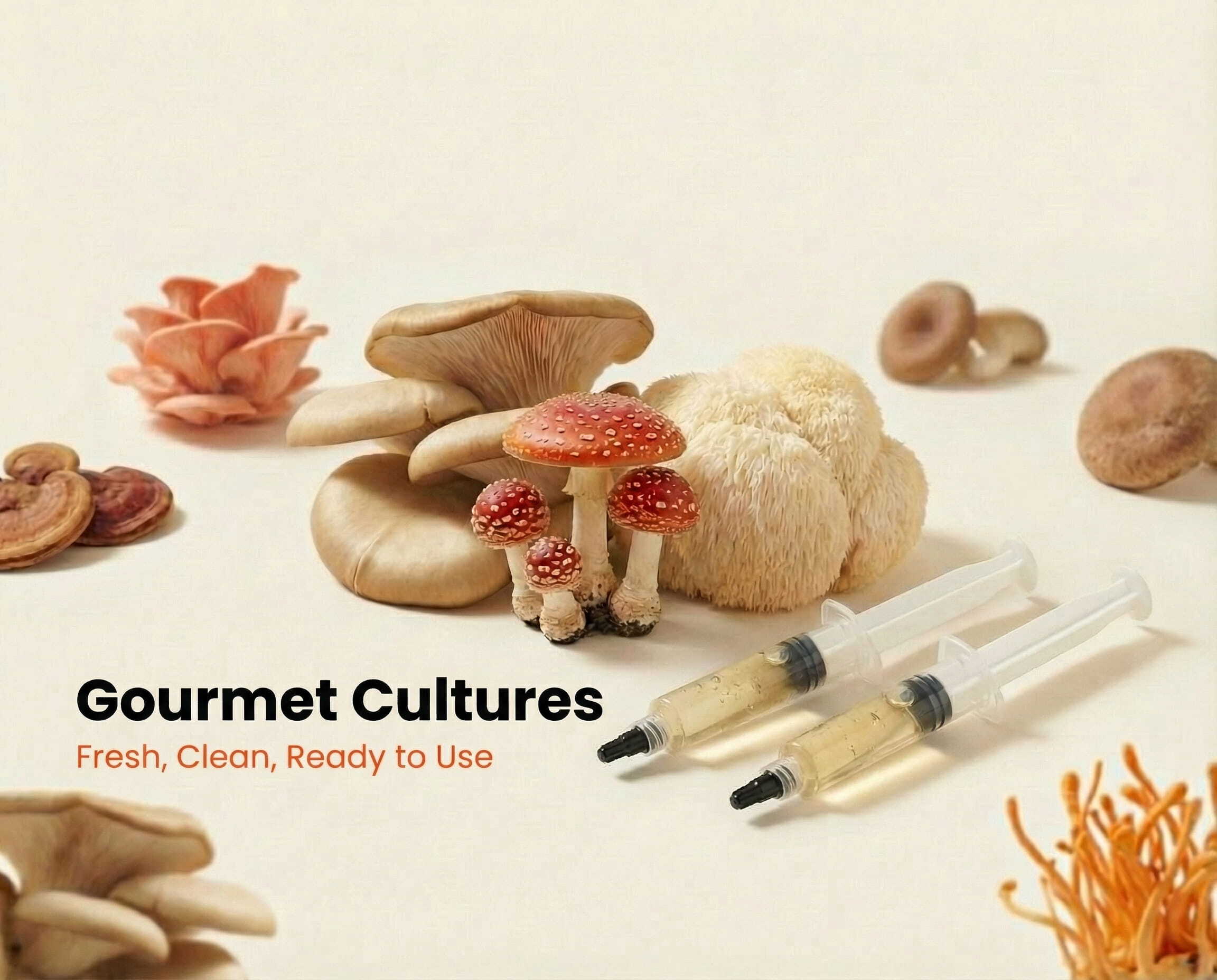
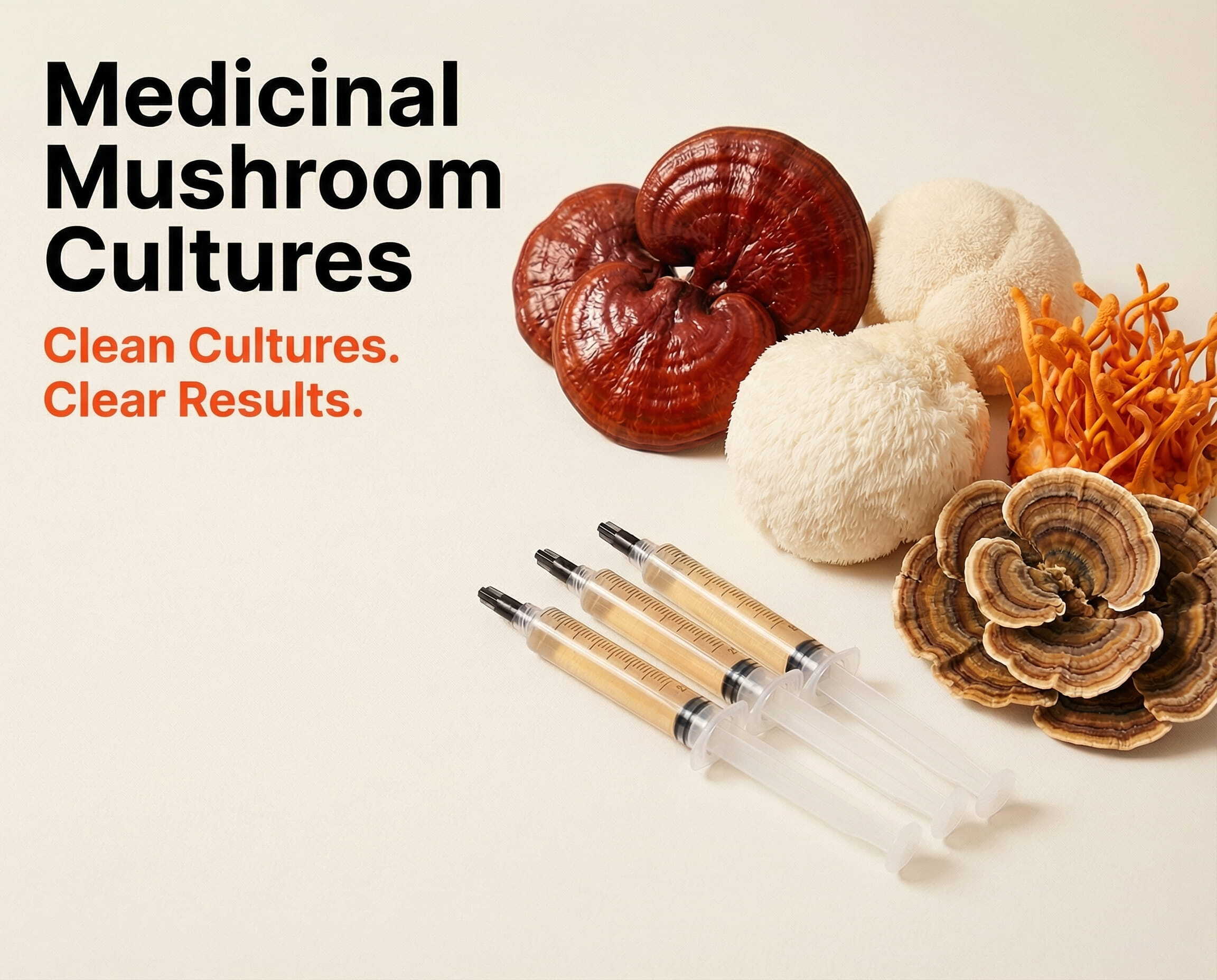
Our gourmet, edible, and medicinal cultures are legal to cultivate and ship to every U.S. state.
The Wider Reform Landscape
Spore legality is one piece of a much larger, fast-moving picture. While spores sit in their own category, the laws around psilocybin itself — the grown, psychoactive mushroom — have been shifting steadily at the state and local level. Understanding that backdrop helps make sense of where spore rules may head next.
Two states have moved furthest. Oregon was the first to establish a regulated, licensed psilocybin services framework, and Colorado followed with its own decriminalization measure and a regulated healing-center model. In both, the emphasis is on supervised, therapeutic access rather than open sale — and neither changes the federal status of the grown mushroom.
Beyond those two, a growing list of cities and counties have deprioritized enforcement of psilocybin possession — places like Denver, Oakland, Santa Cruz, Ann Arbor, Detroit, and Seattle among them. These are local enforcement-priority measures, not legalization, and they generally address the mushroom, not spores.
The takeaway for researchers: decriminalization of the mushroom and the legality of dormant spores are two separate tracks. A city deprioritizing psilocybin possession doesn't change spore law, and a state restricting spores doesn't necessarily reflect its stance on reform. Because all of this is in motion, treating any summary — including this one — as a starting point rather than the final word is the sensible approach.
Buying vs Growing
It's worth saying plainly: buying spores and growing them are two very different things in the eyes of the law. Purchasing and studying psilocybe spores and isolates is legal in most states; cultivating psilocybin mushrooms from them is not, and remains a federal offense. What you do with spores is entirely your responsibility — we supply them strictly as microscopy and taxonomy specimens.
This distinction matters even in states where spores are legal to own. Legality attaches to the specimen and its intended use — microscopy, taxonomy, identification, and research. The moment the intent or the activity shifts toward cultivation, the legal picture changes entirely, because what you'd be producing is a controlled substance. It's the single most important thing to understand before ordering, and it's why we're explicit that our spores are research specimens, full stop.
Please note: this page is general information, not legal advice. Laws differ by state and change over time — the summary above reflects our understanding as of 2026 and may not capture every local rule or recent update. Always confirm the current laws where you live before purchasing, and consult a qualified attorney for guidance on your specific situation.
Shop Spores & Cultures
Drag or scroll to explore →


Spore Legality FAQ
Are mushroom spores legal?
In most U.S. states, yes — psilocybin spores contain no controlled compound, so they're legal to buy and possess as microscopy and taxonomy specimens. A few states are exceptions (see below).
Which states restrict mushroom spores?
A few states have their own laws addressing psilocybin spores, and these can change — so it's best to check the current rules where you live. As for shipping, we're unable to send psilocybe spores to Georgia or Idaho; gourmet, edible, and medicinal cultures ship everywhere.
Why are spores legal but mushrooms aren't?
Because the law controls psilocybin and psilocin, not the fungus. Dormant spores carry no controlled compound, while the grown mushroom does — so the law treats the two very differently.
Is it legal to grow mushrooms from spores?
Growing psilocybin mushrooms is illegal under federal law, even where the spores are legal to own. We supply spores strictly for microscopy and taxonomy; cultivation is the customer's responsibility.
Are isolated spore syringes and liquid cultures legal too?
Our isolated spore syringes and 30mL master isolate vials are liquid cultures — one stabilized genetic line in sterile solution. Like our spores, they are formulated and tested to contain zero psilocybin and psilocin, and they are sold on the same terms: microscopy and taxonomy research only, and not shipped to Georgia or Idaho. As with everything on this page, confirm the current rules where you live.
Where is psilocybin decriminalized in the U.S.?
Oregon and Colorado have gone furthest, each establishing regulated, licensed psilocybin frameworks. A number of cities — including Denver, Oakland, Santa Cruz, Ann Arbor, and Detroit — have deprioritized enforcement of psilocybin possession. These measures address the grown mushroom, not spores, and are separate from spore legality.
Are gourmet and medicinal cultures restricted too?
No — gourmet, edible, and medicinal species like oyster, Lion's Mane, and reishi are legal to buy and cultivate across the U.S., and we ship them everywhere.
Questions About Availability?
If you're unsure what ships to your state, reach out any time via email. New to all of this? Our mushroom spore basics guide covers the fundamentals.
Spore Genetics — Exceptional Mushroom Spores & Cultures