
How to Use a Spore Print
Putting a Spore Print to Work
A print is a dense, long-lasting reserve of spores. Here's how to rehydrate it for the microscope — or draw a fresh spore suspension into a syringe.
A spore print holds spores as a dry deposit, so to work with it you rehydrate a small amount in sterile water. From there you can view the spores under a microscope or draw the suspension into a syringe — and a single print can be used many times over.
Not sure how a print compares to a syringe? See spore syringe vs spore print. Below: what you'll need and the steps.
What You'll Need
Your spore print — sealed and kept dry until you're ready. Browse spore prints.
Sterile water — distilled and sterilized; never tap water.
A clean slide (or a syringe & vessel) — a glass slide and coverslip for viewing, or a clean syringe if you're drawing up a suspension.
Sterile technique — alcohol or a flame, gloves, and still air to keep the spores clean. Browse mycology supplies.
Step by Step
Work clean
Sanitize your workspace, tools, and hands, and work in still air or near a flame. Contamination is the main thing that spoils a good print, so keep everything wiped down with alcohol.
Add sterile water
For the microscope, place a drop of sterile water on a clean slide. To make a suspension, draw sterile water into a clean syringe or sterile vessel instead.
Lift spores from the print
Gently touch the water to the print, or lightly scrape a small amount of the deposit into it. The print is dense — a little goes a long way, and a light touch keeps your sample clean and easy to read.
Prepare your specimen
For viewing, add a coverslip and study it — see how to study spores under a microscope. To make a syringe, draw the spore-water suspension back up into the syringe.
Label & store the rest
Note the strain and date, then reseal the print and return it to cool, dark, dry storage for next time — see how to store mushroom spores.
A few tips
• Use only distilled, sterilized water — tap water introduces contaminants and minerals.
• Take a light touch. An over-loaded sample looks cloudy and crowded under the scope.
• Keep the unused portion of the print bone dry — moisture is what shortens its life.
• One print goes far — stored well, it can be sampled many times over the years.
Our spore prints are supplied as microscopy and taxonomy specimens — the preparation covered here is for studying and preserving spores. Cultivating any species is a separate matter and the customer's responsibility to keep within the laws where they live.
Shop Spores & Supplies
Drag or scroll to explore →




Spore Print FAQ
How do you make a spore syringe from a print?
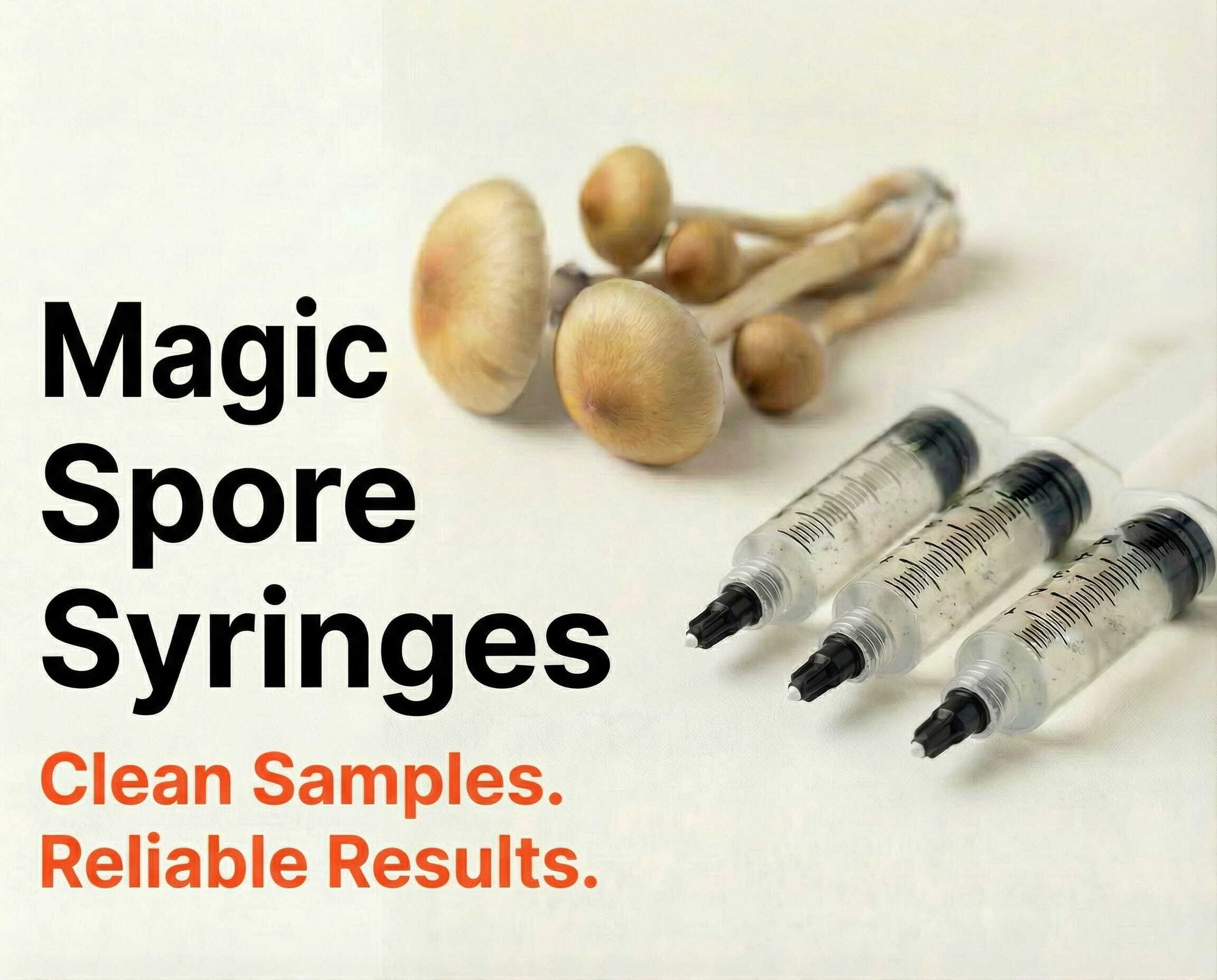
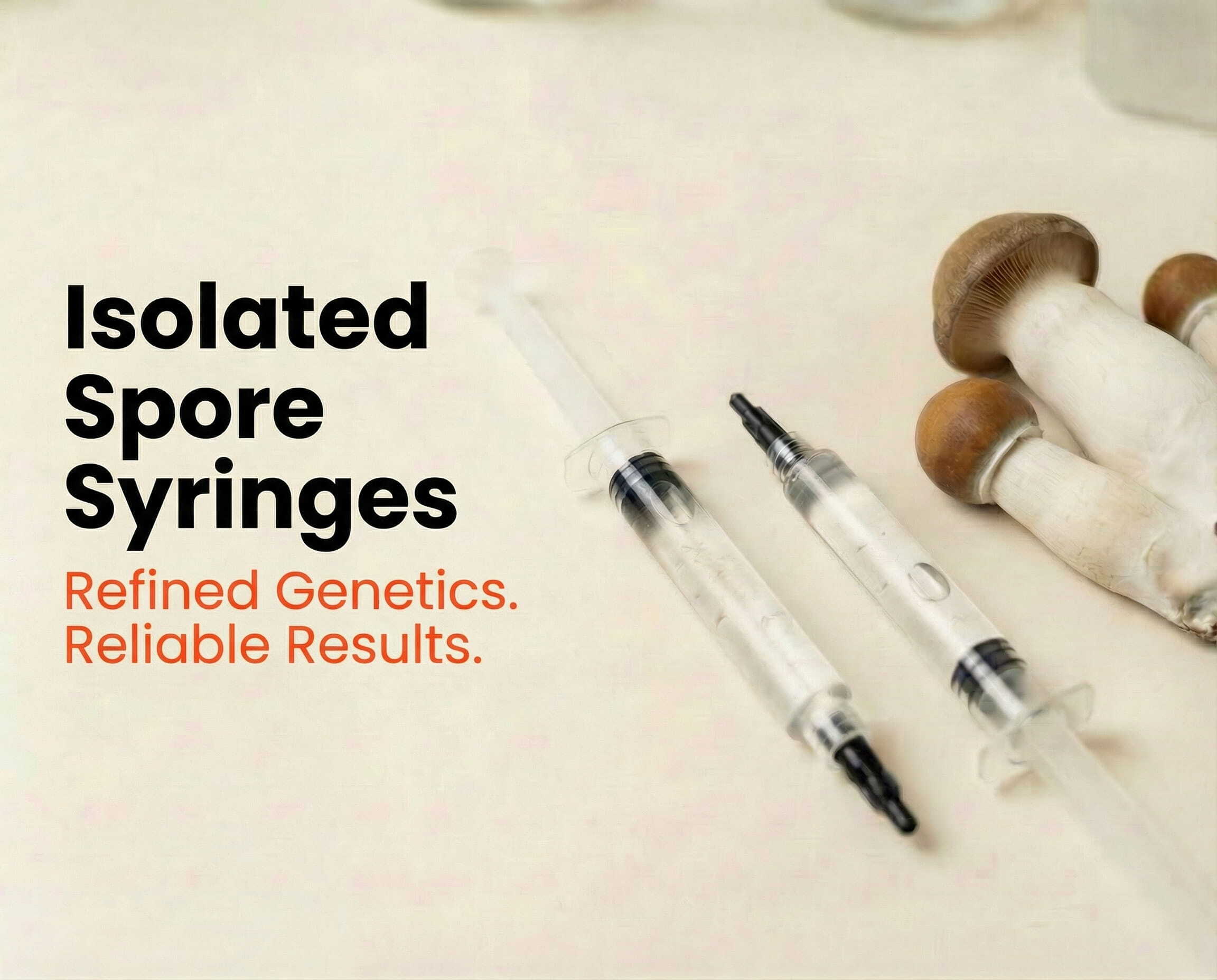
Work cleanly, lift a small amount of spores from the print into sterile water, then draw that suspension up into a clean syringe. One print can make several.
Do you have to rehydrate a spore print?
For most uses, yes — the spores are dry, so a drop of sterile water suspends them so you can view them on a slide or draw them into a syringe.
How much of the print should I use?
Very little. The deposit is concentrated, so a light touch gives a clean sample — and leaves the rest of the print for future use.
Can I reuse a spore print?
Yes — that's a big advantage of prints. Reseal it and store it cool, dark, and dry, and you can sample from it many times over the years.
Need a Hand?
Questions about working with your print? Reach out any time via email. New here? Our mushroom spore basics guide covers the fundamentals.
Spore Genetics — Exceptional Mushroom Spores & Cultures