
How to Store Mushroom Spores
Keep Them Cool, Dark & Dry
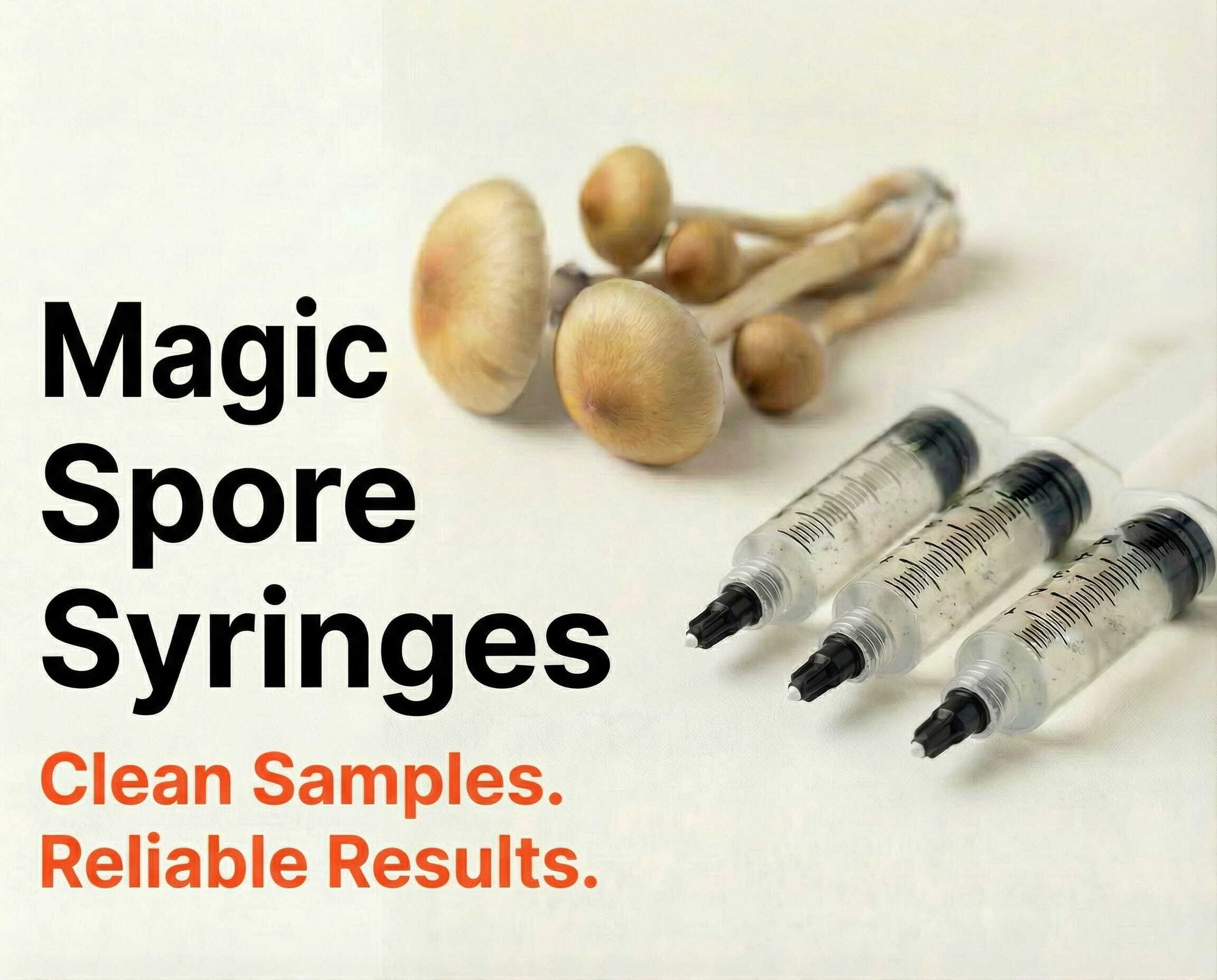
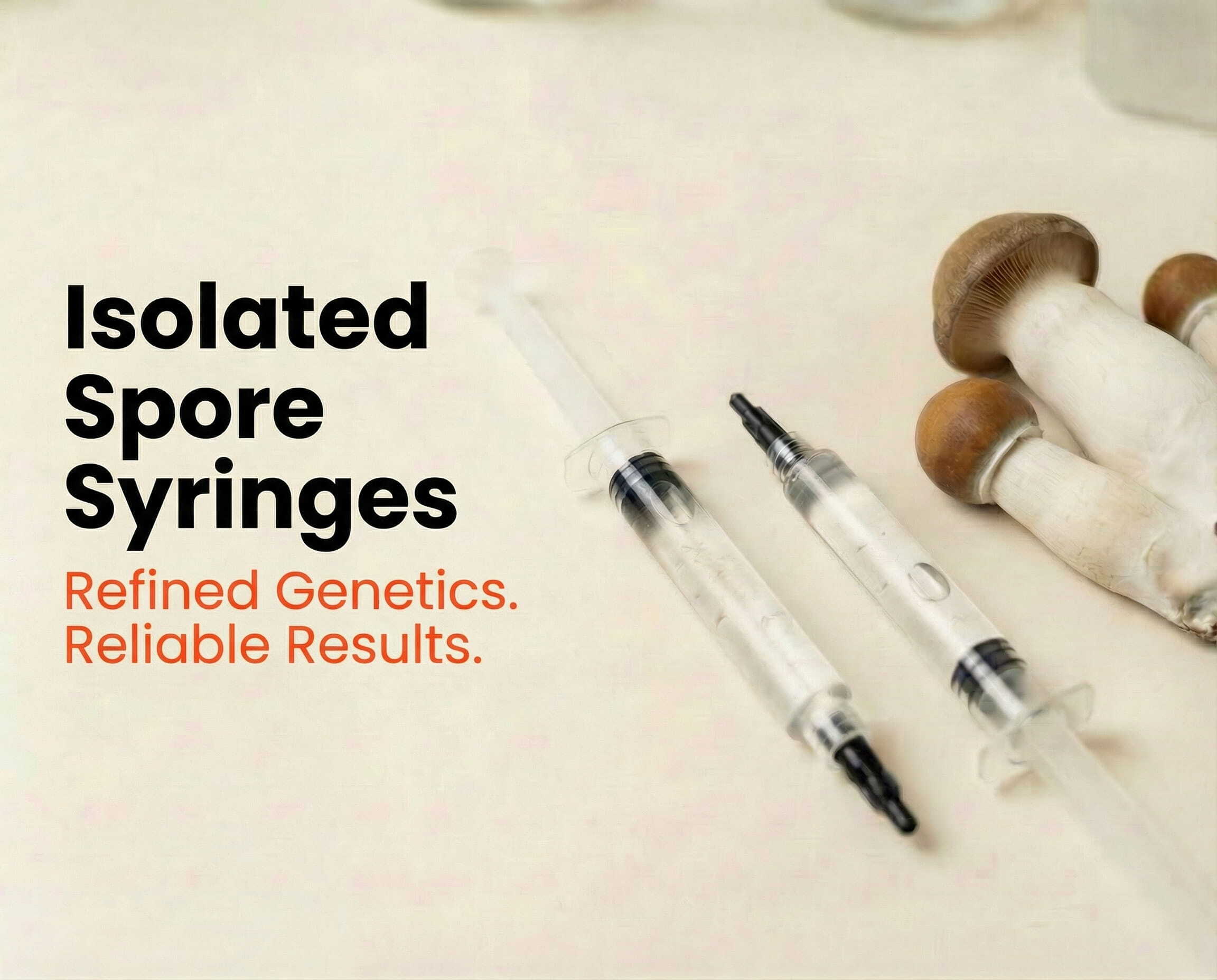
Stored right, spores stay viable for a long time. Here's how long each format lasts and exactly how to keep it at its best.
Store mushroom spores cool, dark, and dry — a refrigerator is ideal. Kept that way, a spore syringe stays viable for several months (often a year or more), and a dry spore print can last for years. Heat, light, and moisture are what shorten their life.
New to the formats? See what are mushroom spores. Below: how long each one lasts, and how to store it properly.
Shelf Life at a Glance
| Format | Typical shelf life | Where to keep it |
|---|---|---|
| Spore syringe | Several months — often a year or more | Refrigerated, sealed in its packaging |
| Spore print | Years, when kept dry | Cool, dark, dry — sealed and labeled |
| Liquid culture | Weeks to a few months — it's alive | Refrigerated; use while fresh |
Viability declines gradually with age — fresher is always more reliable, whatever the format.
Storing a Spore Syringe
Keep it in the refrigerator (not the freezer), sealed in its original packaging to keep light out and contaminants away. A steady, cool temperature around normal fridge range is perfect.
Don't freeze a water-based syringe — ice crystals rupture the spores and destroy viability. Let a refrigerated syringe return to room temperature before you handle it, and give it a gentle shake to redistribute the spores. Browse spore syringes.
Storing a Spore Print
Prints are the longest-lasting format because they're dry. Keep the print in a sealed, labeled envelope or between foil, and store it somewhere cool, dark, and dry — moisture is the enemy, since it can wake spores prematurely or invite mold.
Handled well, a print stays viable for years and can seed many syringes over its life. Learn more in spore syringe vs spore print, or browse spore prints.
Labeling matters more than people expect — once a print is sealed away, the deposit color is often the only clue you have left. Our spore print color chart covers what each genus prints, from purple-brown Psilocybe to jet-black Panaeolus.
Storing a Liquid Culture
A liquid culture is living mycelium, so it plays by different rules: refrigerate it, keep it dark, and use it while it's fresh and vigorous rather than storing it for the long haul. Let it warm to room temperature and swirl gently — don't shake hard — before use.
What Shortens Viability
Heat — warmth ages spores quickly; never leave them in a hot car, windowsill, or near appliances.
Light — UV in particular degrades spores, so keep everything sealed and in the dark.
Freezing a water syringe — ice crystals physically destroy the spores. Refrigerate, don't freeze.
Moisture & temperature swings — humidity ruins dry prints, and repeated warming/cooling stresses everything. Aim for steady and dry.
A quick note: our spore products are supplied as microscopy and taxonomy specimens. Proper storage keeps them viable for study; cultivating any species is the customer's responsibility to keep within the laws where they live.
Shop Spores & Cultures
Drag or scroll to explore →


Storage & Shelf-Life FAQ
How long do spore syringes last?
Refrigerated and sealed, a spore syringe typically stays viable for several months, and often a year or more. Viability slowly declines with age, so fresher is better.
Can you freeze a spore syringe?
No — freezing a water-based syringe forms ice crystals that rupture the spores and ruin it. Keep it in the refrigerator instead, never the freezer.
Do spore syringes need to be refrigerated?
Refrigeration is best for long-term storage. Short term, a cool, dark spot away from heat and light is fine — but the fridge keeps them viable the longest.
How long do spore prints last?
Kept dry, dark, and sealed, a spore print can stay viable for years — the longest-lasting way to preserve genetics. Moisture is the main thing that cuts that short.
How can I tell if spores are still good?
Stored properly and within its usable window, a sealed syringe or print should still be viable. Cloudiness, off colors, or an unusual smell in a syringe suggest contamination — when in doubt, start fresh.
Questions About Storage?
If you're not sure how to store something you've picked up, reach out any time via email. New to all of this? Our mushroom spore basics guide covers the fundamentals.
Spore Genetics — Exceptional Mushroom Spores & Cultures