Psilocybe Mexicana & Magic Truffles Explained
Posted by Spore Genetics Research Team on May 30th 2023
Psilocybe Mexicana & Magic Truffles Explained
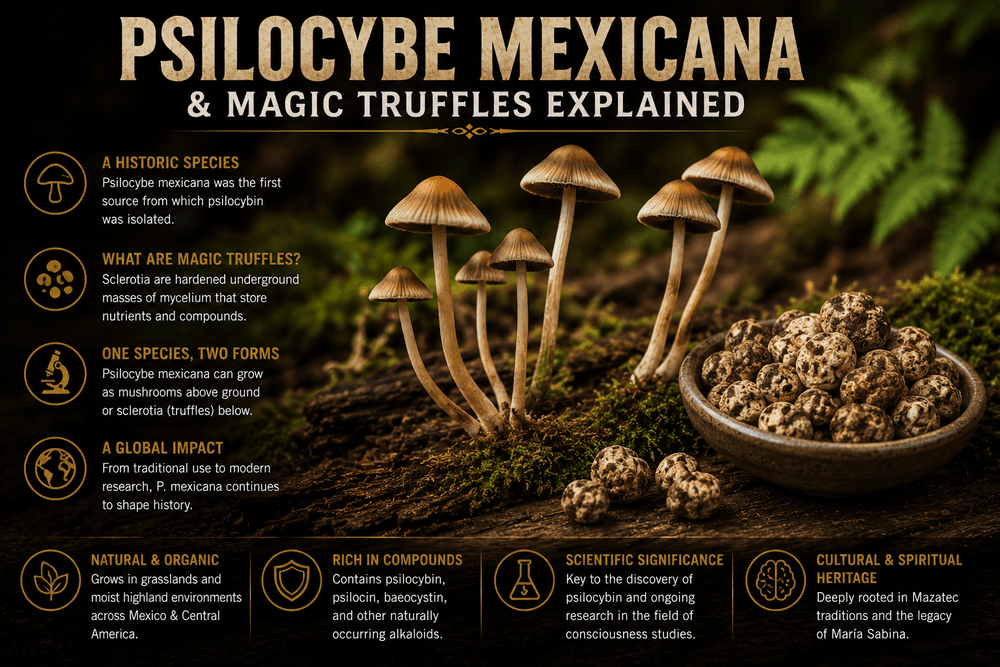
Psilocybe mexicana is a small psilocybin mushroom native to Mexico and Central America, historically significant as the species from which the compound psilocybin was first isolated in the lab. It's also one of the species known for producing sclerotia—the hardened underground masses popularly called "magic truffles."
Psilocybe mexicana sits at the crossroads of science and history, and it's closely tied to the concept of "magic truffles." Here's a clear, educational look at the species, what sclerotia actually are, and why this little mushroom matters so much.
What Is Psilocybe Mexicana?
Psilocybe mexicana is a small, slender grassland mushroom found in the highlands of Mexico and Central America, typically growing in meadows, mossy areas, and along the edges of fields. It has a long history of traditional use in the region—it's one of the species connected to the Mazatec mushroom traditions carried into the modern era by María Sabina. Its modest size belies its outsized place in scientific history. You can study the species under the microscope with our Psilocybe Mexicana isolated spore syringe, and the well-known Mexicana Galindoi variety.
The Species That Gave Us "Psilocybin"
Psilocybe mexicana holds a landmark distinction: it was from this species that Swiss chemist Albert Hofmann first isolated and identified the compound psilocybin in 1958. That makes it a foundational species in the entire history of magic mushrooms and modern psilocybin research—the mushroom that, quite literally, put psilocybin on the scientific map.
What Are Magic Truffles?
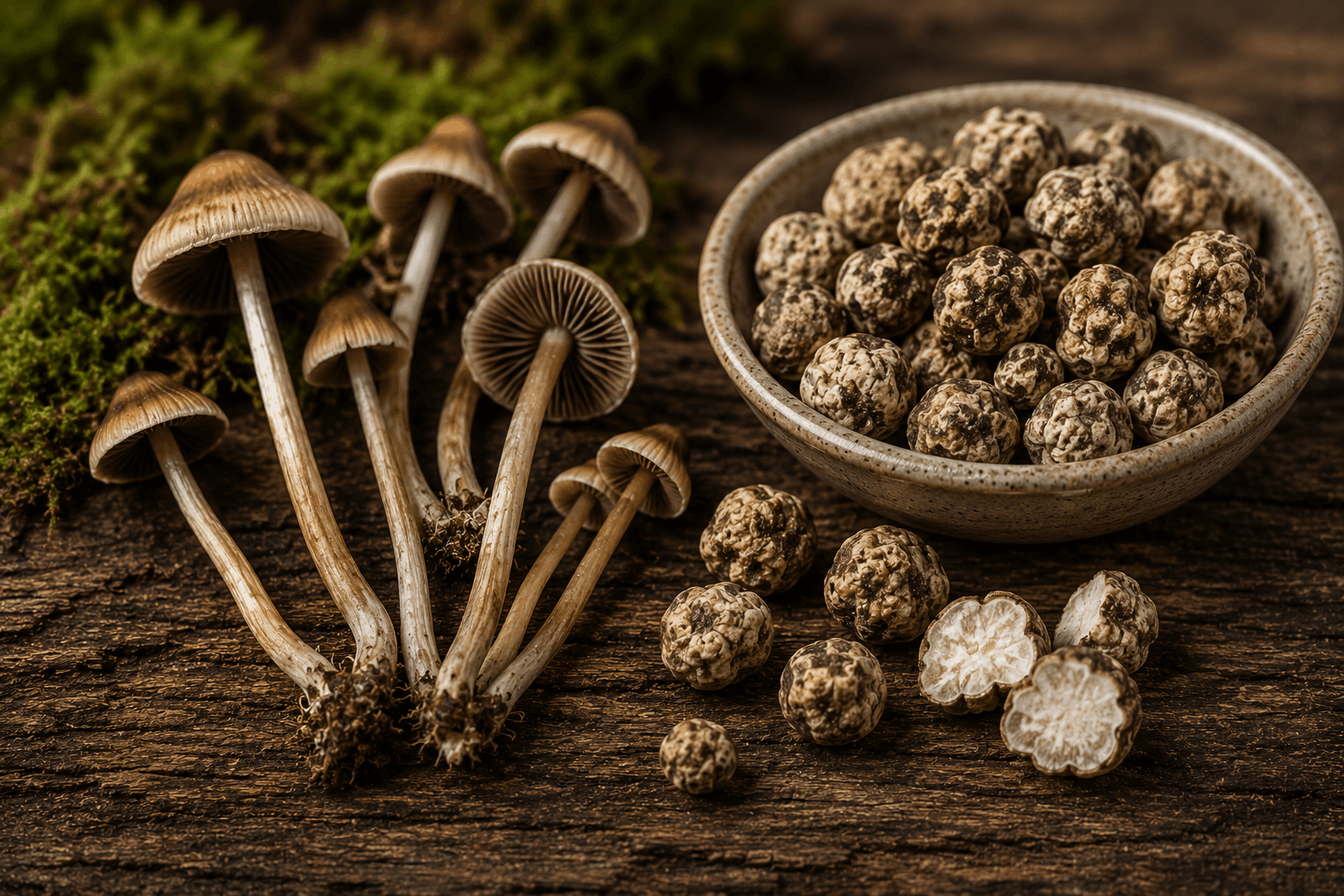
"Magic truffles" aren't truffles in the culinary sense at all. The term refers to sclerotia—compact, hardened masses of mycelium that certain Psilocybe species, including Psilocybe mexicana, form underground as a survival structure. When the fungus faces harsh conditions, it stores nutrients in these dense nodules, which can survive drought or fire and later grow into new mushrooms. Because they form below ground and look nothing like a typical mushroom, they picked up the "truffle" nickname. You can explore these in our Psilocybe mexicana truffle spores collection.
Psilocybe Mexicana & Tampanensis
Psilocybe mexicana isn't the only sclerotia-forming species. Its close relative Psilocybe tampanensis is also well known for producing sclerotia—famously nicknamed the "philosopher's stone." Both species are studied for their sclerotia as well as their mushrooms, which makes them a distinctive and fascinating corner of the Psilocybe genus compared to the more familiar Psilocybe cubensis.
Where It Fits in the Genus
Psilocybe mexicana is one of many species in the diverse Psilocybe genus—each with its own habitat, appearance, and characteristics. To see how the species relate and explore the wider group, visit our guide to the types of magic mushrooms, or browse the species we offer for microscopy study in our Exotic Mushroom Spores collection.
Frequently Asked Questions
What is Psilocybe mexicana?
It's a small psilocybin mushroom native to Mexico and Central America, historically important as the species from which psilocybin was first isolated. It also produces sclerotia, known as "magic truffles."
What are magic truffles?
They're sclerotia—hardened underground masses of mycelium that some Psilocybe species form as a survival structure. They're not true culinary truffles; the name comes from their underground, nodule-like form.
Why is Psilocybe mexicana historically important?
It's the species from which chemist Albert Hofmann first isolated the compound psilocybin in 1958, making it foundational to modern psilocybin science.
What's the difference between Psilocybe mexicana and tampanensis?
Both are sclerotia-forming species. Psilocybe tampanensis is especially known for its sclerotia (the "philosopher's stone"), while mexicana is best known historically as the source of the first isolated psilocybin.
Disclaimer: Psilocybe spores are sold strictly for microscopy, taxonomy, and research purposes. Cultivation of psilocybin mushrooms is illegal in many jurisdictions, including federally in the United States. This article is educational and not intended to encourage any activity that violates federal or local laws. Never consume wild mushrooms.