María Sabina & the Mazatec Magic Mushroom Tradition
Posted by Spore Genetics Research Team on May 8th 2023
María Sabina & the Mazatec Magic Mushroom Tradition
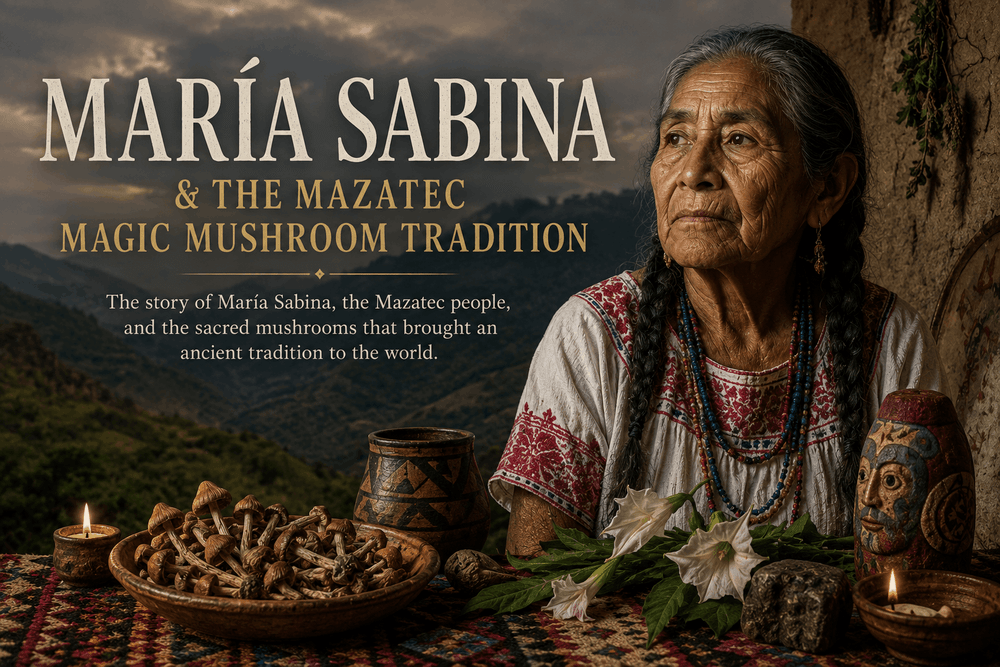
María Sabina was a Mazatec curandera (healer) from Oaxaca, Mexico, whose traditional use of sacred mushrooms brought the world's attention to psilocybin mushrooms in the mid-20th century. Her story—and the centuries-old Mazatec tradition she belonged to—is one of the most important chapters in the modern history of these fungi, and it's the cultural root behind names like the “Mazatapec” strain.
To understand how psilocybin mushrooms entered global awareness, you have to start in the mountains of Oaxaca. Here's the story of María Sabina, the Mazatec people, and the Mexican magic mushrooms at the heart of their tradition.
Who Was María Sabina?
María Sabina (1894–1985) was a Mazatec curandera who lived in the Sierra Mazateca of Oaxaca, southern Mexico. Within her community, she was a respected healer who conducted traditional ceremonies—called veladas—using sacred mushrooms as part of healing and spiritual practice. For the Mazatec, these mushrooms were regarded with deep reverence and had been part of Indigenous tradition in the region for generations.
How the Mazatec Tradition Reached the World
In 1955, an American researcher named R. Gordon Wasson visited María Sabina and participated in a velada. His account—published in a widely read magazine in 1957—introduced the Western world to the Mazatec mushroom tradition for the first time, and it sparked enormous scientific and public interest in psilocybin. This single moment is often credited with launching the modern era of psilocybin research and awareness.
The Mushrooms of the Tradition
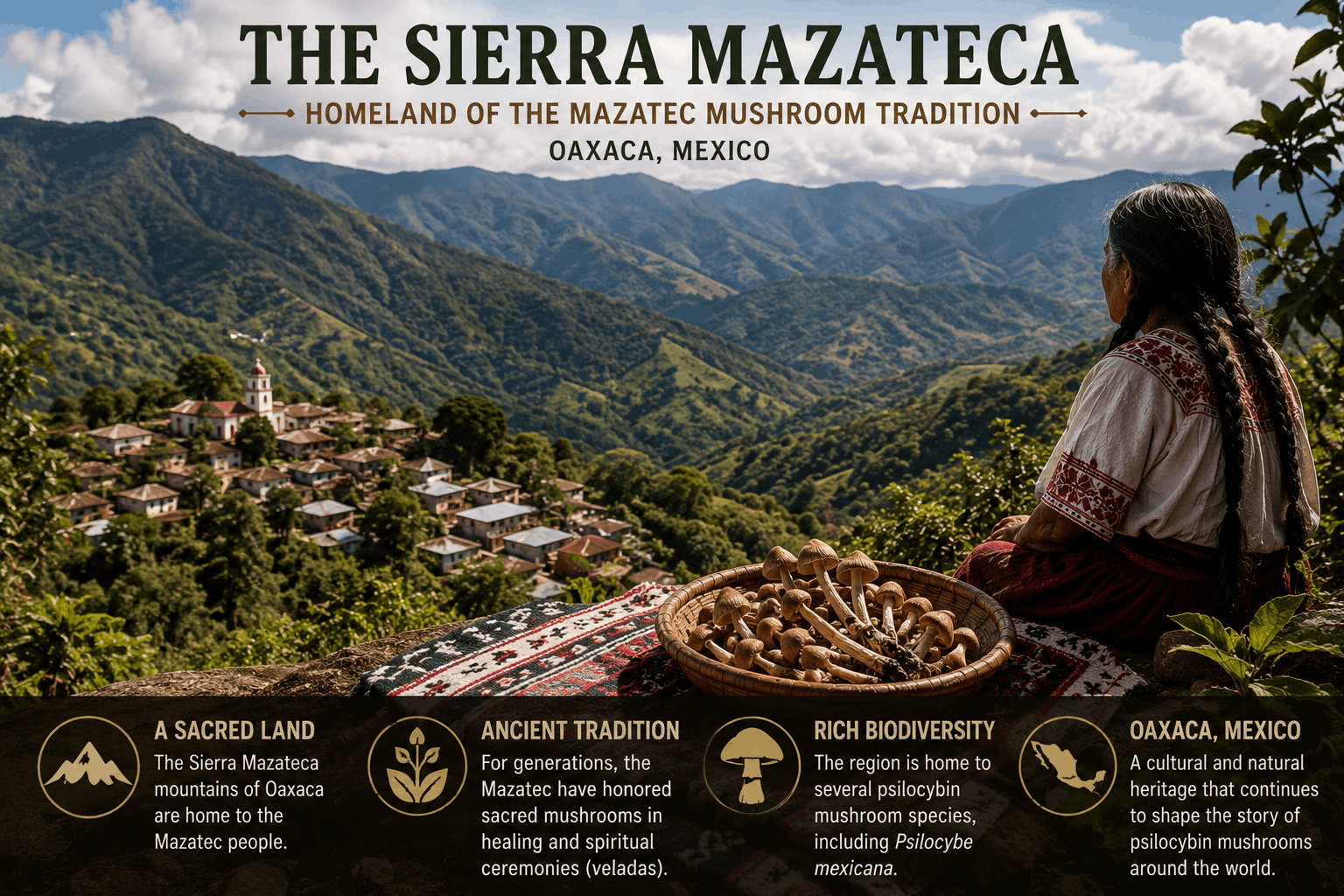
Several psilocybin mushroom species grow in the Oaxacan highlands and are associated with the region's traditions. Among the most historically significant is Psilocybe mexicana, a small species native to Mexico and Central America that was central to early scientific study—it was from this species that the compound psilocybin was first isolated in a laboratory in 1958. The region's connection to these mushrooms is also why the popular Mazatapec cubensis strain carries the name of the Mazatec people—a strain you can study for yourself, named in honor of that tradition.
Mexican Magic Mushrooms: The Sacred Species of Oaxaca
The mushrooms at the center of the Mazatec tradition belong to a wider family of Mexican magic mushrooms native to the cloud forests and highlands of Oaxaca and central Mexico. María Sabina and other Oaxacan healers referred to them collectively as los niños santos—“the holy children.” Several distinct species grow across the region, each carrying its own folk name:
- Psilocybe mexicana — the small, cone-capped species known locally as pajaritos (“little birds”); the species from which psilocybin was first isolated in the laboratory.
- Psilocybe caerulescens — called derrumbes (“landslides”) for its habit of fruiting on bare, disturbed soil; historically among the species used in Mazatec veladas.
- Psilocybe hoogshagenii — a slender species with a distinctive pointed cap, also tied to Oaxacan tradition.
- Psilocybe zapotecorum — named for the Zapotec people, found in wet, forested ground.
- Psilocybe aztecorum — a high-altitude species of the volcanic slopes of central Mexico.
These Mexican species are valued by taxonomists and microscopy researchers for their diversity and their deep place in the region's history. You can study Psilocybe mexicana specimens yourself, and see where they fit among the broader types of magic mushrooms.
The Velada: The Mazatec Healing Ceremony
Within Mazatec tradition, the mushrooms were never treated casually. They were taken in a velada—an all-night healing vigil led by a curandera like María Sabina, conducted in darkness and guided by chanting, prayer, and song. The ceremony was a form of spiritual medicine: a way to diagnose and treat illness, resolve hardship, and seek guidance. For the Mazatec, the mushrooms were sacred intermediaries treated with reverence, not recreation—a context very different from how the wider world would later encounter them.
A Complicated Legacy
María Sabina's story is also a cautionary one. The global attention that followed Wasson's visit brought waves of outsiders to her village, disrupting her community and her life, and she faced hardship as a result of the exposure. Her legacy is remembered with respect and complexity: she is honored as a figure who preserved and shared a sacred tradition, while her story also raises lasting questions about cultural respect, consent, and the impact of outside attention on Indigenous practices.
Why It Matters to Mycology
For anyone studying psilocybin mushrooms today, the Mazatec tradition is foundational context. It's a reminder that these species have a deep human and cultural history long predating modern research. To learn more about the mushrooms themselves, explore our guides to Psilocybe cubensis and the many types of magic mushrooms.
Frequently Asked Questions
Who was María Sabina?
She was a Mazatec curandera (healer) from Oaxaca, Mexico, known for her traditional ceremonies using sacred mushrooms. Her practice brought global attention to psilocybin mushrooms in the 1950s.
What are Mazatec mushrooms?
They're the psilocybin mushrooms traditionally used by the Mazatec people of Oaxaca, Mexico, in healing and spiritual ceremonies. Psilocybe mexicana and Psilocybe caerulescens are among the most historically significant.
What are Mexican magic mushrooms called?
In Oaxacan tradition they were known collectively as los niños santos (“the holy children”), with individual species carrying folk names such as pajaritos (Psilocybe mexicana) and derrumbes (Psilocybe caerulescens).
What mushrooms did María Sabina use?
The Mazatec veladas centered on native Oaxacan Psilocybe species—especially Psilocybe caerulescens (“derrumbes”) and Psilocybe mexicana—the sacred mushrooms of the region.
What is the connection to the Mazatapec strain?
The “Mazatapec” cubensis strain is named after the Mazatec region of Mexico, reflecting the area's deep association with sacred mushroom traditions.
Why is María Sabina important?
Her sharing of the Mazatec tradition in 1955 introduced the Western world to psilocybin mushrooms and helped launch modern psilocybin research—though it came at great personal cost to her.
Disclaimer: This article is provided for educational and historical purposes only. Psilocybe spores are sold strictly for microscopy and taxonomy research; cultivation of psilocybin mushrooms is illegal in many jurisdictions, including federally in the United States. This content is not intended to encourage any illegal activity. It also touches on Indigenous traditions, which we aim to describe with respect and accuracy.