
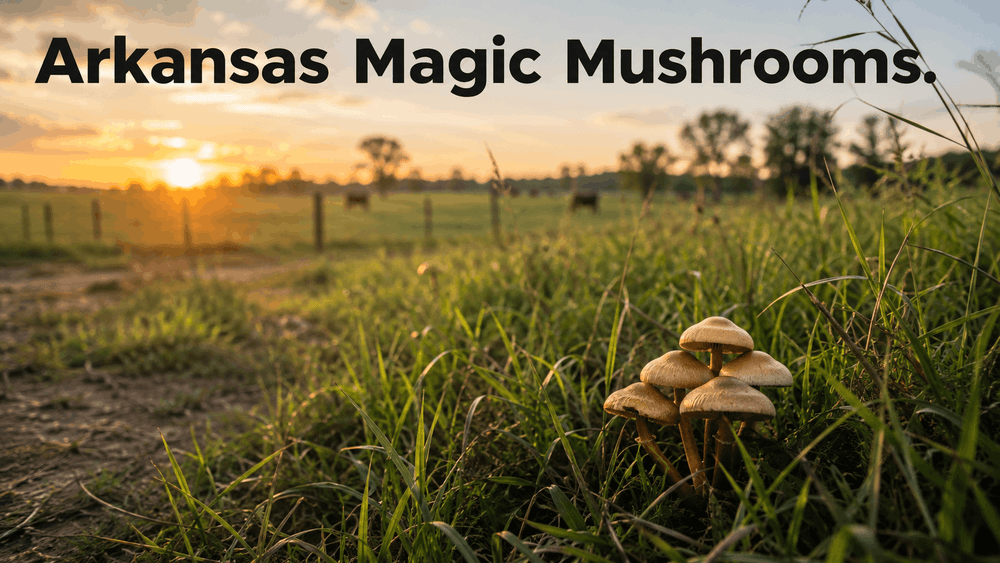
Arkansas Magic Mushrooms: Species, Habitat & Range
Posted by Spore Genetics Research Team on Jun 9th 2023
Arkansas Magic Mushrooms: Species, Habitat & Range
Arkansas sits in the warm, humid South-Central United States — cattle country with the heat, rainfall, and pastureland that Psilocybe cubensis needs to thrive. Unlike the cool, wood-loving Pacific Northwest, Arkansas is dung-loving mushroom territory. Here's which psilocybin species occur across the state, the climate and habitat behind them, and how they're studied.
This is a guide to natural range and ecology — not a foraging guide. Pastures are one of the richest fungal habitats there is, and several look-alikes (some dangerous) share the same ground, so read the safety section below.
Why Arkansas Is Cubensis Country
Climate decides everything. Arkansas's warm, humid, subtropical summers, frequent rain, and abundant grazing land create ideal conditions for dung-loving Psilocybe cubensis — the classic warm-weather psilocybin mushroom. Where the Pacific Northwest's species fruit on cold, wet wood, Arkansas's fruit on herbivore dung in warm pastures. It places the state firmly in the Gulf-influenced South, the natural home of wild cubensis. For the national picture, see our guide to where magic mushrooms grow.
The Key Species of Arkansas
Psilocybe cubensis
The headline species. Psilocybe cubensis is a warm-climate, dung-loving mushroom documented across the Gulf-influenced South, and Arkansas's cattle pastures and humid summers suit it well. It's the most widely studied psilocybin species in the world, with a dark purple-brown spore print and a signature blue-bruising reaction. Explore the many cultivated lines as microscopy specimens in our mushroom spores collection — from the classic Golden Teacher onward — and read our full Psilocybe cubensis guide.
Panaeolus cyanescens (Pan Cyan)
Another warm-climate, dung-loving species that can occur in the humid South, Panaeolus cyanescens is a slender, fast-fruiting mushroom that prints jet black rather than purple-brown. Study it as our Panaeolus cyanescens Estero spore syringe.
Panaeolus cinctulus (Banded Mottlegill)
One of the most widespread dung- and compost-loving species in North America, Panaeolus cinctulus turns up in lawns, gardens, and manured ground across Arkansas and well beyond.
Gymnopilus Species
Arkansas's woodlands host wood-rotting Gymnopilus species — orange-capped, bitter, rusty-brown-spored mushrooms sometimes called “big laughing gyms.” Their rusty print is an important separator (see safety, below).
What Else Grows in the Pasture — and the Safety Rule
Herbivore dung is one of the richest fungal habitats on earth, and the overwhelming majority of what fruits from it is not psychoactive. A single Arkansas pasture can produce psychoactive species, harmless ones, and genuinely dangerous ones within a few feet of each other. Two purple-brown-spored dung species — Protostropharia semiglobata and Deconica coprophila — print the same color as cubensis, so a print alone won't separate them; blue bruising helps, since only the active species bruise. Far more serious are the rusty-brown-spored mushrooms: some Conocybe species in grass and dung carry the same deadly amatoxins as the death cap. Rusty brown is a hard stop. Our spore print color chart shows where each genus falls, and our guide to deadly look-alikes covers the amatoxin risk in depth.
When and Where They Fruit
Arkansas's season follows the warmth: cubensis and the dung-lovers fruit through the warm, rainy months, typically appearing in pastures a day or two after warm rain rather than on any fixed calendar. This is ecology, not a treasure map — and pasture foraging carries real toxic-look-alike risk, which is exactly why understanding range is a scientific exercise, not a foraging invitation.
Studying Arkansas Species
The spores themselves contain no psilocybin, so they're studied legally as microscopy and taxonomy specimens across most of the country — the safe way to explore Arkansas's species with none of the identification risk. Browse them in our mushroom spores and isolated spore syringes collections, and see our guide on how to study spores under a microscope. For the legal picture, see are mushroom spores legal.
Frequently Asked Questions
What magic mushrooms grow in Arkansas?
Arkansas's warm, humid climate favors dung-loving species, led by Psilocybe cubensis, along with Panaeolus cyanescens, the widespread Panaeolus cinctulus, and wood-rotting Gymnopilus species.
Does Psilocybe cubensis grow wild in Arkansas?
Yes — Arkansas's humid summers and cattle pastures suit wild Psilocybe cubensis, which occurs across the Gulf-influenced South. Fruiting generally follows warm rain in grazed pastures.
When do magic mushrooms grow in Arkansas?
Through the warm, rainy months, usually a day or two after warm rain in pastures rather than on a fixed schedule.
Are magic mushrooms legal in Arkansas?
No — psilocybin is a federally Schedule I substance and Arkansas has not enacted any reform, so psilocybin mushrooms are illegal in the state. Mushroom spores, which contain no psilocybin, are used legally for microscopy in most states; see our legality guide for details.
What dangerous look-alikes grow in Arkansas pastures?
Rusty-brown-spored species are the main danger — some Conocybe contain deadly amatoxins. Several harmless purple-brown-spored dung mushrooms also resemble cubensis, which is why a spore print plus blue-bruising check, and ideally microscopy, matter so much.
Disclaimer: This article is educational and covers natural species range and taxonomy — it is not a foraging guide. Herbivore dung and pasture habitats contain toxic and potentially deadly species alongside harmless ones. Never consume any wild mushroom without expert confirmation. Psilocybe spores sold by Spore Genetics are provided strictly for microscopy, taxonomy, and research. We ship to every U.S. state except Georgia and Idaho.