
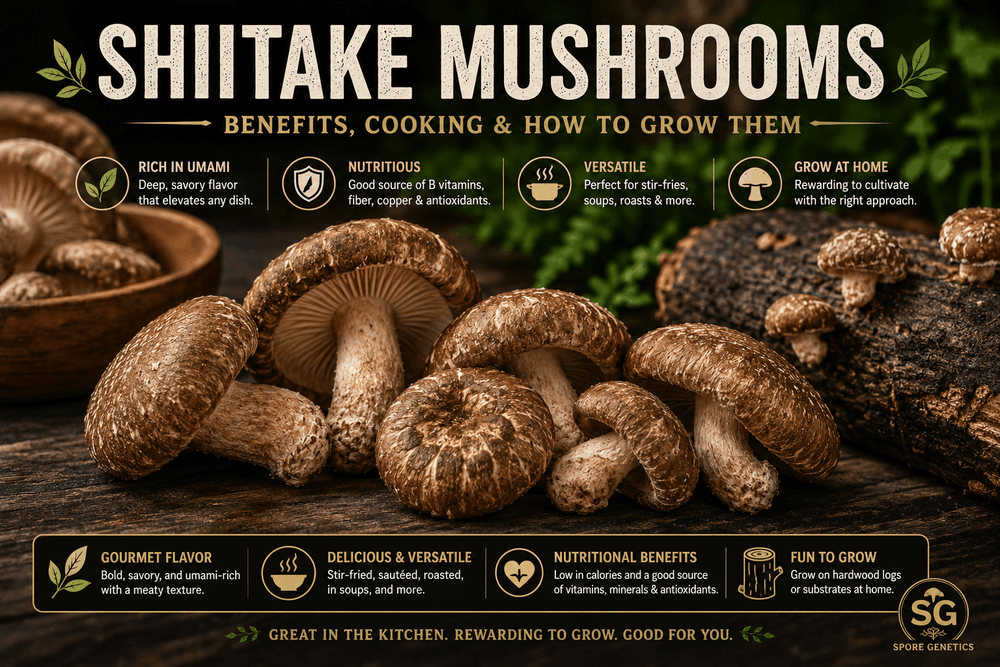
Shiitake Mushrooms: Benefits, Cooking & How to Grow Them
Posted by Spore Genetics Research Team on May 15th 2023
Shiitake Mushrooms: Benefits, Cooking & How to Grow Them
Shiitake mushrooms (Lentinula edodes) are one of the world's most popular and widely cultivated gourmet mushrooms, prized for their rich, savory, umami-packed flavor and meaty texture. A staple of East Asian cuisine for centuries, they're delicious fresh or dried, valued for their nutritional benefits, and—with the right approach—rewarding to grow at home.
From stir-fries to broths to plant-based mains, shiitake are one of the most versatile mushrooms in the kitchen. Here's a complete guide to what they are, their benefits, how to cook them, and how to grow your own.
What Are Shiitake Mushrooms?
Shiitake (Lentinula edodes) are gourmet mushrooms native to East Asia, recognized by their broad tan-to-dark-brown caps and slender, fibrous stems. They grow naturally on hardwood and have been cultivated for well over a thousand years. Their deep, savory flavor comes from natural compounds that make them one of the richest sources of umami in the mushroom world—which is why they're a cornerstone ingredient across so many cuisines.
What Do Shiitake Mushrooms Taste Like?
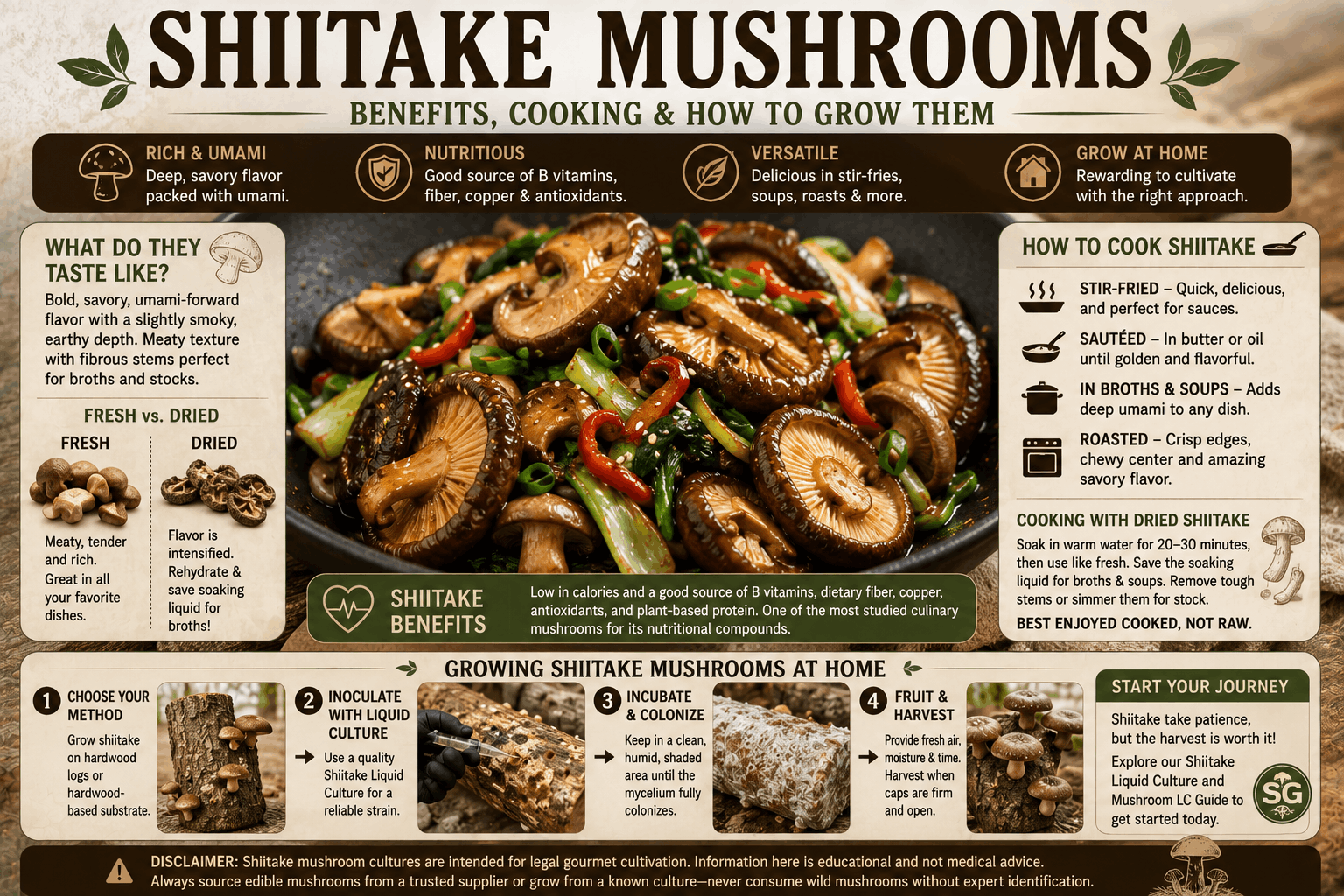
Shiitake have a bold, savory, umami-forward flavor with a slightly smoky, earthy depth—far richer than a standard button mushroom. Their caps are meaty and satisfying when cooked, while the stems, though tougher, are excellent for flavoring stocks and broths. Dried shiitake take this even further: drying intensifies their flavor, and rehydrating them creates a deeply savory soaking liquid that's prized for soups and sauces.
How to Cook Shiitake Mushrooms
Shiitake are endlessly versatile in the kitchen:
- Stir-fried — sliced caps cook quickly and soak up sauces beautifully.
- Sautéed — in butter or oil until golden and crisp-edged.
- In broths & soups — a classic umami base, especially using dried shiitake.
- Roasted — tossed with oil until the edges crisp for a savory, chewy bite.
Cooking with dried shiitake: soak them in warm water until soft (20–30 minutes), then use the caps as you would fresh—and save the flavorful soaking liquid as a broth. Remove the tough stems, or simmer them separately to enrich stocks. Note that shiitake are best enjoyed cooked rather than raw.
Shiitake Mushroom Benefits
Shiitake are low in calories and a good source of nutrients—B vitamins, dietary fiber, copper, antioxidants, and plant-based protein. But they're also a genuinely functional food: shiitake are one of the best-known sources of lentinan, a beta-glucan compound that has been widely studied for immune support, along with eritadenine and other bioactive compounds. That combination of rich flavor and researched compounds is why shiitake sit in both the gourmet and functional-mushroom worlds. You can explore them alongside other functional species in our medicinal mushrooms collection. As with any dietary change, consult a healthcare provider for personalized guidance.
Growing Shiitake Mushrooms at Home
Shiitake are traditionally grown on hardwood logs or supplemented hardwood-based substrates. They take a bit more patience than fast species like oysters, but they're deeply rewarding—and starting from a quality liquid culture gives you a reliable, known strain to work with. You'll find our Shiitake Liquid Culture in our gourmet cultures collection, and if you're new to the process, our mushroom liquid culture guide covers the basics. For faster-growing beginner options, see our guides to oyster mushrooms and the king oyster.
Shiitake Spores & Spore Print
Under the microscope, shiitake are a white-spored species: a Lentinula spore print comes out white to pale cream, and the spores are small, smooth, and ellipsoid, hyaline (colorless) under magnification—typical of the gourmet, wood-loving group and easy to distinguish from the dark prints of psilocybin species. As with most gourmet mushrooms, growers start shiitake from a liquid culture rather than spores, since a live culture of a known strain colonizes faster and keeps the genetics consistent. To take and read a print from your own harvest, see our spore print color chart and guide to studying spores under a microscope.
Frequently Asked Questions
What are shiitake mushrooms?
They're gourmet mushrooms (Lentinula edodes) native to East Asia, known for their rich, savory, umami flavor and meaty texture. They're among the most popular cultivated mushrooms in the world.
How do you cook shiitake mushrooms?
They're excellent stir-fried, sautéed, roasted, or simmered in broths. Remove the tough stems (or use them for stock), and cook the caps until golden. They're best enjoyed cooked, not raw.
How do you cook dried shiitake mushrooms?
Soak them in warm water for 20–30 minutes until soft, then use the caps like fresh ones—and save the savory soaking liquid as a flavorful broth.
What color is a shiitake spore print?
White to pale cream. Shiitake are a white-spored species, which makes their print easy to tell apart from the dark prints of many other mushrooms.
Is shiitake a medicinal mushroom?
Shiitake is considered both gourmet and functional—it's a well-known source of lentinan, a beta-glucan studied for immune support, along with other bioactive compounds. It's best viewed as a nutritious food, not a treatment.
Are shiitake mushrooms healthy?
Yes—they're low in calories and provide B vitamins, fiber, copper, antioxidants, and plant-based protein, and are among the more studied culinary mushrooms nutritionally.
Disclaimer: Shiitake mushroom cultures are intended for legal gourmet cultivation. Information here is educational and not medical advice. Always source edible mushrooms from a trusted supplier or grow from a known culture—never consume wild mushrooms without expert identification.