
King Oyster Mushroom: Flavor, Benefits & How to Cook
Posted by Spore Genetics Research Team on May 7th 2023
King Oyster Mushroom: Flavor, Benefits & How to Cook Them
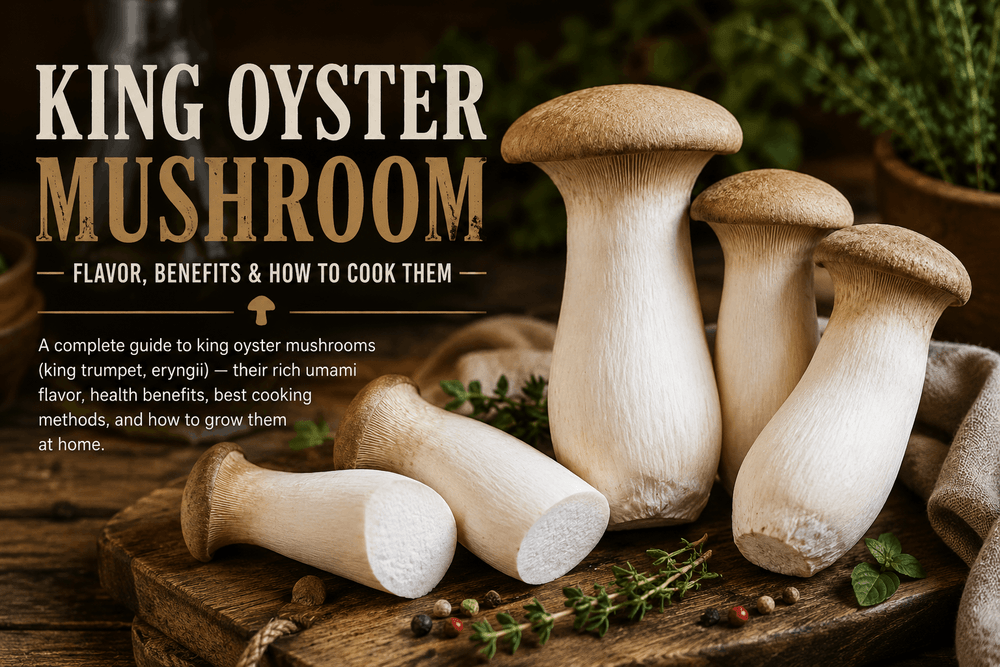
King oyster mushrooms—also known as king trumpet mushrooms or eryngii (Pleurotus eryngii)—are the largest species in the oyster mushroom family, prized for their thick, meaty stems and savory, umami-rich flavor. Their firm texture makes them one of the most versatile gourmet mushrooms in the kitchen, and they're a rewarding species to grow at home.
If you've seen those large, white-stemmed mushrooms with small tan caps, you've met the king oyster. Here's everything worth knowing—what they are, how they taste, their benefits, and how to cook and cultivate them.
What Are King Oyster Mushrooms?
The king oyster (Pleurotus eryngii) is the largest member of the oyster mushroom genus. Unlike the thin, fan-shaped clusters of blue or pearl oysters, king oysters grow as substantial individual mushrooms with a thick white stem and a small brownish cap. They go by several names—king trumpet, French horn mushroom, and eryngii—but they're all the same prized species. The stem is the star: dense, meaty, and the part most cooks prize.
What Do King Oyster Mushrooms Taste Like?
King oysters have a mild, savory, umami flavor with a subtle sweetness, and—most notably—a remarkably meaty, almost scallop-like texture when cooked. That firm bite is why they're such a popular plant-based substitute for seafood and meat. Sliced into rounds and seared, the stems are often used to mimic scallops; shredded, they make a convincing pulled "meat."
How to Cook King Oyster Mushrooms
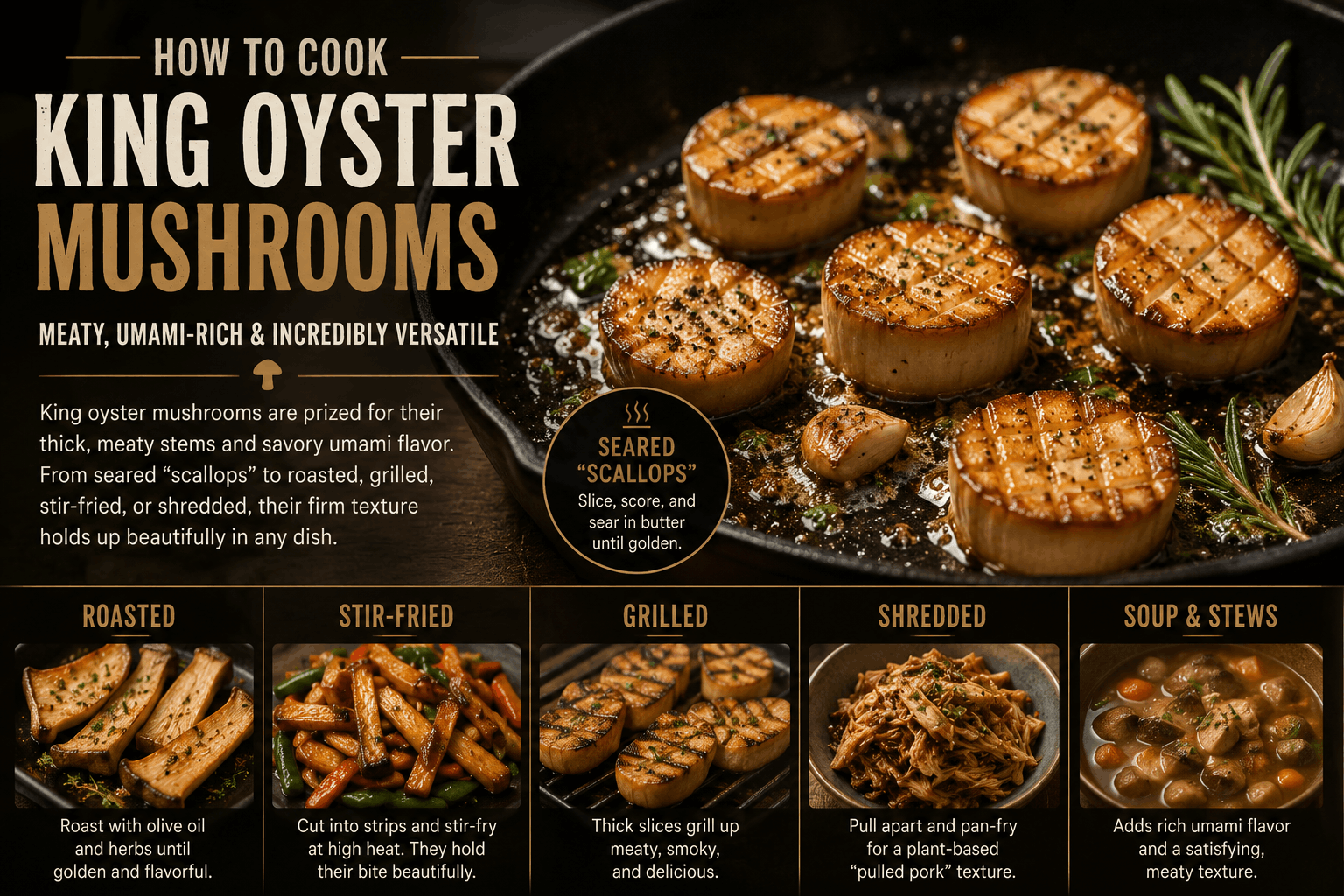
Their dense texture makes king oysters incredibly versatile:
- Seared "scallops" — slice the stem into thick rounds, score, and sear in butter until golden.
- Roasted — halved or sliced, roasted with olive oil and herbs until caramelized.
- Stir-fried — cut into strips; they hold their bite beautifully in high-heat dishes.
- Grilled — thick slices grill up meaty and smoky.
- Shredded — pulled apart and pan-fried for a plant-based "pulled pork" texture.
A simple standout: slice the stems into rounds, score a crosshatch on each side, and sear in butter and garlic until deeply golden—an easy mushroom "scallop."
King Oyster Mushroom Benefits
King oysters are low in calories and a good source of nutrients, offering dietary fiber, B vitamins, and antioxidants, along with plant-based protein. Their satisfying, meaty texture also makes them a filling, wholesome centerpiece for vegetarian and vegan dishes.
Growing King Oyster Mushrooms at Home
King oysters are a rewarding gourmet species to cultivate, growing well on supplemented hardwood-based substrates. The simplest way to begin is with a liquid culture, which gives you living mycelium of a known, consistent strain—you'll find our King Trumpet Oyster Liquid Culture ready to go. If you'd like to explore the wider oyster family, we also carry other varieties like Blue Oyster and Elm Oyster in our gourmet cultures collection. New to working with LC? Start with our mushroom liquid culture guide.
Frequently Asked Questions
What is a king oyster mushroom?
It's the largest species of oyster mushroom (Pleurotus eryngii), known for its thick, meaty stem and savory umami flavor. It's also called king trumpet or eryngii.
What do king oyster mushrooms taste like?
Mild, savory, and umami-rich, with a notably meaty, scallop-like texture when cooked—which is why they're popular as a seafood or meat substitute.
How do you cook king oyster mushrooms?
They're excellent seared (as "scallops"), roasted, grilled, stir-fried, or shredded. Their firm texture holds up to high heat without going soggy.
Are king oyster mushrooms healthy?
Yes—they're low in calories and provide fiber, B vitamins, antioxidants, and plant-based protein.
Disclaimer: King oyster mushroom cultures are intended for legal gourmet cultivation. Always source edible mushrooms from a trusted supplier or grow from a known culture—never consume wild mushrooms without expert identification.