

Oyster Mushrooms: Types, Benefits & How to Grow Them
Posted by Spore Genetics Research Team on May 10th 2023
Oyster Mushrooms: Types, Benefits & How to Grow Them
Oyster mushrooms (Pleurotus) are among the most popular gourmet mushrooms in the world—prized for their delicate, savory flavor, tender texture, and the fact that they're one of the easiest mushrooms to grow at home. They come in a range of beautiful varieties, from blue and pearl to vivid pink and golden, each with its own character.
Whether you're cooking them or growing them, oyster mushrooms are a fantastic place to start. Here's a complete guide to the main types, their benefits, and how to grow, study, and cook them.
What Are Oyster Mushrooms?
Oyster mushrooms are a group of gourmet mushrooms in the genus Pleurotus, named for their fan- or oyster-shaped caps that grow in shelving clusters. They have a mild, savory flavor with a subtle sweetness and a soft, velvety texture when cooked. Beyond the kitchen, they're famous among growers for being fast, forgiving, and productive—making them the go-to species for beginners.
Types of Oyster Mushrooms
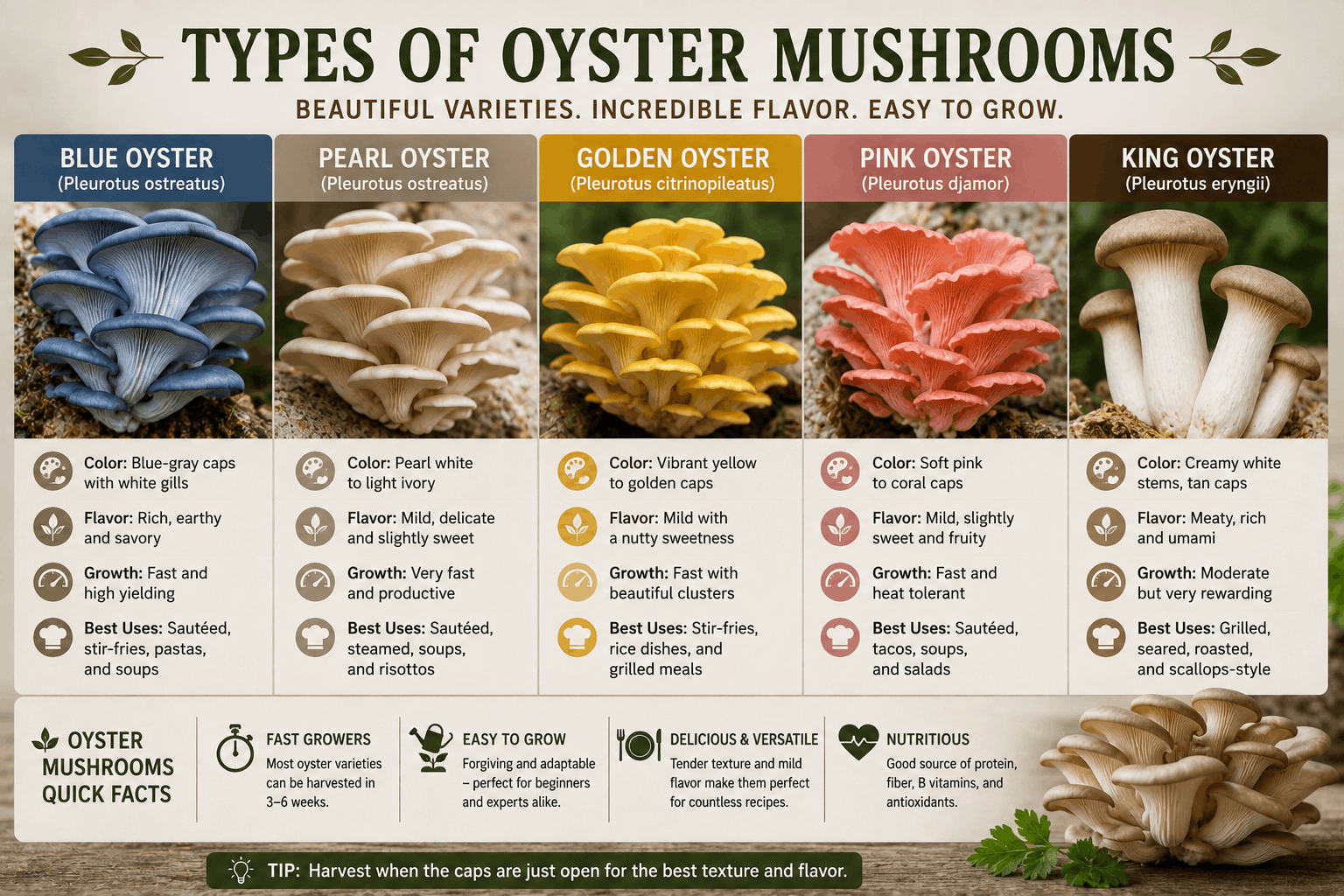
The Pleurotus family includes several stunning varieties, many of which we offer as cultures:
- Blue Oyster — robust and flavorful, with young caps showing a bluish tint; a grower favorite.
- Pearl Oyster — the classic pearl oyster mushroom, versatile with pale caps and a mild taste.
- Pink Oyster — vivid pink and fast-growing, with a meatier texture and bolder flavor.
- Golden Oyster — bright yellow, delicate, with a slightly nutty flavor.
- Elm Oyster — a hearty relative with firm texture and rich taste.
You'll find our full range in the gourmet cultures collection. For the largest member of the family, see our separate guide to the king oyster mushroom.
Growing Oyster Mushrooms at Home
Oyster mushrooms are widely considered the best mushroom for beginners—they colonize quickly, tolerate a range of conditions, and grow on many substrates (from straw to supplemented sawdust). The easiest way to start is with a liquid culture of a known strain. Browse our oyster varieties—Blue, Pearl, Pink, Golden, and Elm—in our gourmet cultures collection, and if you're new to the process, our mushroom liquid culture guide covers the basics.
Oyster Mushroom Spores & Spore Prints
Under the microscope, oyster mushrooms belong to the white-spored group. A Pleurotus spore print typically falls between white and a pale lilac-gray—quite different from the dark purple-brown print of Psilocybe or the jet black of Panaeolus, which is one quick way taxonomists tell groups apart. The spores themselves are small, smooth, and cylindrical to ellipsoid, and hyaline (colorless) under magnification. Because oysters colonize so aggressively, growers almost always start them from a liquid culture of a known variety rather than from spores—it's faster and keeps the strain consistent. If you'd like to take a spore print from your own harvest, our spore print color chart and guide to studying spores under a microscope walk through it.
How to Cook Oyster Mushrooms
Oyster mushrooms cook quickly and take on flavor beautifully:
- Sautéed — torn into pieces and pan-fried in butter or oil until the edges crisp.
- Stir-fried — a natural fit for Asian-inspired dishes; they cook in minutes.
- Roasted — tossed with oil and roasted until crisp-edged and golden.
- Fried “oyster” bites — battered clusters make a popular plant-based appetizer.
- In soups & pastas — they add savory depth without overpowering.
A simple favorite: tear into bite-sized pieces and sauté over medium-high heat without crowding the pan, letting them brown before seasoning—this brings out their best texture and flavor.
Oyster Mushroom Benefits
Oyster mushrooms are low in calories and a good source of nutrients, providing dietary fiber, B vitamins, antioxidants, and plant-based protein. They're a light, wholesome, and flavorful addition to almost any dish.
Frequently Asked Questions
What are oyster mushrooms?
They're gourmet mushrooms in the genus Pleurotus, known for their fan-shaped caps, mild savory flavor, tender texture, and how easy they are to grow.
What are the different types of oyster mushrooms?
Common varieties include blue, pearl, pink, golden, and elm oysters—plus the larger king oyster, which is a distinct species.
What color is an oyster mushroom spore print?
Pleurotus (oyster) spore prints range from white to a pale lilac-gray—a light print best captured on dark paper, and very different from the dark prints of psilocybin species.
Do you grow oyster mushrooms from spores or liquid culture?
Most growers use a liquid culture. Oyster mycelium is fast and vigorous, so starting from a live culture of a known variety is quicker and more consistent than starting from spores.
How do you cook oyster mushrooms?
They're excellent sautéed, stir-fried, roasted, or battered and fried. They cook quickly, so brown them without crowding the pan for the best texture.
Are oyster mushrooms easy to grow?
Yes—they're widely regarded as the best beginner mushroom, colonizing quickly and growing on many substrates. Starting from a liquid culture makes it even simpler.
Disclaimer: Oyster mushroom cultures are intended for legal gourmet cultivation. Always source edible mushrooms from a trusted supplier or grow from a known culture—never consume wild mushrooms without expert identification.