What Is Mycology? The Study of Fungi
Posted by Spore Genetics Research Team on Jun 17th 2023
What Is Mycology? The Study of Fungi
Mycology is the scientific study of fungi—the vast kingdom of organisms that includes mushrooms, molds, yeasts, and more. It's a field that touches medicine, food, agriculture, and ecology, and it's the science behind everything we do here at Spore Genetics. Whether you're a curious beginner or an aspiring researcher, understanding mycology is the first step into one of biology's most fascinating frontiers.
Fungi are everywhere—in the soil, in our food, in medicine, and quietly holding entire ecosystems together. The science that studies them is mycology. Here's what it is, what mycologists do, and how you can start exploring it yourself.
What Is Mycology?
Mycology is the branch of biology devoted to the study of fungi: their genetics, biochemistry, classification (taxonomy), ecology, and their many uses to humans. The word comes from the Greek mykes (“fungus”) and logia (“study”). In short, mycology is the study of fungi in all their forms—from the mushrooms you can see to the microscopic molds and yeasts you can't.
Fungi Are Their Own Kingdom
One of the first things mycology teaches is that fungi are not plants. They belong to their own biological kingdom, separate from plants and animals—though, genetically, they're actually more closely related to animals than to plants. Unlike plants, fungi don't photosynthesize; they absorb nutrients from their surroundings, and their cell walls are built from chitin, the same material found in insect exoskeletons. To go deeper on the basics, see our guide to what fungi are and the mushroom life cycle.
What Does a Mycologist Do?
A mycologist is a scientist who studies fungi. Their work is remarkably broad, because fungi reach into so many fields:
- Identification & taxonomy — classifying species and mapping how they relate, often using spores and microscopy.
- Medicine — fungi gave us penicillin and many other drugs, and functional species are studied for their compounds.
- Food & fermentation — from cultivated gourmet mushrooms to the yeasts behind bread, beer, and cheese.
- Agriculture & ecology — fungi partner with plant roots and recycle the nutrients that keep ecosystems alive.
Some mycologists work in laboratories and universities; others are dedicated amateurs who study, identify, and cultivate fungi as a serious hobby.
The Main Branches of Mycology
Because fungi are so varied, mycology splits into several areas of focus:
- Taxonomy & field mycology — identifying and classifying wild species.
- Medicinal mycology — studying functional mushrooms like lion's mane, reishi, and turkey tail.
- Culinary mycology — cultivating gourmet mushrooms like oysters and shiitake.
- Microscopy & spore study — examining spores under magnification to distinguish species.
How to Get Started in Mycology
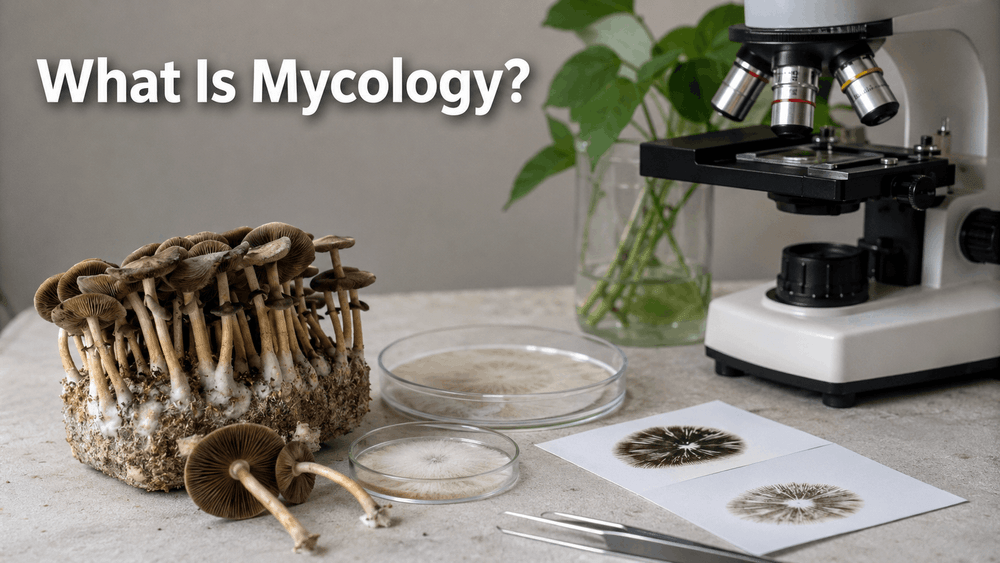
You don't need a university lab to begin—amateur (or “citizen”) mycology is one of the most accessible sciences there is. Great entry points include learning to take a spore print, studying spores under a microscope, and cultivating your own gourmet mushrooms from a liquid culture. Microscopy in particular is where much of the real science happens—and it's the legal, research-focused way to study even psilocybin species through their spores.
Frequently Asked Questions
What is mycology?
Mycology is the scientific study of fungi—including mushrooms, molds, and yeasts—covering their genetics, classification, ecology, and uses.
What is a mycologist?
A mycologist is a scientist who studies fungi. Their work spans identification and taxonomy, medicine, food and fermentation, agriculture, and ecology.
Is mycology the study of mushrooms?
Mushrooms are part of it, but mycology covers all fungi—molds, yeasts, and microscopic species included. Mushrooms are simply the fruiting bodies of certain fungi.
How do you become a mycologist?
Professional mycologists typically study biology and specialize in fungi, but many skilled amateur mycologists start with hands-on hobbies like spore microscopy, taking spore prints, and cultivating gourmet mushrooms.
Are fungi plants?
No. Fungi form their own kingdom, separate from plants and animals—and are genetically closer to animals than plants. They don't photosynthesize, and their cell walls contain chitin.
Disclaimer: This article is educational. Spore Genetics supplies spores and cultures for legal microscopy, taxonomy, and gourmet cultivation. Cultivation of psilocybin mushrooms is illegal in many jurisdictions, including federally in the United States.