Reishi Mushroom: Benefits, Uses & How It's Taken
Posted by Spore Genetics Research Team on May 24th 2023
Reishi Mushroom: Benefits, Uses & How It's Taken
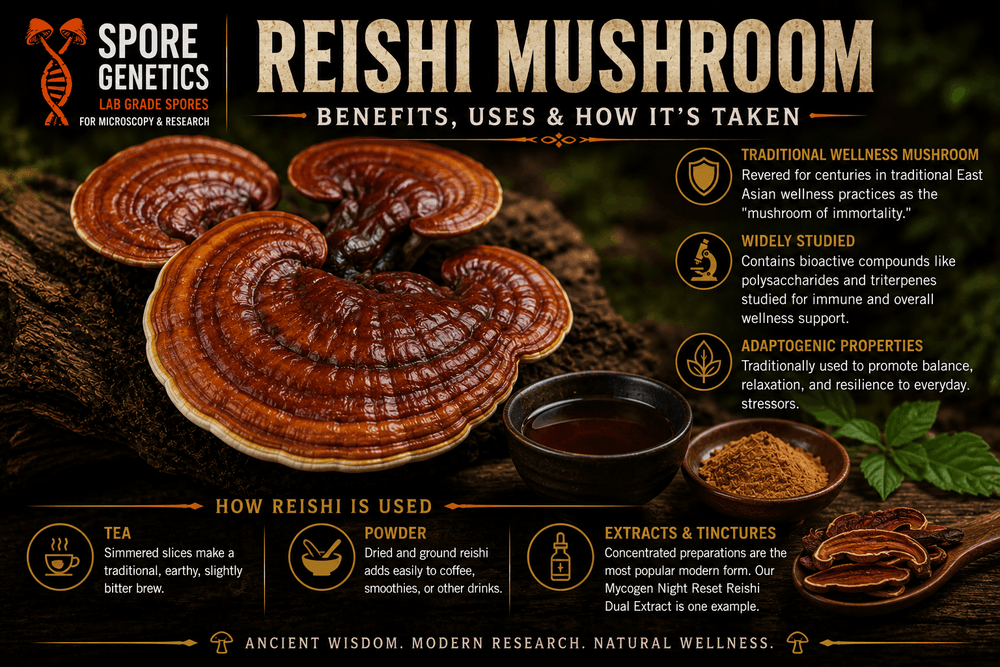
Reishi (Ganoderma lucidum) is one of the most revered functional mushrooms in the world—known for centuries in traditional wellness practices as the “mushroom of immortality.” Recognized by its glossy, reddish, kidney-shaped cap, reishi is too woody to eat as food and is instead used in teas, powders, and extracts, making it a cornerstone of the functional mushroom world.
Few mushrooms carry as much history and reputation as reishi. Here's a clear, balanced look at what it is, the compounds behind it, the benefits researchers are exploring, and how it's typically used.
What Is Reishi?
Reishi (Ganoderma lucidum) is a polypore mushroom that grows on hardwood trees, distinguished by its shiny, varnished-looking reddish-brown cap. It has been used in traditional East Asian wellness practices for over two thousand years—its Japanese name “reishi” and Chinese name “lingzhi” both carry connotations of longevity and vitality. Unlike culinary mushrooms, reishi is hard and bitter, so it's prepared as a tea or concentrated into extracts rather than cooked and eaten.
The Compounds Behind Reishi's Benefits
Reishi contains an estimated 400 bioactive compounds, but two families do most of the heavy lifting—and the difference between them matters more than most people realize:
- Beta-glucan polysaccharides — complex, water-soluble sugars in the cell walls, most associated with reishi's immune-modulating activity.
- Triterpenes (ganoderic acids) — the bitter, alcohol-soluble compounds studied for anti-inflammatory, antioxidant, and liver-supportive properties.
Because one group dissolves in water and the other in alcohol, how reishi is prepared determines how much of its full compound profile you actually get—a point we'll return to below.
Reishi Benefits
Reishi is among the most studied functional mushrooms. Here's what tradition and current research suggest—framed honestly, because these are areas of ongoing research and traditional use, not established medical treatments. Reishi is a wellness supplement, not a cure or a replacement for medical care.
Immune Support
Reishi's best-known role. Its beta-glucans appear to help modulate the immune system, and research has explored their influence on the activity of white blood cells such as lymphocytes and natural killer cells. Much of this work is still early—spanning cell, animal, and some human studies—but immune support is the through-line of reishi's traditional use and modern interest.
Stress, Calm & Sleep
Reishi is classed as an adaptogen—traditionally used to help the body cope with stress and stay in balance. It has a long association with calm and restful sleep, which is why it's so often taken in the evening as part of a wind-down routine.
Fatigue & Mood
A frequently studied area: reviews have noted research associating reishi with reduced fatigue and improvements in mood and wellbeing, with its polysaccharides possibly easing exercise-related fatigue. The findings are promising, though larger human trials are still needed.
Antioxidant Support
Reishi's triterpenes and polysaccharides show antioxidant activity in laboratory studies, helping counter the free radicals involved in cell stress. An honest caveat: human results are mixed, and not every study finds a measurable change—the lab signal is real, but the human picture is still forming.
Blood Sugar & Cholesterol
Preliminary studies—largely in test tubes and animals—have explored whether reishi may help support healthy blood sugar and cholesterol levels. This is an early, unsettled area and not a reason to change any medical management.
Liver & Everyday Wellness
Reishi contains liver-supportive (hepatoprotective) compounds and carries a long traditional association with liver health. Combined with its immune and adaptogenic reputation, that's why many people take it simply as a daily wellness tonic.
What the Research Does — and Doesn't — Show
It's worth being straight about this. Reishi has a genuinely deep base of traditional use and a large, growing body of research into its compounds. But most of the strongest findings come from cell-culture and animal studies, and human clinical evidence—while promising in areas like fatigue and immune support—remains incomplete and sometimes mixed. Used with that understanding, reishi is one of the most time-tested functional mushrooms available—valued as a daily wellness supplement rather than a treatment for any condition.
How Reishi Is Used
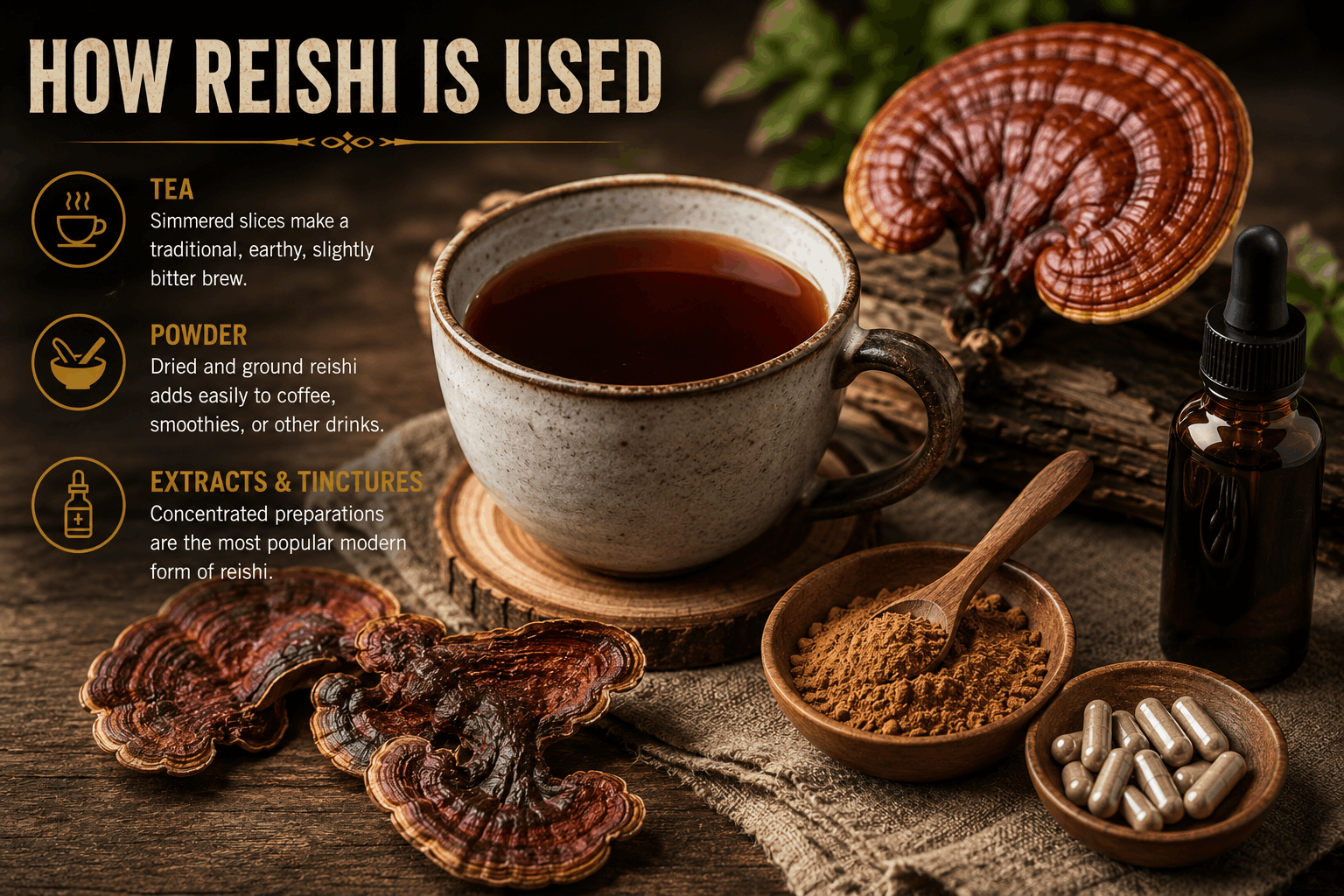
Because it's woody and bitter, reishi is never eaten like a culinary mushroom. Instead it's taken as:
- Tea — simmered slices make a traditional, earthy, slightly bitter brew.
- Powder — dried and ground for adding to drinks.
- Extracts & tinctures — concentrated preparations are the most popular modern form.
Here's the detail that separates a quality reishi product from a weak one. Remember reishi's two compound families—water-soluble beta-glucans and alcohol-soluble triterpenes? A tea or a simple powder captures only part of the picture. A proper dual extract, made with both hot water and alcohol, pulls reishi's full range of active compounds, and it's the single most important thing to look for. (Our guide to mushroom tinctures explains the process in detail.)
That's exactly how our Mycogen Night Reset Reishi Dual Extract is made—dual-extracted from 100% fruiting bodies and finished alcohol-free for easy evening use, formulated with rest and recovery in mind, as part of our mushroom extracts line. Reishi is often taken in the evening, which is why it's a common ingredient in wind-down and sleep-supporting blends.
Reishi & Other Functional Mushrooms
Reishi is one of several well-known functional mushrooms, alongside turkey tail and maitake. Many people use them together, which is why multi-mushroom blends like our Full Spectrum Mushroom Complex combine several species—including reishi—in one preparation.
Growing Reishi
Reishi is a rewarding functional mushroom to cultivate, growing on hardwood-based substrates. It's also fun to grow because it takes different forms depending on conditions—we offer both the classic Red Reishi Liquid Culture, which produces the familiar glossy varnished conk, and the Antler Reishi Liquid Culture, named for its striking branching, antler-like growth. Starting from a liquid culture gives you a reliable, known strain—browse more in our gourmet and functional cultures collection, and see our mushroom liquid culture guide to get started.
Frequently Asked Questions
What is reishi mushroom?
Reishi (Ganoderma lucidum) is a woody functional mushroom with a glossy reddish cap, used for over two thousand years in traditional wellness practices. It's taken as tea, powder, or extract rather than eaten as food.
What are reishi's benefits?
Reishi contains compounds studied for immune support, stress, sleep, fatigue, antioxidant activity, and liver health. These reflect ongoing research and traditional use rather than established medical treatments—it's a wellness supplement, not a cure.
How do you take reishi?
Because it's too woody to eat, reishi is consumed as tea, powder, or—most commonly today—concentrated extracts and tinctures. It's often taken in the evening.
How long does reishi take to work?
Reishi is a slow, cumulative tonic taken consistently over weeks rather than a fast-acting remedy.
Is reishi safe? Are there side effects?
Reishi is generally well tolerated, though some people notice mild digestive upset. Check with a healthcare provider if you're pregnant, nursing, taking medication (especially blood thinners or immunosuppressants), or managing a medical condition.
Does fruiting body or mycelium matter?
Yes—extracts made from 100% fruiting bodies generally contain a higher concentration of reishi's active compounds than mycelium grown on grain.
Why is reishi called the “mushroom of immortality”?
The nickname comes from its long history in traditional East Asian wellness practices, where it was associated with longevity and vitality.
Disclaimer: This article is for educational purposes only and is not medical advice. Reishi is a wellness supplement, not a treatment or cure for any condition—consult a healthcare provider before starting any new supplement, especially if you take medications or have a medical condition. Never consume any wild mushroom without expert identification.