Amanita Mushrooms: Identification, Edible & Deadly Species
Posted by Spore Genetics Research Team on May 10th 2023
Amanita Mushrooms: Iconic, Edible & Deadly Species
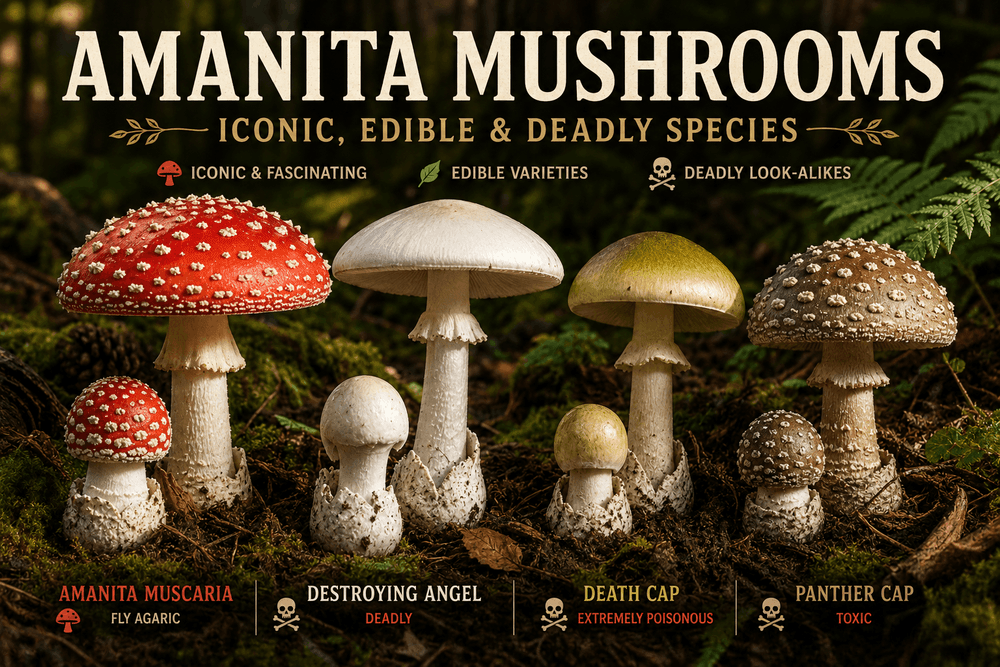
The Amanita genus is one of the most important—and most dangerous—in the entire fungal kingdom. It contains the instantly recognizable red-and-white fly agaric, several edible species, and some of the deadliest mushrooms on Earth, including the destroying angel and death cap. Understanding this genus is essential knowledge for anyone interested in mushrooms.
Few groups of mushrooms carry as much fascination—or as much risk—as the Amanitas. Here's an overview of the key species, how to tell them apart, and why correct identification within this genus can be a matter of life and death.
What Are Amanita Mushrooms?
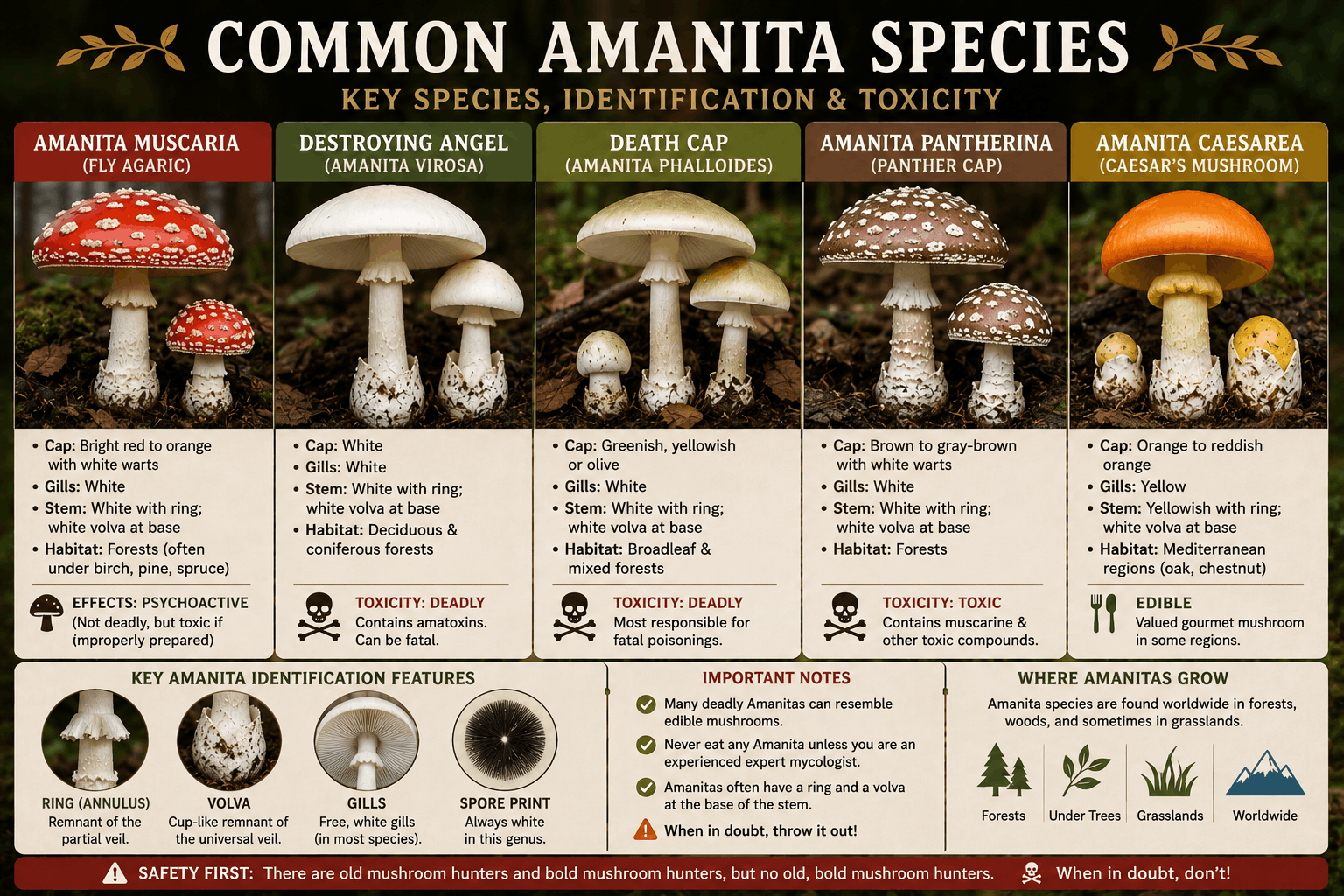
Amanita is a genus of gilled mushrooms found worldwide, many of which form symbiotic relationships with trees. Members of the genus often share a few structural features: a cap, a ring (annulus) on the stem, and a cup-like structure at the base called a volva. The genus is famous for spanning the full spectrum—from the iconic and the edible to the outright lethal—which is exactly why it deserves careful study.
The Fly Agaric (Amanita muscaria)
The best-known member of the genus is the Amanita muscaria, or fly agaric—the classic red cap with white spots seen throughout folklore, art, and fairy tales. It's the storybook mushroom made real, and it has a rich cultural history. We cover it in depth in its own dedicated guide.
The Deadly Amanitas
This is the part that makes the genus so important to understand. Some of the most poisonous mushrooms known belong to Amanita:
- Destroying Angel — pure white and deceptively plain-looking, responsible for serious and often fatal poisonings.
- Death Cap (Amanita phalloides) — believed to be responsible for the majority of fatal mushroom poisonings worldwide.
- Amanita pantherina (Panther Cap) — a toxic relative of the fly agaric.
Many of these deadly species can superficially resemble edible mushrooms, which is precisely why foraging without expert knowledge is so dangerous. The old warning holds: there are old mushroom hunters and bold mushroom hunters, but no old, bold mushroom hunters.
Are There Edible Amanitas?
Yes—some Amanita species are considered edible and are eaten in various parts of the world. However, because the genus contains deadly look-alikes and identification can be extremely subtle, edible Amanitas are strictly a subject for genuine experts. For everyone else, the safe rule is simple: never eat any Amanita.
Amanita Spores & Identification
Because the genus contains deadly look-alikes, identification comes down to examining several features together—and the spores are one of them. Amanita is a white-spored genus: a spore print is typically white to cream, not the dark print of many other mushrooms. Under the microscope the spores are smooth and roughly spherical to ellipsoid, and in many species they are amyloid, meaning they stain blue-black in an iodine (Melzer's) reagent—a detail taxonomists use to place a specimen. Beyond the spores, the three structural clues to check are the cap, the ring (annulus) on the stem, and the volva—the cup-like sac at the base that's often buried in soil or leaf litter and easily missed. No single feature is enough on its own, which is exactly why careful, feature-by-feature study matters here more than in almost any other genus. Our spore print color chart and guide to studying spores under a microscope cover the techniques.
Why the Amanita Genus Matters
The Amanita genus is a powerful reminder of how much variety—and how much risk—exists among mushrooms, and why careful, feature-by-feature identification is so central to mycology. To learn more, explore our guide to the iconic Amanita muscaria and our overview of fungi and the mushroom life cycle.
Frequently Asked Questions
What are Amanita mushrooms?
Amanita is a worldwide genus of gilled mushrooms that includes the iconic fly agaric, several edible species, and some of the deadliest mushrooms known, such as the death cap and destroying angel.
What is the most dangerous Amanita?
The death cap (Amanita phalloides) is believed to be responsible for the majority of fatal mushroom poisonings worldwide, with the destroying angel close behind.
What color is an Amanita spore print?
Amanita is a white-spored genus—spore prints are typically white to cream. In many species the spores are also amyloid, staining blue-black in an iodine reagent, which aids identification.
How do you identify an Amanita mushroom?
Look for the genus's three structural features together—a cap, a ring (annulus) on the stem, and a volva (cup) at the base—along with a white spore print. Because deadly look-alikes exist, never rely on one feature, and never eat a wild Amanita without expert confirmation.
Are any Amanita mushrooms edible?
Some are, but the genus contains deadly look-alikes and identification is extremely subtle, so edible Amanitas are strictly for genuine experts. For everyone else, the safe rule is to never eat any Amanita.
Disclaimer: This article is for educational and identification purposes only. The Amanita genus contains some of the world's deadliest mushrooms; never eat any wild mushroom without expert identification. Spore Genetics spores and cultures are sold for microscopy, taxonomy, and legal cultivation only.