
Spore Syringe vs Spore Print
Same Spores, Two Formats
A spore syringe and a spore print both carry spores — but one is ready to view and the other is built to last. Here's how they differ and which fits your work.
A spore syringe holds spores suspended in sterile water, ready to deposit onto a slide. A spore print is a dry deposit of spores on foil or paper — the archival format collectors use to store and share genetics. In short: a syringe is the ready-to-use option for immediate microscopy, while a print is the long-lasting way to preserve a strain.
New to the basics? Start with what are mushroom spores. Below, we break down each format, compare them side by side, and help you choose.
What Is a Spore Syringe?
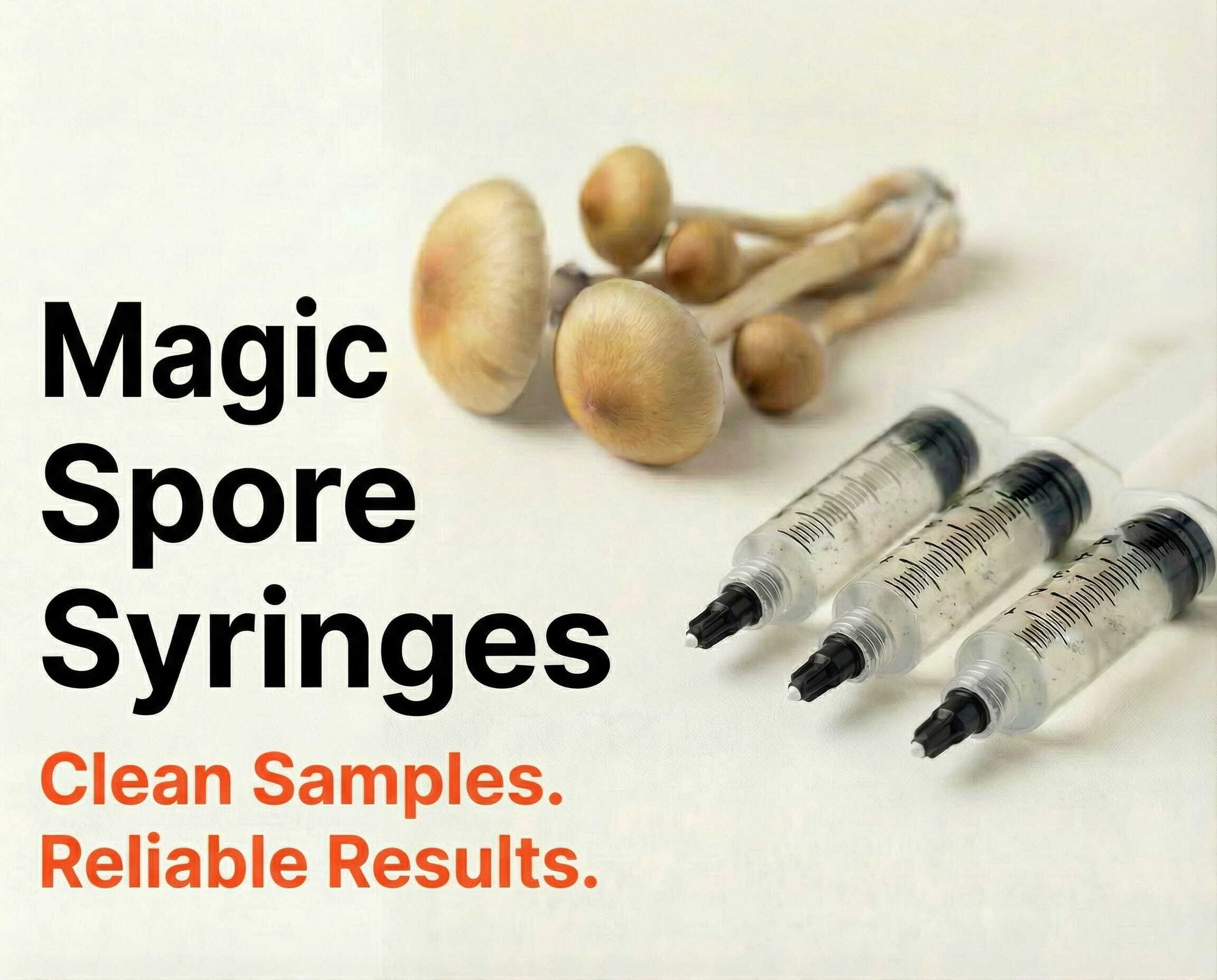
A spore syringe is a sterile syringe filled with mushroom spores suspended in water. It's the most convenient format for getting spores onto a microscope slide — shake, deposit a drop, and you're viewing. Nothing is alive and growing inside, so the spores stay dormant until you use them.
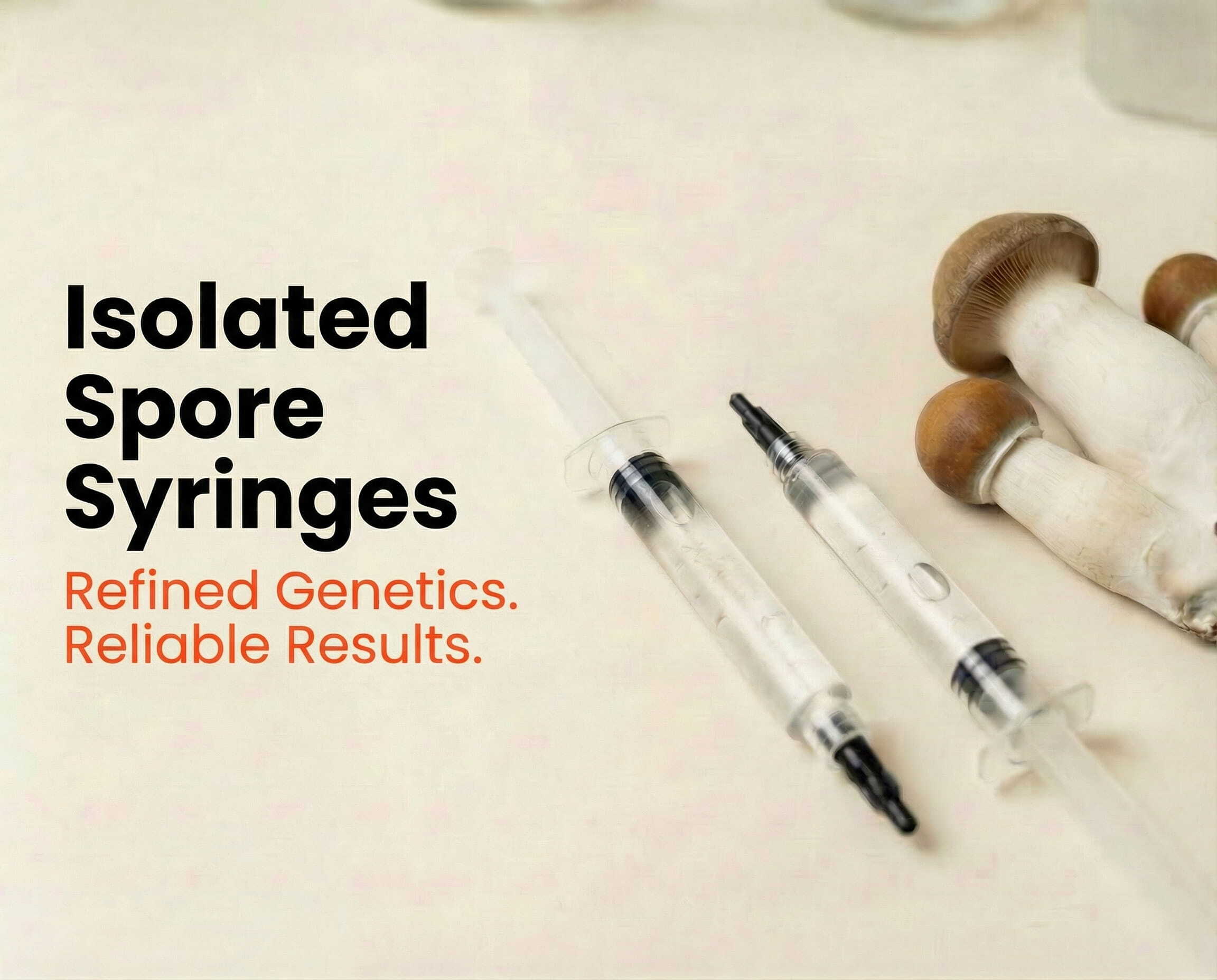
Syringes come as multi-spore (diverse genetics) or isolated (a single stabilized phenotype). New to them? See how to use a spore syringe, or browse all spore syringes.
What Is a Spore Print?
A spore print is made by resting a mature mushroom cap gills-down on a sterile surface — foil, glass, or paper — so it drops a fine layer of spores in the pattern of its gills. Sealed and kept dry, that dry deposit is the most durable way to store spores, often staying viable for years.
Prints are the collector's and archivist's format: flat, compact, easy to ship, and a single print can seed many syringes down the line. Browse our mushroom spore prints.
Spore Syringe vs Spore Print, Side by Side
| Spore Syringe | Spore Print | |
|---|---|---|
| Form | Spores suspended in sterile water | Dry spore deposit on foil or paper |
| Ready to use | Yes — deposit straight onto a slide | Needs rehydrating or scraping first |
| Best for | Immediate microscopy | Long-term storage & preserving genetics |
| Shelf life | Months, refrigerated | Years, kept dry & sealed |
| Portability & storage | Liquid — handle and store with care | Flat, compact, easy to store & ship |
| Contamination risk | Water can harbor microbes over time | Very low when kept dry & sealed |
| Beginner ease | Easiest — view right away | One extra prep step first |
Which Should You Choose?
Choose a spore syringe if…
You want to get spores under the microscope right away with no prep. It's the most convenient starting point for viewing and comparing genetics, and the friendliest option for beginners.
Choose a spore print if…
You want to preserve a strain for the long haul, keep a compact reference library, or share genetics. A print stores for years and can later be used to make your own syringes.
Plenty of collectors keep both: prints for archival storage, syringes for hands-on study.
A quick note on use: both spore syringes and spore prints are supplied as microscopy and taxonomy specimens — dormant spores contain no controlled compound. Preserving and studying spores is legal in most places; cultivating any species is the customer's responsibility to keep within the laws where they live.
Shop Spores & Cultures
Drag or scroll to explore →



Spore Syringe vs Spore Print FAQ
Is a spore print better than a spore syringe?
Neither is “better” — they serve different purposes. A print is the durable choice for storing and preserving genetics; a syringe is the convenient choice for viewing spores right away.
Can you make a spore syringe from a spore print?
Yes. Under sterile conditions, spores are lifted from the print into sterile water to create a suspension — effectively making a syringe from a print. A single print can produce several.
Which lasts longer?
The print. A dry, sealed spore print can stay viable for years, while a water-based syringe is best used within months. Cool, dark, dry storage extends both.
Which is better for beginners?
A spore syringe — there's no prep, so you can go straight to the microscope. A print adds one rehydration step before viewing.
Which is better for microscopy?
A syringe is more convenient for quick viewing. A print gives a very clean, concentrated sample once prepared, which some researchers prefer for detailed morphological work.
Still Deciding?
Not sure whether a syringe or a print fits your project? Tell us what you're working on and we'll point you the right way via email. And if you're just getting started, our mushroom spore basics guide covers the fundamentals.
Spore Genetics — Exceptional Mushroom Spores & Cultures