Psilocybe Ovoideocystidiata: ID, Habitat & Facts
Posted by Spore Genetics Research Team on Apr 26th 2023
Psilocybe Ovoideocystidiata: Identification, Habitat & Facts
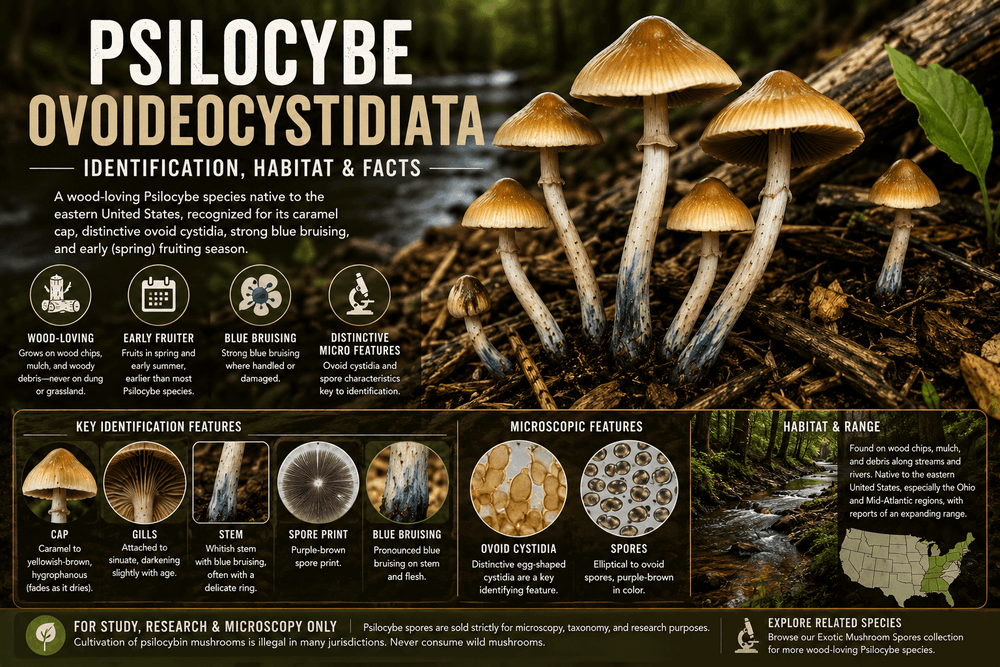
Psilocybe ovoideocystidiata is a wood-loving species native to the eastern United States, notable for fruiting earlier in the year than most of its relatives—often in spring and early summer. It's recognized by its caramel-colored cap, distinctive microscopic features, and strong blue bruising, making it a species of real interest to mycologists and microscopy researchers.
Among the many Psilocybe species, ovoideocystidiata stands out for its unusual season and its growing range. Here's a clear look at how to identify it, where it grows, and what sets it apart.
What Is Psilocybe Ovoideocystidiata?
Psilocybe ovoideocystidiata is a wood-loving (lignicolous) mushroom in the family Hymenogastraceae. Like its relative Psilocybe cyanescens, it grows on wood-based material—mulch, wood chips, and debris along riverbanks—rather than on dung or open grassland. Its name references the ovoid (egg-shaped) cystidia visible under the microscope, a key feature for identifying the species.
Identification & Key Features
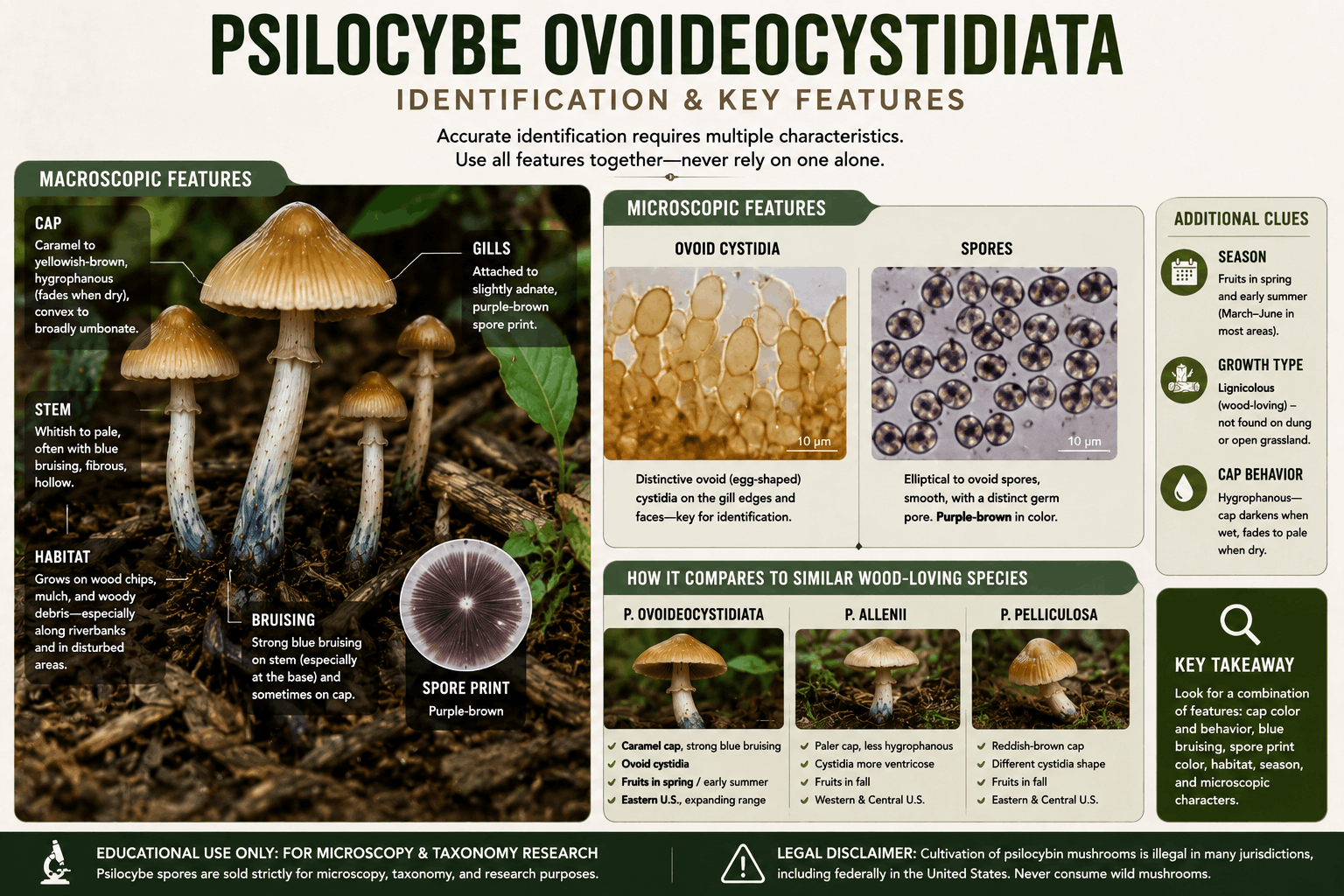
This species typically presents a caramel to yellowish-brown cap that fades as it dries (hygrophanous), a whitish stem, and pronounced blue bruising where handled or damaged. Its spore print is purple-brown, and under magnification its distinctive ovoid cystidia and spore characteristics help separate it from similar wood-loving species. As with all wild mushroom identification, multiple features—not just one—should always be considered together.
Habitat & Range
Psilocybe ovoideocystidiata is most associated with the eastern United States, particularly the Ohio and Mid-Atlantic regions, where it favors wood chips, mulch beds, and the disturbed soils along streams and rivers. It has also been reported expanding its range over time. One of its most distinctive traits is timing: while many Psilocybe species fruit in autumn, ovoideocystidiata frequently appears in spring and early summer.
How It Compares to Other Wood-Loving Species
Ovoideocystidiata belongs to a group of wood-loving Psilocybe species that researchers often study side by side. Close relatives in this category include Psilocybe allenii and Psilocybe pelliculosa, while Psilocybe cyanescens (the "wavy cap") is perhaps the best-known of the group. Comparing their caps, seasons, ranges, and microscopic features is a rewarding area of taxonomic study. You can explore related species in our Exotic Mushroom Spores collection.
Frequently Asked Questions
What is Psilocybe ovoideocystidiata?
It's a wood-loving Psilocybe species native to the eastern U.S., known for its caramel cap, blue bruising, ovoid cystidia, and unusually early (spring) fruiting season.
Where does Psilocybe ovoideocystidiata grow?
It grows on wood chips, mulch, and debris along riverbanks, primarily in the eastern United States, and is noted for expanding its range.
When does it fruit?
Unlike many Psilocybe species that fruit in autumn, ovoideocystidiata commonly fruits in spring and early summer.
How is it identified?
By a combination of features: a hygrophanous caramel cap, purple-brown spore print, blue bruising, and distinctive ovoid cystidia visible under the microscope.
Disclaimer: Psilocybe spores are sold strictly for microscopy, taxonomy, and research purposes. Cultivation of psilocybin mushrooms is illegal in many jurisdictions, including federally in the United States. This article is educational and not intended to encourage any activity that violates federal or local laws. Never consume wild mushrooms.