
Psilocybe Cyanescens: The Wavy Cap Mushroom Explained
Posted by Spore Genetics Research Team on Apr 7th 2023
Psilocybe Cyanescens: The Wavy Cap Mushroom Explained
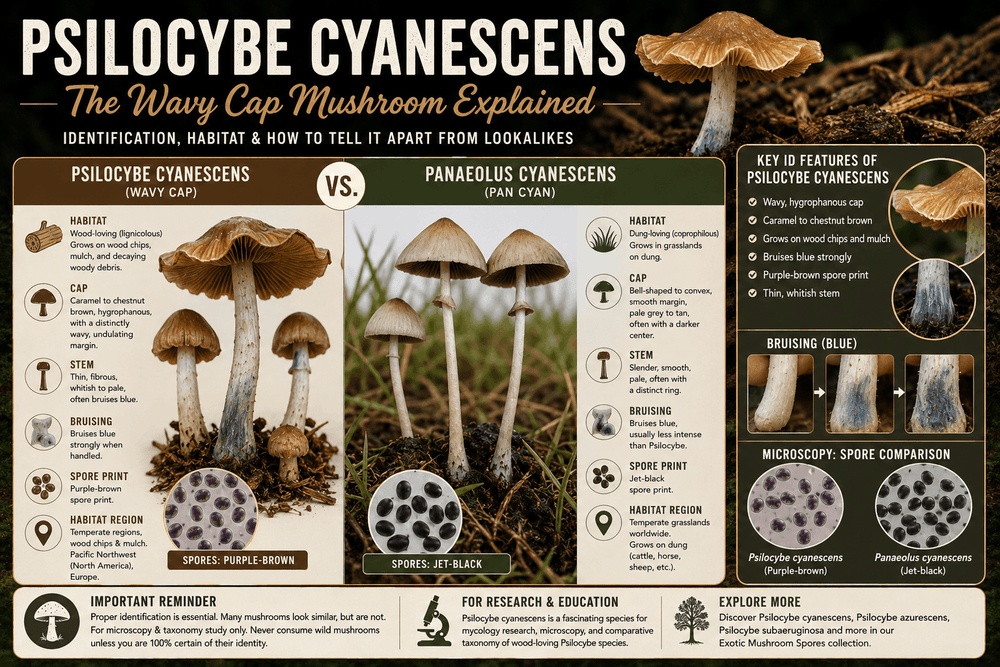
Psilocybe cyanescens, commonly known as the "wavy cap," is a wood-loving member of the genus Psilocybe recognized for its rippled, caramel-colored cap and strong blue bruising. It's frequently confused with Panaeolus cyanescens, but the two are entirely different species—a distinction that matters for anyone studying these mushrooms.
If you've come across the name "wavy cap," this is the species it truly belongs to. Here's a clear look at what Psilocybe cyanescens is, how to recognize it, and how to tell it apart from the lookalikes it's so often mixed up with.
What Is Psilocybe Cyanescens?
Psilocybe cyanescens is a wood-loving (lignicolous) species in the family Hymenogastraceae. Rather than growing on dung or soil, it thrives on wood-based material—mulch, wood chips, and decaying woody debris. It's known for a caramel-to-chestnut cap that's hygrophanous (it changes color as it dries) and for bruising blue when handled, a trait reflected in its name (cyanescens means "becoming blue").
Why Is It Called a "Wavy Cap"?
The common name comes from the cap itself: as the mushroom matures, the margin becomes distinctly wavy and undulating rather than staying smooth and domed. That rippled edge is one of the species' most recognizable features and the reason "wavy cap" stuck as its everyday name.
Psilocybe Cyanescens vs. Panaeolus Cyanescens
This is the most common point of confusion, because both species share the word "cyanescens" (both bruise blue). But they're different mushrooms in different genera:
· Psilocybe cyanescens — a wood-loving Psilocybe with purple-brown spores and a wavy caramel cap. The true "wavy cap."
· Panaeolus cyanescens — a grassland, dung-loving species ("pan cyan") with jet-black spores and a slender pale form. You can read more on our Panaeolus spores page.
Under the microscope the difference is immediate: purple-brown spores for Psilocybe cyanescens versus jet-black for Panaeolus cyanescens.
Identification & Habitat
Psilocybe cyanescens is most often found on wood chips and mulch in temperate regions—notably the Pacific Northwest of North America and across Europe—typically fruiting in autumn as temperatures cool. Key ID features include the wavy hygrophanous cap, a thin whitish stem, purple-brown spore deposit, and prominent blue bruising where damaged.
Psilocybe Cyanescens vs. Azurescens
Another wood-loving relative it's compared to is Psilocybe azurescens, which favors coastal dune grasses and woody debris and is famed for its size and potency. Both are popular subjects for study among the wood-loving Psilocybe species—you'll find these and others in our Exotic Mushroom Spores collection, including Psilocybe subaeruginosa, a close Southern-Hemisphere counterpart.
Spores & Microscopy
For researchers, Psilocybe cyanescens offers a classic purple-brown spore print and distinctive morphology that make it a rewarding subject for microscopy and comparative taxonomy—particularly when studied alongside its wood-loving and grassland relatives.
Frequently Asked Questions
Is Psilocybe cyanescens the same as Panaeolus cyanescens?
No. They are different species in different genera. Psilocybe cyanescens is a wood-loving mushroom with purple-brown spores (the true "wavy cap"); Panaeolus cyanescens is a grassland, dung-loving species with jet-black spores.
What is a wavy cap mushroom?
"Wavy cap" is the common name for Psilocybe cyanescens, referring to the rippled, undulating cap margin it develops as it matures.
Where does Psilocybe cyanescens grow?
It grows on wood-based substrates like mulch and wood chips in temperate regions, especially the Pacific