The Therapeutic Benefits of Mushrooms: How Functional Mushrooms Support Health
Posted by Spore Genetics Research Team on Oct 12th 2023
The Therapeutic Benefits of Mushrooms: How Functional Mushrooms Support Health
Functional mushrooms are valued for a handful of specific compounds — beta-glucans, triterpenes, antioxidants, and species-specific molecules like the hericenones in lion’s mane. These are the reason certain mushrooms are studied for immune support, cognition, energy, and general wellness. The benefits are real and increasingly researched, but they come from nutrition and bioactive compounds, not magic.
Mushrooms have been used in traditional wellness practices for thousands of years, and modern science is now examining why. Here’s a clear, grounded look at the compounds behind the “functional mushroom” label and what they’re studied for.
What Makes a Mushroom “Functional”?
A functional mushroom is simply one valued for more than flavor — for bioactive compounds that may support the body in specific ways. A few groups of compounds do most of the work:
- Beta-glucans — a type of fiber found across many mushrooms, the most studied compounds for immune modulation.
- Triterpenes — found notably in reishi, studied for anti-inflammatory and adaptogenic properties.
- Hericenones & erinacines — specific to lion’s mane, of interest for their relationship to nerve and cognitive health.
- Antioxidants, fiber & B vitamins — the everyday nutrition that makes mushrooms a genuinely healthy food, low in calories and rich in micronutrients.
What the Benefits Are Studied For
Research is ongoing, but the areas of interest cluster around a few themes:
- Immune support — beta-glucans are the headline here; several species are studied for how they help regulate immune response. Our roundup of immune-supporting mushrooms covers the main ones.
- Cognitive & nervous-system health — lion’s mane is the most talked-about, thanks to its unique compounds.
- Energy & stamina — cordyceps is traditionally associated with energy and endurance.
- General wellness — as a whole food, mushrooms contribute fiber, antioxidants, and plant-based nutrients to a balanced diet.
It’s worth being clear-eyed: much of this research is early, and traditional use is not the same as clinical proof. Functional mushrooms are best thought of as a supportive addition to a healthy lifestyle, not a treatment.
Which Mushrooms Are Considered Functional?
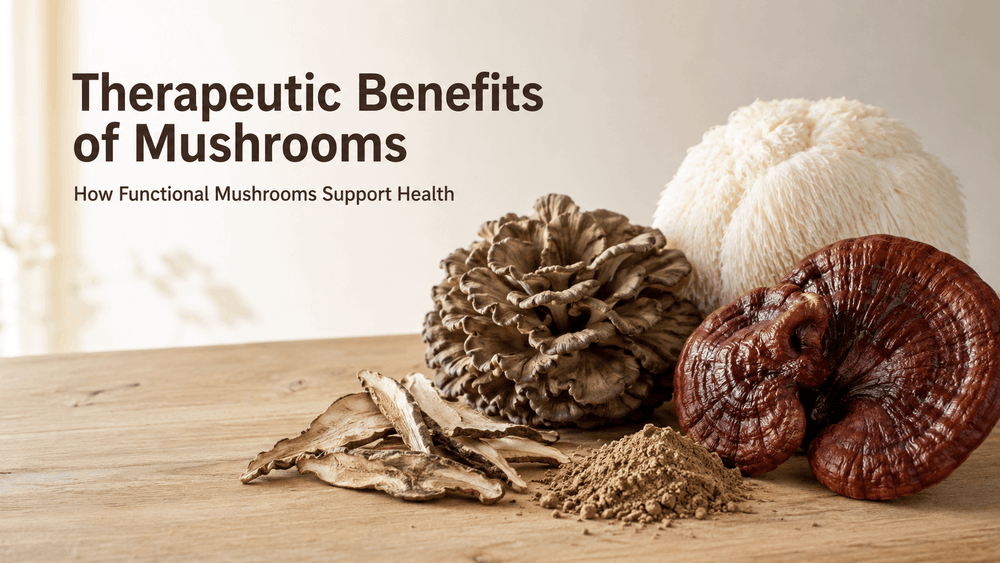
The best-known functional and medicinal species include reishi, lion’s mane, cordyceps, turkey tail, and maitake. Each is associated with a different compound profile and different traditional uses. For a species-by-species breakdown, see our guide to the most beneficial medicinal mushrooms, and you can explore the ones we offer as cultures in our medicinal mushrooms collection.
A Note on Growing Your Own
Many functional species — lion’s mane, reishi, cordyceps, maitake — can be grown at home from a liquid culture, which is the freshest and most economical way to keep them on hand. Our guide to mushroom cultivation covers the process end to end.
Frequently Asked Questions
What are the health benefits of mushrooms?
Mushrooms provide fiber, B vitamins, and antioxidants, and functional species contain bioactive compounds like beta-glucans and triterpenes studied for immune, cognitive, and general wellness support. They’re a nutritious, low-calorie food.
What is a functional mushroom?
A functional mushroom is one valued for bioactive compounds beyond nutrition — for example reishi, lion’s mane, cordyceps, and turkey tail, each associated with specific compounds and traditional uses.
What are beta-glucans?
Beta-glucans are a type of fiber found in many mushrooms and the most studied compounds behind their immune-supporting reputation.
Are functional mushrooms a substitute for medicine?
No. They’re best viewed as a supportive addition to a healthy diet, not a treatment. Research is ongoing, and you should consult a healthcare provider before starting any new wellness regimen.
Disclaimer: This article is for educational purposes only and is not medical advice. Statements here have not been evaluated by the FDA, and functional mushrooms are not intended to diagnose, treat, cure, or prevent any disease. Consult a qualified healthcare provider before beginning any new wellness regimen.