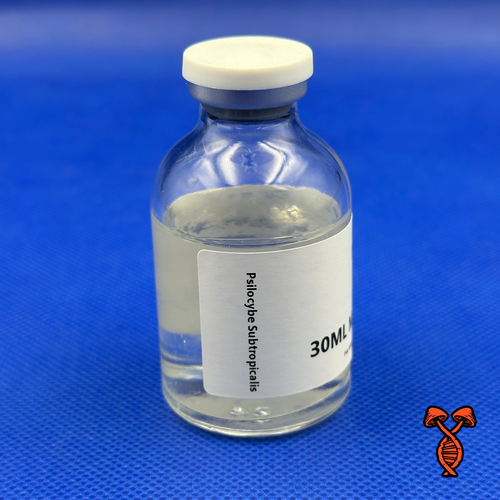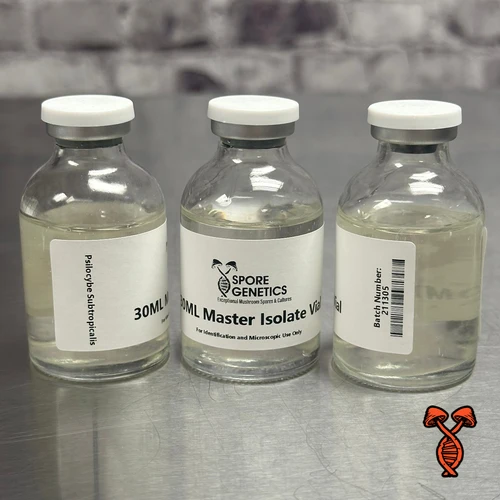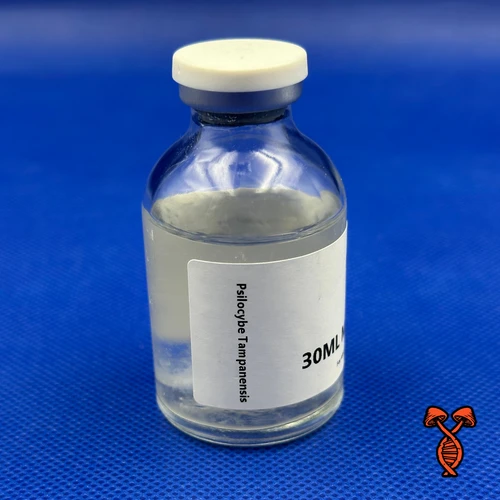


Psilocybe Cyanescens “Wavy Caps” – 30ML Master Isolate Vial
The Psilocybe Cyanescens “Wavy Caps” Master Isolate Vial provides three times the solution of a standard 10cc syringe, offering exceptional clarity, volume, and convenience in one fully equipped research kit. Each vial arrives completely ready to use, including a sterile 10cc syringe, drawing needle, pressure-equalizer needle, alcohol prep pad, and step-by-step instruction card. No prep, no hassle — just 30ML of high-purity isolate solution prepared inside our ISO-7 cleanroom.
Choose a single vial or upgrade to the 3-pack for additional savings.
Psilocybe cyanescens, the “Wavy Cap,” is a naturally wood-loving species, most commonly found on decaying wood, mulch, and wood-chip beds in cool, damp conditions. It is a distinct species from the dung-loving Panaeolus cyanescens (Pan Cyan) it's often confused with. Under the microscope, this isolate shows the classic Psilocybe traits — dark purple-brown, thick-walled spores with a visible germ pore, and clean, high-contrast cellular detail — making Wavy Caps an excellent candidate for microscopy comparison, species differentiation, and taxonomic reference collections.
Each 30ML Master Isolate Vial provides ample solution for multiple microscope slides, replicate preparations, and extended observation sessions. Every batch is filtered, clarified, and sealed under sterile ISO-7 conditions to maintain clarity, consistency, and dependable research performance.
What’s Included
· 30ML Psilocybe Cyanescens “Wavy Caps” Master Isolate Vial
· Sterile 10cc syringe
· Sterile drawing needle
· Sterile pressure-equalizer needle (helps balance internal pressure for smoother withdrawal)
· Alcohol prep pad
· 4×6 handling & preparation instruction card
Ready to use immediately — no additional preparation required
Storage & Stability
· Best used within 90 days
· Store refrigerated at 36–46°F
· May remain stable for 12 months or longer with proper storage
For Research Use Only. All Spore Genetics isolates are intended strictly for microscopy, taxonomy, and mycological research.