
Multi-Spore vs Isolated Spore Syringe
Diversity or Consistency?
Both come in a 10cc syringe — the difference is what's inside. One gives you a whole spore population to explore, the other a single stabilized genetic line as a liquid culture. Here's how to choose.
A multi-spore syringe contains dozens of genetically distinct spores — natural diversity in a single syringe. An isolated (ISO) syringe is a liquid culture of one stabilized phenotype for consistent, repeatable results. In short: multi-spore is for exploring genetic variation; isolated is for knowing exactly what you'll get.
New to the basics? Start with what are mushroom spores. Below, we break down each type, compare them side by side, and help you decide.
What Is a Multi-Spore Syringe?
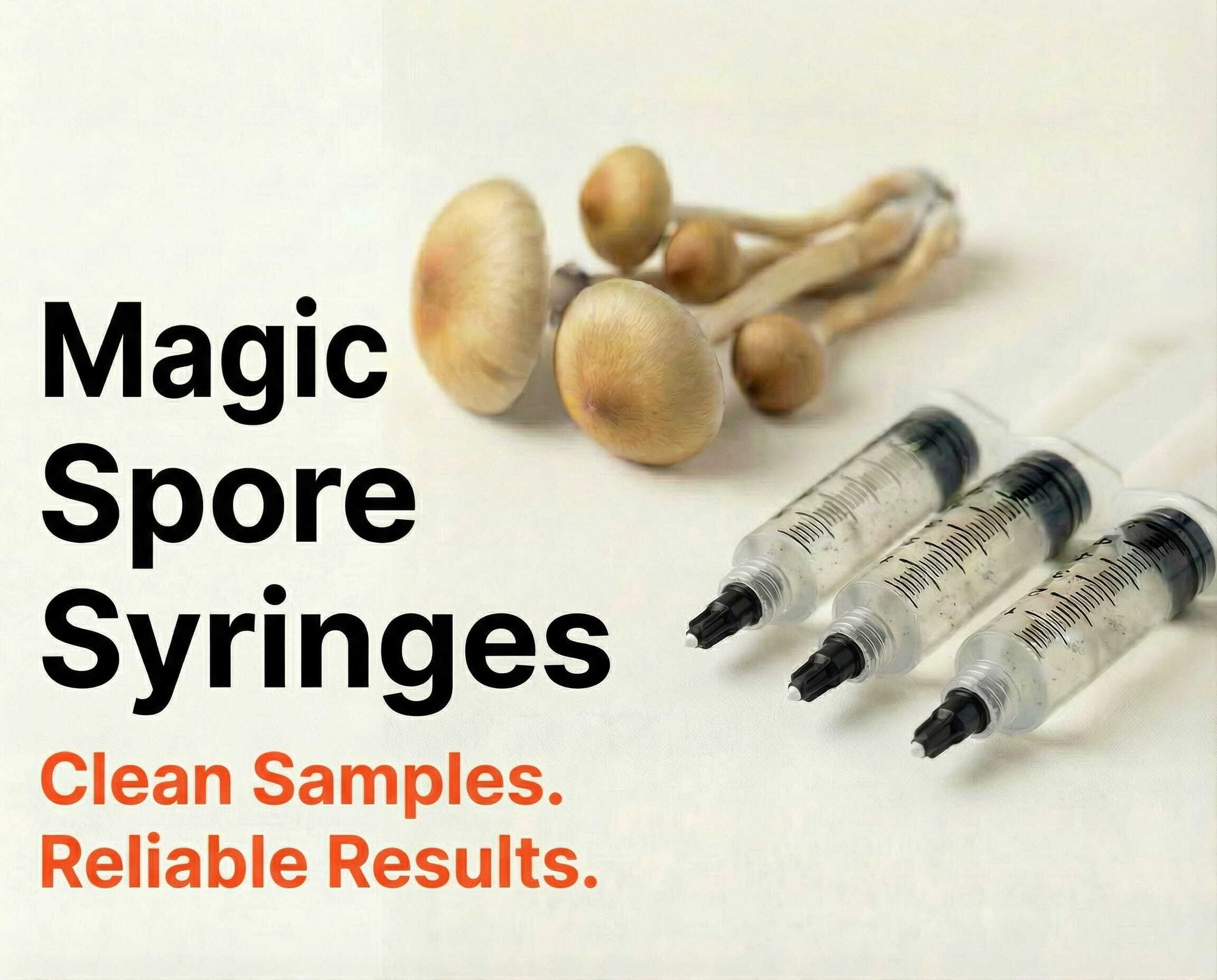
A multi-spore syringe is the “standard” spore syringe — a suspension of spores collected as they naturally occur, containing dozens of genetically distinct genotypes. Every spore is a little different, so the syringe represents a whole population rather than one individual.
That built-in diversity makes multi-spore syringes ideal for observing natural variation, comparing phenotypes under the microscope, and building a broad reference library. They're also the most budget-friendly starting point. Browse multi-spore syringes.
What Is an Isolated (ISO) Spore Syringe?
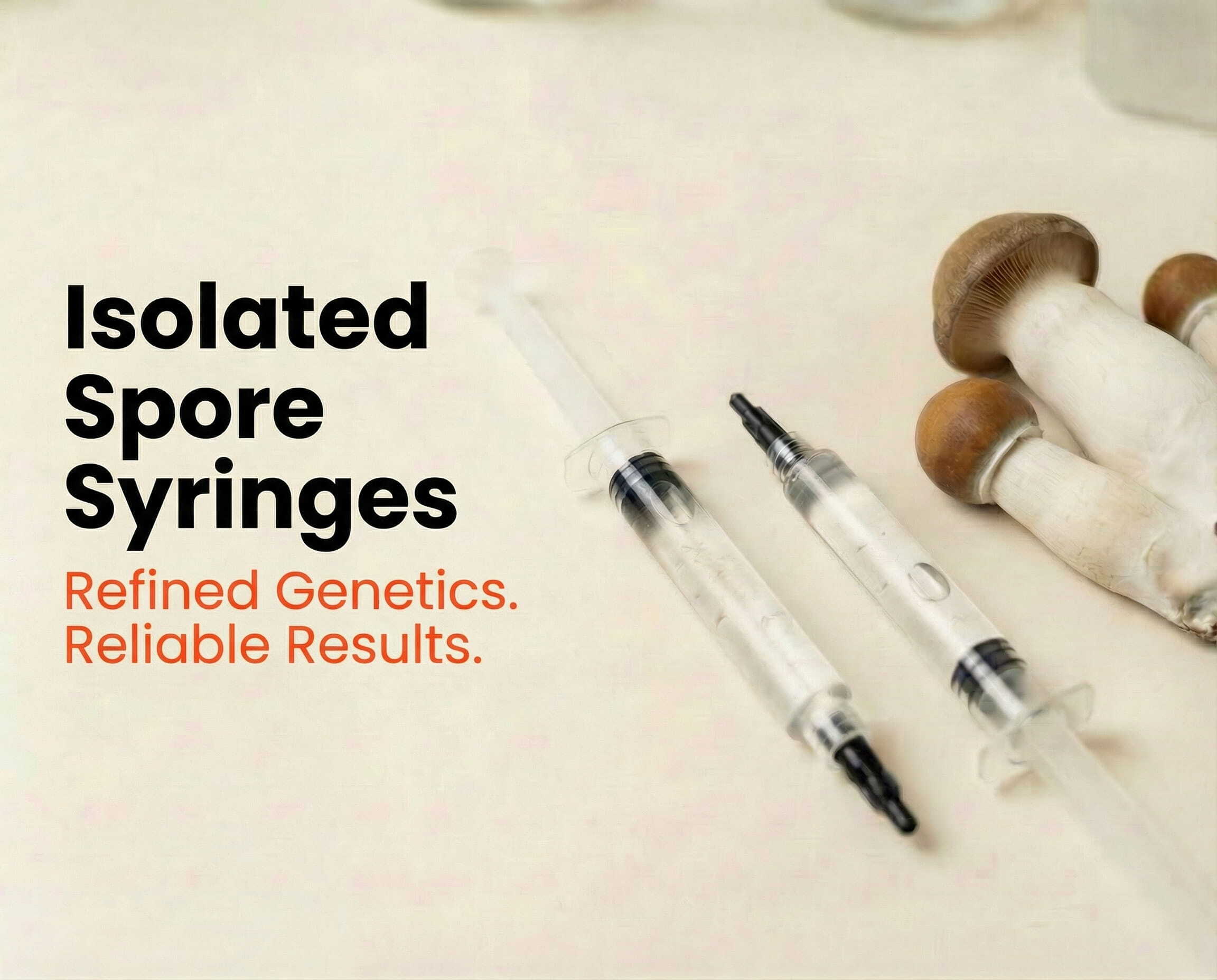
An isolated spore syringe starts from a strong multi-spore culture, then goes through several rounds of selection and stabilization to lock in a single, repeatable phenotype. Instead of a diverse population, you get one refined, true-to-type genetic.
We produce every isolate with in-house agar work — selecting and stabilizing a single genetic across multiple rounds on agar plates in our own lab, rather than sourcing it. Because that genetic is uniform and vigorous instead of a mixed population, an isolated syringe colonizes faster and more predictably than a standard multi-spore syringe — because it is a liquid culture: one stabilized genetic line in sterile solution, sold under our isolate label.
That consistency is why isolates are a favorite for predictable, uniform results and clean, consistent morphology under the microscope. The extra lab work is why they carry a premium. Browse isolated spore syringes.
Multi-Spore vs Isolated, Side by Side
| Multi-Spore | Isolated (ISO) | |
|---|---|---|
| Genetics | Dozens of distinct genotypes | A single stabilized phenotype |
| Variation | High — natural diversity | Low — uniform & predictable |
| Growth & vigor | Mixed — a range of genotypes | Faster, more uniform — one vigorous strain |
| Best for | Exploring & comparing genetics | Consistent, repeatable results |
| Under the microscope | Diverse morphology to study | Clean, consistent morphology |
| How it's made | Spores collected as they occur | Selected & stabilized over several rounds |
| Great for | Beginners & explorers | Researchers wanting precision |
| Typical price | Lower — the everyday option | A premium for the extra lab work |
Isolated Syringe or Liquid Culture? Ours Are the Same Thing
Our isolates are liquid cultures. Each isolated spore syringe holds one lab-selected, stabilized genetic line in sterile solution, produced through our in-house agar isolation — the same single-genetic format as a liquid culture, sold under our isolate label.
Isolated spore syringe — a Psilocybe liquid culture: one stabilized genetic, formulated and tested to contain zero psilocybin and psilocin, for microscopy and taxonomy research only.
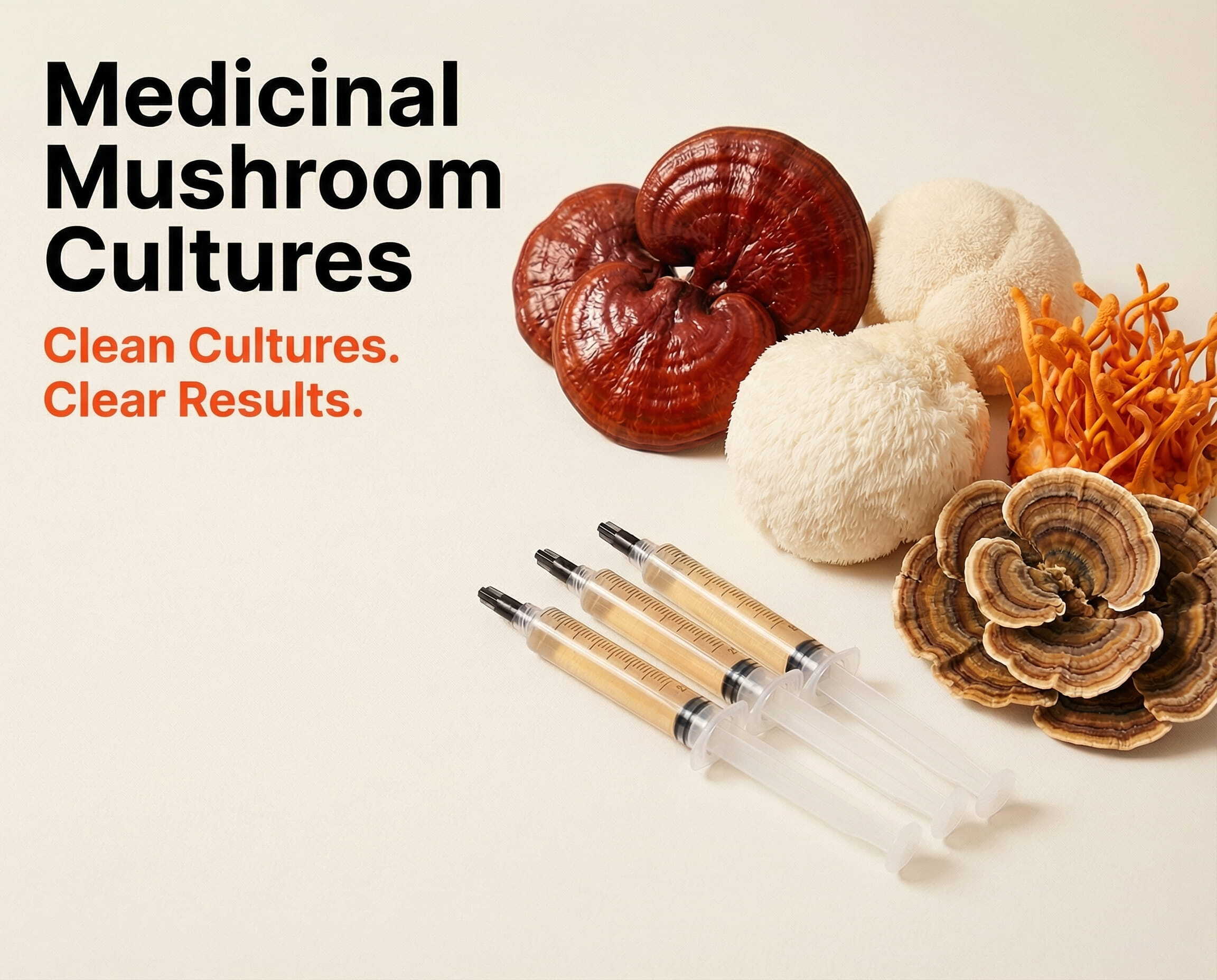
Gourmet liquid culture — the same format for gourmet and medicinal species that are legal to cultivate; see our gourmet cultures.
Keep isolates refrigerated and use them within about six months. Need more volume? Our 30mL master isolate vials are the same cultures at roughly three syringe-equivalents. Full explanation: spore syringe vs liquid culture.
Which Should You Choose?
Choose multi-spore if…
You want to explore genetic diversity, compare a range of phenotypes, discover natural variation, or build a broad library affordably. It's the classic starting point for learning and exploring.
Choose isolated if…
You want a known, consistent phenotype and repeatable results every time. Isolates trade diversity for reliability — ideal once you know exactly which genetic you want to work with.
A common path: start multi-spore to explore, then move to isolates once you've found the traits you want to study consistently.
A quick note on use: both multi-spore and isolated syringes are supplied as microscopy and taxonomy specimens and contain no controlled compounds — our isolates are formulated and tested to contain zero psilocybin and psilocin. Studying them is legal in most places; cultivating any species is the customer's responsibility to keep within the laws where they live.
Shop Spores & Cultures
Drag or scroll to explore →



Multi-Spore vs Isolated FAQ
What's the difference between multi-spore and isolated?
A multi-spore syringe holds a diverse population of genetically distinct spores; an isolated syringe holds a single, stabilized phenotype as a liquid culture. Diversity versus consistency, in one line.
Is an isolated spore syringe better?
Not universally — it's better for consistency. If you want predictable, uniform results, an isolate wins. If you want to explore natural variation, a multi-spore syringe is the better fit.
Which is better for beginners?
Both are beginner-friendly. Multi-spore is the affordable way to explore and learn; an isolate is worth it early if you already know you want one specific, consistent genetic.
Why do isolated syringes cost more?
They take extra lab work — multiple rounds of selection and stabilization to lock in a single true-to-type phenotype, versus collecting spores as they naturally occur.
Can you isolate a strain from a multi-spore syringe?
Yes — that's exactly how isolates are made. Working on agar, researchers select and transfer a single promising genetic over several generations until it's stabilized.
Still Deciding?
Not sure whether to explore with multi-spore or lock in an isolate? Tell us what you're studying and we'll help you choose — reach out via email. Just getting started? Our mushroom spore basics guide covers the fundamentals.
Spore Genetics — Exceptional Mushroom Spores & Cultures