
Sterile Technique for Mushroom Cultivation: A Guide
Posted by Spore Genetics Research Team on Apr 30th 2023
Sterile Technique for Mushroom Cultivation: A Beginner's Guide
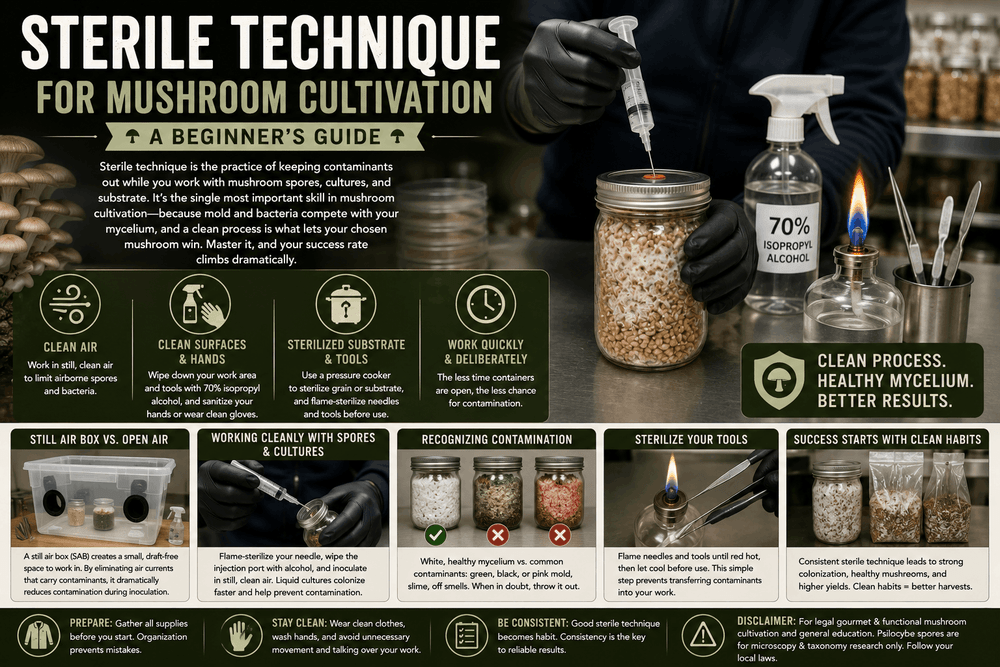
Sterile technique is the practice of keeping contaminants out while you work with mushroom spores, cultures, and substrate. It's the single most important skill in mushroom cultivation—because mold and bacteria compete with your mycelium, and a clean process is what lets your chosen mushroom win. Master it, and your success rate climbs dramatically.
Whether you're inoculating a grain jar with a gourmet liquid culture or examining spores, contamination is the number-one cause of failure. The good news: sterile technique is learnable, and a few consistent habits prevent the vast majority of problems. Here's how it works.
Why Sterile Technique Matters
Mushrooms grow from spores and mycelium, not seeds, and the same warm, humid, nutrient-rich conditions that mycelium loves are exactly what molds and bacteria love too. In an open environment, those faster-growing contaminants usually outcompete your mushroom culture. Sterile technique tips the odds back in your favor by minimizing the contaminants that reach your substrate and cultures in the first place.
The Core Principles
- Clean air — work in still, clean air to limit airborne spores and bacteria (more on this below).
- Clean surfaces & hands — wipe down your work area and tools with 70% isopropyl alcohol, and sanitize your hands or wear clean gloves.
- Sterilized substrate & tools — use a pressure cooker to sterilize grain or substrate, and flame-sterilize needles and tools before use.
- Work quickly and deliberately — the less time containers are open, the less chance for contamination.
Still Air Box vs. Open Air
One of the easiest upgrades for a home cultivator is a still air box (SAB)—a clear plastic tote with arm holes that creates a small, draft-free space to work in. Because contaminants travel on air currents, simply eliminating airflow dramatically reduces contamination during inoculation. A still air box is inexpensive, beginner-friendly, and for most home gourmet growers it's all that's needed to work cleanly.
Working With Spores & Cultures Cleanly
Sterile technique is especially important at inoculation—the moment you introduce spores or a culture to a substrate. Flame the needle of your spore syringe or liquid culture before use, wipe the injection port with alcohol, and inject in still, clean air. Working with a liquid culture can also help, since live mycelium colonizes quickly and gives contaminants less time to take hold. Using clean, lab-prepared sterile syringes and needles from the start removes one more variable.
Recognizing Contamination
Even with good technique, it helps to know the warning signs. Healthy mycelium is bright white and rhizomorphic or fluffy. Common contamination signs include green, black, or pink coloration, slimy or wet patches, or unusual sour or off smells. When in doubt, it's safer to discard a contaminated container than to risk spreading spores to your other cultures.
Frequently Asked Questions
What is sterile technique in mushroom cultivation?
It's the set of practices—clean air, sanitized surfaces and tools, sterilized substrate, and careful handling—used to prevent mold and bacteria from contaminating your mushroom cultures and substrate.
Do I need a flow hood or is a still air box enough?
For most home and gourmet growers, a still air box is enough and far more affordable. Flow hoods offer more capacity and convenience but aren't necessary to work cleanly at a small scale.
What's the most common cause of contamination?
Airborne contaminants reaching open containers, and unsterilized tools or surfaces. Eliminating airflow and sanitizing everything you touch prevents most issues.
Disclaimer: This guide is intended for the legal cultivation of gourmet and functional mushrooms and for general educational purposes. Psilocybe (psilocybin) spores, where offered, are sold strictly for microscopy and taxonomy research; cultivation of psilocybin mushrooms is illegal in many jurisdictions. Always follow the laws in your area.