Psilocybin Therapy & Benefits: What the Research Shows
Posted by Spore Genetics Research Team on Apr 13th 2023
Psilocybin Therapy & Benefits: What the Research Shows
Psilocybin—the naturally occurring compound found in certain mushrooms—has become one of the most actively researched subjects in modern psychiatry. Scientists at major institutions are studying its potential in controlled clinical settings, even as it remains a federally controlled substance. This article looks at what that research actually explores, where the law stands, and why interest has grown so quickly.
Few topics in mycology draw as much curiosity as psilocybin. Beyond the headlines, there's a serious and rapidly expanding body of scientific study underway. Here's an educational overview of the current landscape.
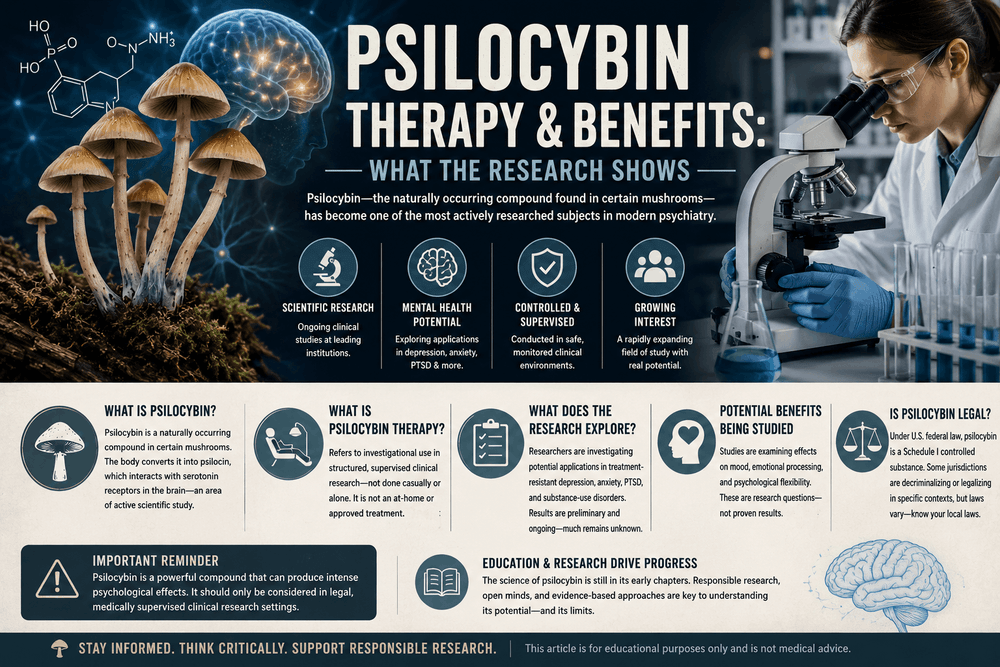
What Is Psilocybin?
Psilocybin is a naturally occurring compound produced by several species of mushrooms, most notably within the genus Psilocybe. Once ingested, the body converts psilocybin into psilocin, which interacts with serotonin receptors in the brain. It's this interaction that researchers are working to understand, and it's the reason psilocybin has drawn the attention of neuroscientists and clinicians worldwide.
What Is Psilocybin Therapy?
“Psilocybin therapy” refers to the investigational use of psilocybin within structured, supervised clinical research—not something done casually or alone. In these studies, psilocybin is administered in carefully controlled environments alongside professional psychological support and monitoring. It's important to understand that this is an area of active research, conducted under strict protocols and regulatory oversight, rather than an approved or at-home treatment.
What Does the Research Explore?
Researchers at institutions such as Johns Hopkins and Imperial College London have investigated psilocybin's potential in areas including treatment-resistant depression, anxiety, PTSD, and substance-use disorders. Early findings have generated significant scientific interest, but it's essential to frame this accurately: these are ongoing investigations, results are still being studied and replicated, and psilocybin is not an established or approved medical treatment. Much remains unknown, which is exactly why the research continues.
Potential Benefits Being Studied
When people search for “psilocybin benefits,” they're usually referring to the outcomes researchers are examining—not proven results. Studies have looked at effects on mood, emotional processing, and psychological flexibility. These remain research questions under active investigation, and any potential applications would only ever be appropriate within a legal, medically supervised clinical context.
Is Psilocybin Legal?
Under U.S. federal law, psilocybin is classified as a Schedule I controlled substance, making it illegal to possess, cultivate, or distribute in most of the country. However, the legal landscape is shifting in specific places: Oregon and Colorado have established regulated, state-supervised therapeutic programs, and several cities have moved to decriminalize it. Laws vary widely and continue to change, so the only reliable rule is to check the current regulations in your own jurisdiction.
Psilocybe Mushrooms & Microscopy Research
The scientific interest in psilocybin has also fueled broader curiosity about the Psilocybe mushrooms that produce it. At Spore Genetics, our mushroom spores are provided strictly for microscopy, taxonomy, and research purposes—the study of spore morphology and genetics under the microscope. Spores themselves contain no psilocybin, which is why they can be studied legally in most areas for educational and taxonomic work.
Frequently Asked Questions
What is psilocybin therapy?
It's the investigational use of psilocybin within supervised clinical research settings, conducted under strict medical and regulatory protocols. It is not an approved treatment or something intended for personal, at-home use.
Is psilocybin legal?
Psilocybin is a Schedule I controlled substance under U.S. federal law. Some states (such as Oregon and Colorado) have created regulated therapeutic programs, and certain cities have decriminalized it, but laws vary—always verify your local regulations.
What benefits is psilocybin research studying?
Researchers are examining its potential effects on conditions like depression, anxiety, and PTSD. These are ongoing investigations, not established medical outcomes.
Are psilocybin mushroom spores legal to study?
Spores contain no psilocybin and are sold for microscopy and taxonomy research. Laws still vary by location, so customers are responsible for compliance in their own area.
Disclaimer: This article is provided for educational and informational purposes only and is not medical advice. Psilocybin is a Schedule I controlled substance under U.S. federal law, and cultivation or use of psilocybin mushrooms is illegal in many jurisdictions. Nothing here is intended to encourage or facilitate any illegal activity or self-treatment. If you are struggling with your mental health, please consult a licensed healthcare professional—do not attempt to self-treat. Spore Genetics spores are sold strictly for microscopy, taxonomy, and research purposes.