
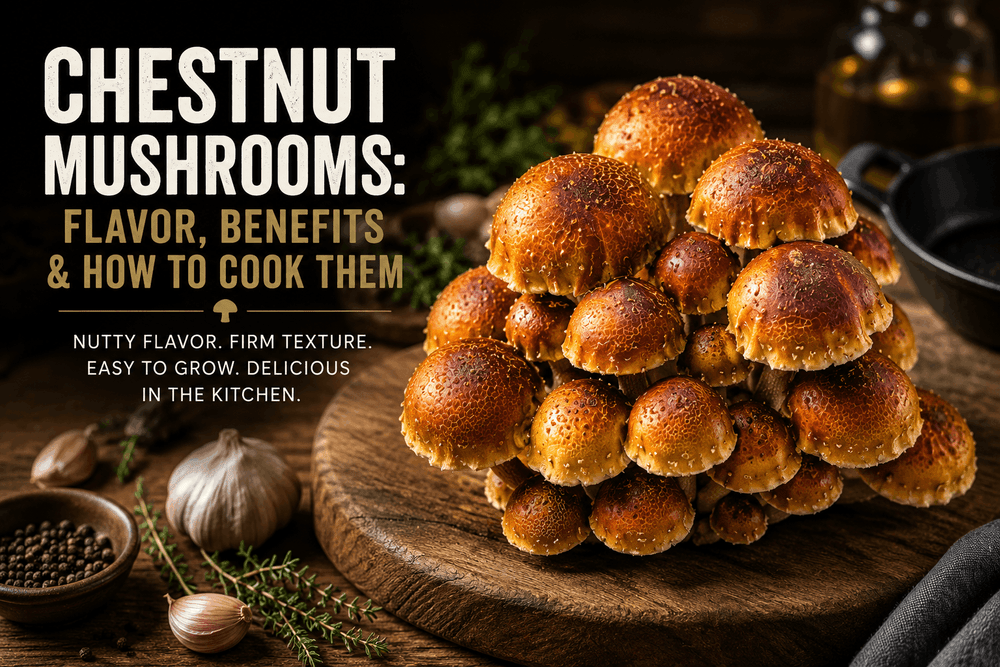
Chestnut Mushrooms: Flavor, Benefits & How to Cook
Posted by Spore Genetics Research Team on May 5th 2023
Chestnut Mushrooms: Flavor, Benefits & How to Cook Them
Chestnut mushrooms—also known as cinnamon caps—are a gourmet variety prized for their nutty, savory flavor and pleasantly crisp texture. With their warm brown caps and slender stems, they're a favorite among home cultivators and cooks alike, and they're as rewarding to grow as they are to eat.
If you're looking to expand beyond the usual button or oyster mushrooms, the chestnut mushroom is a fantastic next step. Here's everything worth knowing—what they are, how they taste, their benefits, and how to cook and grow them.
What Are Chestnut Mushrooms?
The chestnut mushroom (Pholiota adiposa), sometimes called the cinnamon cap, is a gourmet species recognized by its glossy, chestnut-brown caps that grow in attractive clusters. They have a firmer texture than many cultivated mushrooms, which helps them hold their shape beautifully when cooked. Note that "chestnut mushroom" is occasionally used as a name for a brown variety of the common button mushroom—but the gourmet cinnamon cap is a distinct and far more flavorful species.
What Do Chestnut Mushrooms Taste Like?
Chestnut mushrooms have a deep, nutty, slightly earthy flavor with a satisfying crunch—richer and more savory than a standard button mushroom. That firm texture means they stand up well to high-heat cooking without going soggy, making them especially good for sautéing and stir-frying.
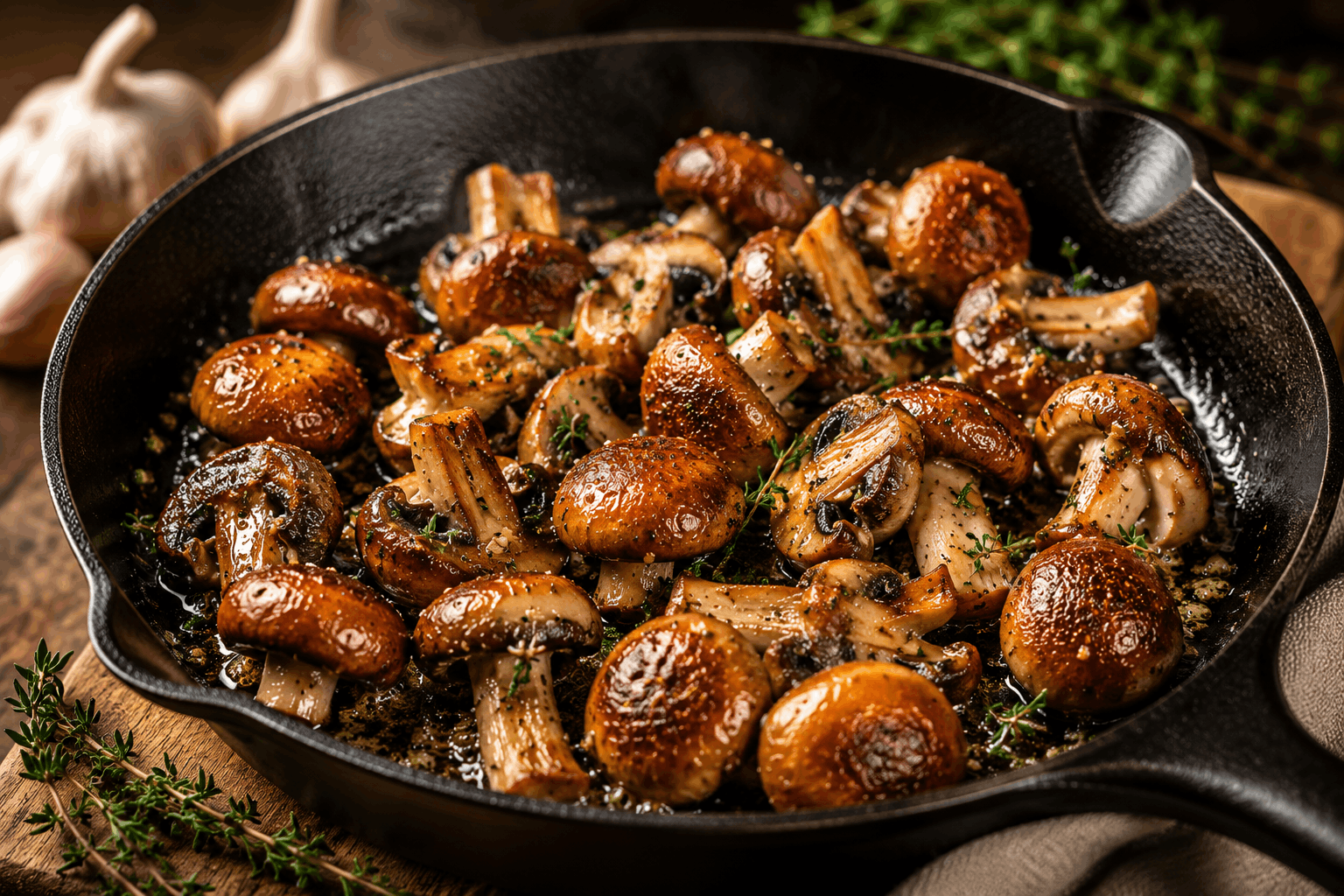
How to Cook Chestnut Mushrooms
Their firm texture makes chestnut mushrooms wonderfully versatile in the kitchen:
- Sautéed — in butter or oil with garlic until golden; their crunch holds up perfectly.
- Stir-fried — they shine in Asian-inspired dishes where texture matters.
- Roasted — tossed with herbs and olive oil for a deep, nutty flavor.
- In soups & stews — they keep their shape rather than turning mushy.
A simple favorite: sauté whole or halved chestnut mushrooms over medium-high heat until browned, then finish with garlic, butter, and a pinch of salt.
Chestnut Mushroom Benefits
Like most edible mushrooms, chestnut mushrooms are low in calories and a good source of nutrients—providing B vitamins, dietary fiber, and antioxidants, along with plant-based protein. They're a flavorful, wholesome addition to a balanced diet.
Growing Chestnut Mushrooms at Home
Chestnut mushrooms are a satisfying species to cultivate. They grow well on supplemented hardwood-based substrates and reward growers with dense, attractive clusters. The easiest way to start is with a liquid culture, which gives you living mycelium of a known, consistent strain—you can find our Chestnut Mushroom Liquid Culture in our gourmet cultures collection. For a primer on working with liquid culture, see our mushroom liquid culture guide.
Frequently Asked Questions
What are chestnut mushrooms?
Chestnut mushrooms (also called cinnamon caps) are a gourmet species with glossy brown caps, a nutty flavor, and a firm, crisp texture that holds up well to cooking.
What do chestnut mushrooms taste like?
They have a rich, nutty, slightly earthy flavor with a satisfying crunch—more savory than a standard button mushroom.
How do you cook chestnut mushrooms?
They're excellent sautéed, stir-fried, roasted, or added to soups and stews. Their firm texture means they stay crisp and don't turn soggy.
Are chestnut mushrooms healthy?
Yes—they're low in calories and provide B vitamins, fiber, antioxidants, and plant-based protein.
<s