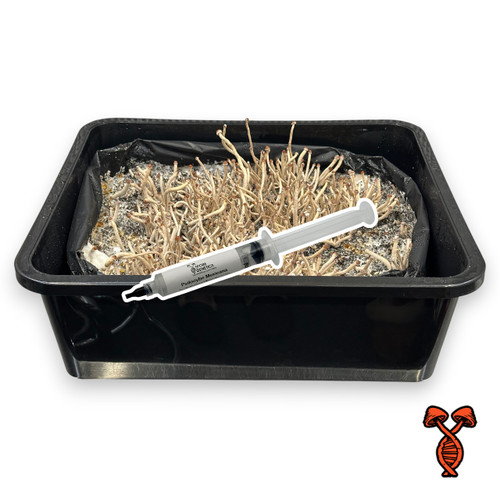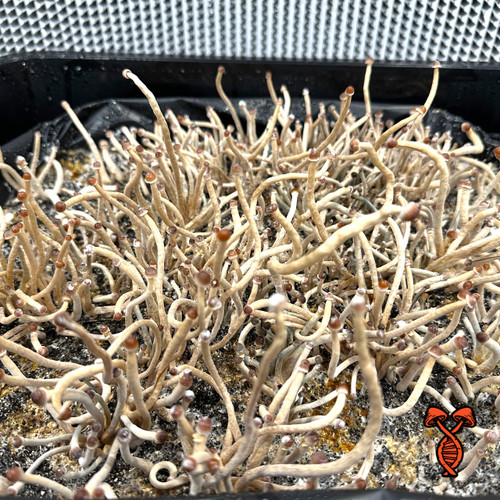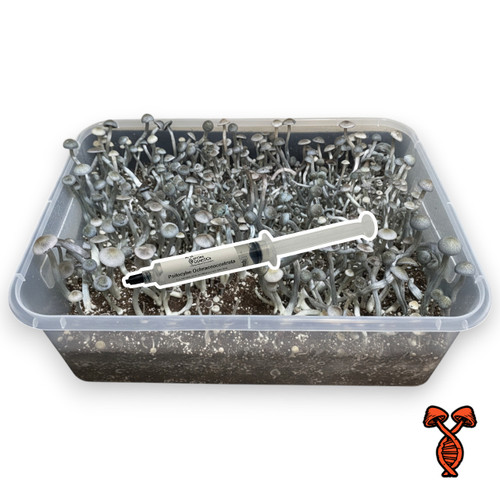


Psilocybe Subtropicalis Isolated Spore Syringe – 10cc | Spore Genetics
Also known as “Semperviva” — a resilient, slow-growing Mexican Psilocybe species
Psilocybe subtropicalis is a rare psilocybin producing species originally described by world-renowned mycologist Gastón Guzmán in 1995, with documented collections from Coatepec, Veracruz, Mexico. Long surrounded by taxonomic confusion, this species has been known under several names—including Psilocybe semperviva and Psilocybe hoogshagenii var. convexa—before modern DNA sequencing finally confirmed them as the same species.
The name “Semperviva” (“ever-living”) reflects one of its most defining traits:
extreme resilience and unusually long survival in culture compared to other Psilocybe species.
Unlike its close relatives Psilocybe mexicana and Psilocybe tampanensis, subtropicalis does not form sclerotia, making its lineage even more distinct.
This Isolated Spore Syringe provides researchers with a stable, clean genetic sample ideal for studying this unique and highly misunderstood species within the Psilocybe genus.
Species Background
Documented Origins
· First formally described: Guzmán, 1995
· Type locality: Coatepec, Veracruz, Mexico
· Habitat: Subtropical forests, muddy soils, humus-rich ground
· Ecological type: Wood-associated / humicolous saprotroph
Taxonomic History (Simplified)
This species has gone by many names over the decades:
| Former Name | Why It Was Used | Current Status |
| Psilocybe semperviva | Very resilient, slow-growing phenotype | Now considered P. subtropicalis |
| Psilocybe hoogshagenii var. convexa | Early classification before DNA analysis | Not genetically correct |
| Psilocybe bipleurocystidiata | Synonym published by Horak & Guzmán (2009) | Merged with P. subtropicalis |
DNA sequencing now confirms all of these as the same species.
Macroscopic Features (General Observations)
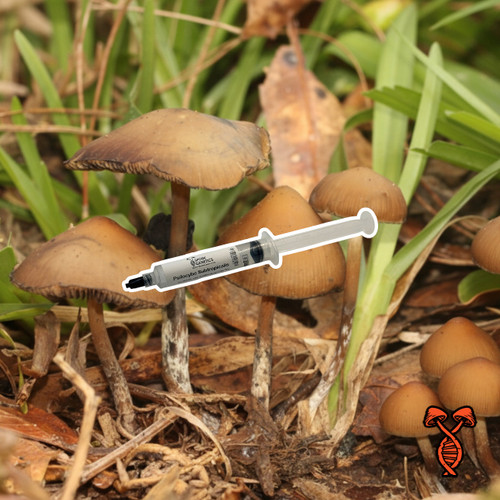
Because Psilocybe subtropicalis is under-documented and rarely encountered, its features are less fully described than most Psilocybe species. However, available data and community collections note:
Cap
· Hygrophanous (color changes as it dries)
· Light brown to yellow-brown when moist
· Smooth surface
· Convex to subumbonate
Gills
· Adnate to slightly adnexed
· Brown to purple-brown as spores mature
Stem
· Slender, whitish to pale brown
· Bruising blue when handled
· Typically longer than P. mexicana
· Tough and slow to decay (a defining trait)
Spore Print
· Deep purple-brown (consistent with Psilocybe section Cubensae)
Microscopic Features
While underpublished, specimens identified as Psilocybe subtropicalis / semperviva typically show:
· Ellipsoid, thick-walled spores
· Dark purple-brown pigmentation
· Presence of pleurocystidia & cheilocystidia
· Blueing hyphae in damaged tissue
Further microscopic study is ongoing, making this species especially valuable for taxonomists.
Why Researchers Value Psilocybe subtropicalis
✔ Extremely contamination-resistant – among the most durable species in the genus
✔ Very slow growing – matching its “Semperviva” reputation
✔ Does not produce sclerotia – unlike mexicana and galindoi
✔ Genetically unique – now considered distantly related to Psilocybe hoogshagenii
✔ Rare and understudied – ideal for research collections
Psilocybe Subtropicalis Product Features & What's Included
✔ 10cc Psilocybe subtropicalis Spore Isolate
✔ Prepared in our ISO-7 cleanroom for maximum sterility
✔ Ideal for microscopy & taxonomic research
✔ Includes sterile needle + alcohol prep pad
✔ Ships fast & discreet within the USA
✔ Comes with our How to Use a Spore Syringe insert
Important Note: Psilocybe subtropicalis (“Semperviva”) is a distinct Mexican Psilocybe species, once confused with Psilocybe Mexicana and Psilocybe hoogshagenii var. convexa. DNA analysis now recognizes all historical names—Semperviva, convexa, bipleurocystidiata—as a single species: Psilocybe subtropicalis.
Intended strictly for microscopy and research — not for cultivation.