
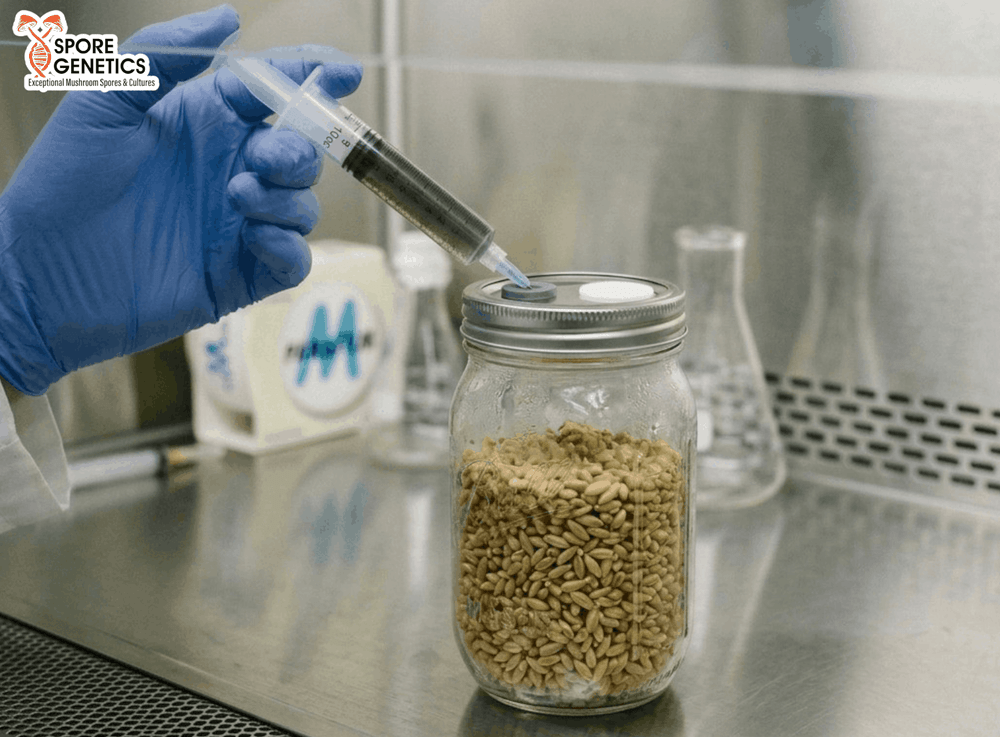
Why Spores Aren’t Germinating (7 Common Reasons + Fixes)
Posted by Spore Genetics Research Team on Mar 19th 2026
Why Your Spores Aren’t Germinating (7 Common Reasons)
If your spores aren’t germinating, it’s usually due to environmental conditions, timing, or natural variability—not necessarily a faulty syringe.
Quick Answer
If your spores aren’t germinating, the most common reasons are:
-
Not enough time has passed
-
Temperature is too low or inconsistent
-
Moisture levels are off
-
Spores weren’t evenly distributed
-
Early growth isn’t visible yet
-
Contamination is present
-
Natural genetic variability
In many cases, spores are already developing—you just may not see visible growth yet.
Introduction
One of the most common concerns in mycology research is:
“Why aren’t my spores germinating, and is something wrong?”
After inoculation, it’s normal to expect visible growth—but spores don’t behave like liquid culture. They must first germinate and pair before forming visible mycelium, and that process can take time.
Below are the 7 most common reasons spores appear inactive, and what you can expect during early-stage development.
1. Germination Takes Longer Than Expected
Spore germination is not immediate.
-
Typical timeframe: 3–14+ days
-
Some genetics take longer
-
Growth starts microscopically
If you’re under a week in, this is completely normal.
2. Temperature Is Too Low or Unstable
Temperature directly affects germination speed.
-
Ideal range: 70–75°F (21–24°C)
-
Below this → slower activity
-
Above this → increased contamination risk
Stable temperatures outperform higher temperatures every time.
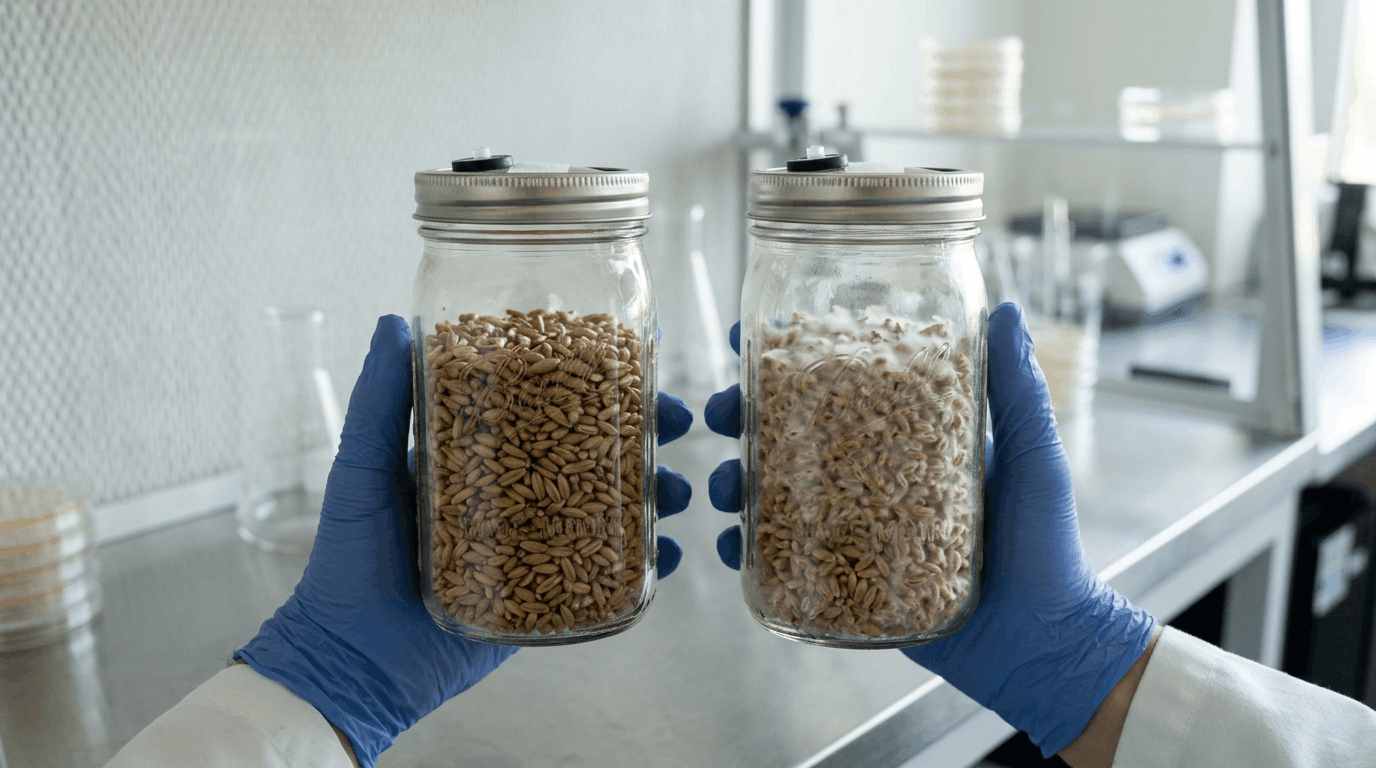
3. Early Growth Is Hard to See
Initial mycelium is extremely subtle.
-
May appear as faint, wispy strands
-
Often hidden within grain
-
Becomes visible only after expansion
“No growth” is often just growth you can’t see yet.
4. Spore Distribution Was Uneven
Spores settle quickly in solution.
-
Always shake your syringe thoroughly
-
Each drop should contain spores
-
Uneven distribution delays results
A properly mixed syringe = more consistent germination.
5. Moisture Levels Are Off
Spores require proper hydration to activate.
-
Too dry → no germination
-
Too wet → bacterial competition
Aim for balanced hydration, not saturation.
6. Hidden Contamination
Contamination isn’t always visible early on.
-
Bacteria may outcompete spores
-
Growth may stall before appearing
-
Clean technique is critical
If nothing happens after extended time, contamination may be involved.
7. Natural Genetic Variability
Spores are inherently unpredictable.
-
Not all spores germinate
-
Some pairings take longer
-
Each syringe behaves slightly differently
This variability is part of spore-based research.
Common Mistakes
-
Not shaking the syringe before use
-
Checking too frequently
-
Using inconsistent temperatures
-
Expecting liquid culture speed
-
Over- or under-injecting
Pro Tips for Better Results
-
Keep temps steady in the low 70s
-
Shake thoroughly before every use
-
Avoid disturbing early stages
-
Consider agar for clearer observation
FAQ
How long does it take for spores to germinate?
Spore germination typically takes 3–14 days, though some strains may take longer depending on conditions. For a full breakdown of what to expect at each stage, see our guide on how long mushroom spores take to germinate.
Is it normal to see no growth after a week?
Yes, this is completely normal. Many spores take longer than 7 days to show visible growth.
Do spores always germinate?
Not all spores germinate. Success depends on proper conditions and viable spore pairings.
Final Thoughts
If your spores aren’t germinating yet, the most important thing to remember is:
Time is often the missing factor.
Many successful results begin with little to no visible activity. Staying patient and maintaining consistent conditions will give spores the best chance to develop.
Consistency Starts With Quality
High-density spore syringes can make a noticeable difference in early-stage research by ensuring even distribution and reliable starting material.
Explore our collection of high density spore syringes here:
Psilocybe cubensis spore syringes
Each order includes a step-by-step “How to Use” guide to support consistent results.