
Habitats of Magic Mushrooms in Dung, Grass, & More
Posted by Spore Genetics Research Team on Feb 2nd 2026
When you think of magic mushrooms, most typically think of just the psilocybe cubensis mushrooms such as a Golden Teacher, Melmak, PES Amazonian, Pink Buffalo, or any of the classics. Here’s the truth, there are so many different species among us that naturally grow in the wild that are exponentially magical. Roughly over 200 species of fungi produce the beloved psilocybin. But where exactly do some of these species grow naturally? Why are some mushrooms grass lovers but others enjoy dung or wood? Let me give you guys a clear view on some of the species of fungi and their natural needs in habitats.
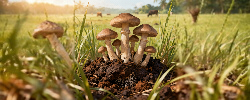
Dung Loving Mushrooms The Pastures Prize
These are the most common psilocybin mushrooms that we all know and love to research. Dung is such a nutrient jackpot! These kinds of cubensis magic mushrooms are particularly fond of herbivore dung such as cow & horse manure and enjoy tropical/subtropical pastures.
The way these mushrooms spread is quite easy but interesting and we have to thank our cows and horses for this. They inadvertently spread the spores by eating the grass that has been sporulated on, and after digestion within the animal, they drop their dung patties creating a perfect ground for mushrooms to come to full life.
Below I will list a few dung loving cubensis mushrooms in case you didn’t catch them earlier -
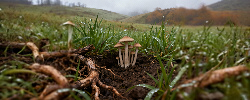
Grass Loving Mushrooms the Greenery is Key
Who says you need dung in order to create some potency fueled mushrooms? There is a beauty with grass lovers because they don’t need much other than fertile soils near meadows, lawns, and grazed fields. This is great when you have decaying grass roots, which totally happens often. Grass loving species will be a lot easier to come across in the wild as they don’t usually need much when it comes to growing because these psilocybin mushrooms have adapted to withstand cooler climates.
There is one place in the world that has an abundance of these grass loving mushrooms and that’s Europe. There are reports of findings in pretty much every country in Europe being a classic Autumn fruiter that drives Europeans to forage. The next runner up would be the Pacific Northwest of North America especially around Washington, Oregon, and Northern Cali which also trickles into areas around Canada.
Below will be a few psilocybin mushrooms that are grass lovers -
· Psilocybe Semilanceata (Liberty Cap)
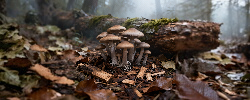
Wood Loving & Sand Loving Mushrooms Exist Too
Most times people tend to forget we have wood loving and sand loving mushrooms too. Truthfully we have so many mushrooms in our ecosystem that points to the fact mushrooms were here long before any of us. While I may only be talking about the sand & wood lovers in this passage, I want you to know that fungi will feed on anything you can think of because they are the pinnacle of decomposing, regeneration, and adaptation. They help sustain life in general by turning waste into resources for all life here, not just us humans.
Steering the conversation towards the sand loving mushrooms, these fungi have adaptability to harsh and low nutrient sandy environments. These kinds of mushrooms have a unique way of forming their mycelium, because it needs some form of woody debris or lignin-rich organic matter to form this sort of dense mat or protective structures that help the mushroom withstand any drought, fires, or erosion by maintaining some moisture to keep this mycelial network alive. These fungi work as cool-climate lovers and subtropical humid climates and can be found in some subtropical or specific coastal sandy habitats. There is no specific area these are abundant in, these are going to be on the more rare side. Here are a couple that we know of containing psilocybin -
Now let’s shift over to wood loving psilocybin mushrooms. These are going to be a lot more prevalent as opposed to sand lovers. Woody debris and mulch are everywhere, while pure sandy dune habitats with the right woody mix are coastal-specific and need the right conditions. With that being said, wood loving mushrooms are going to be found abundantly in Australia and New Zealand, some point to the theory that they originated from there. Head over to North America and they can be found naturally in the pacific northwest such as Oregon, Washington, and Northern California and other parts down south where humidity is abundant. I’ll list two strains below that are psilocybin producing wood loving strains -
As you can see, there are so many types of psilocybin producing mushrooms that occur naturally in the wild. Some are more of a rarity than others, but purely mushrooms are the key to life. They help keep us, the ecosystem, animals, and many other living organisms at bay simply just from them existing. There is always so much more research to be done, and that’s where we as the researchers come in and take up space. Our voice matters, and so do mushrooms. Let’s keep discovering guys and have a beautiful day!